CWS Market Review – October 14, 2025
(This is the free version of CWS Market Review. If you like what you see, then please sign up for the premium newsletter for $20 per month or $200 for the whole year. If you sign up today, you can see our two reports, “Your Handy Guide to Stock Orders” and “How Not to Get Screwed on Your Mortgage.”)
In recent issues, I’ve talked about how placid the stock market has been. The S&P 500 just ran off 34 days in a row without a 1% change. That’s the longest such streak in nearly 50 years.
Well, that all came to a crashing end on Friday when the stock market fell 2.7% on news of the Trump administration’s tariff threats.
Interestingly, Friday’s stock drop had a huge divide between—exactly what we’ve been talking about—High Beta and Low Vol stocks. On Friday, the High Beta sector fell about 5% while the Low Vol sector was largely flat. That’s a huge gap.
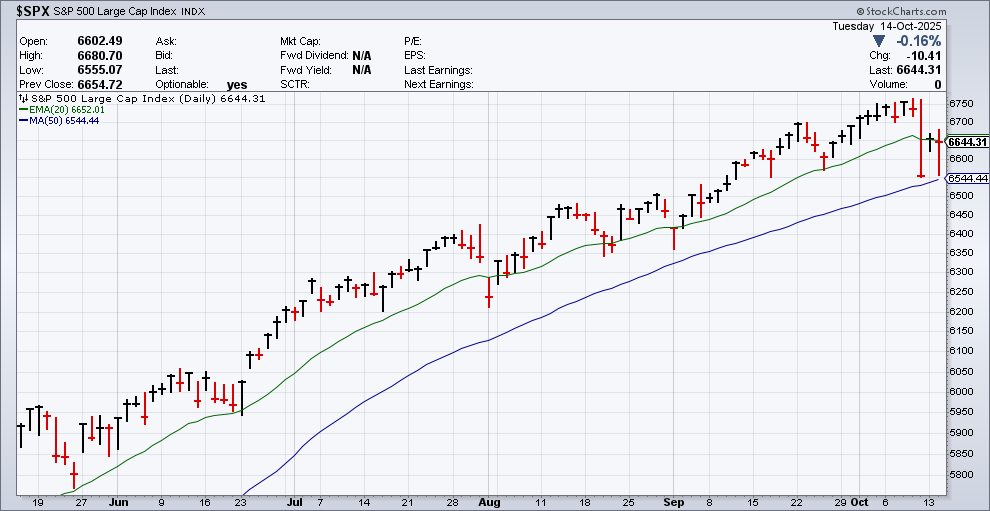
I knew there was going to be a rotation, but I had no idea when. I’m not ready to proclaim this as the start of a Low Vol rally, but it shows these exact tensions within the market. The High Beta stocks performed well as long as the market did well, and the market did well as long as the economic news was positive.
Investors need to understand how much of the rally has been placed on the shoulders of just a few stocks.
Q3 Earnings Begins
Today was also the first big day of Q3 earnings season. The big banks went first and it looks like Q3 was a good one for Wall Street.
Goldman Sachs (GS) said it made $12.25 per share which beat estimates for $11 per share. That’s an increase of 37% over last year. Revenues climbed 20% to $15.18 billion. That beat estimates for $14.1 billion. Goldman’s investment banking fees increased 42% to $2.66 billion.
One weak spot was Goldman’s equity trading division. Sales rose 7% to $3.74 billion, which was $160 million below the estimate. Revenue at Goldman’s fixed income division rose 17% to $3.47 billion. That topped estimates by $289 million.
Goldman’s stock has done well this year, but the stock fell a little bit in today’s trading.
JPMorgan Chase (JPM) said its Q3 profit rose 12% to $14.39 billion, or $5.07 per share. That beat estimates of $4.84 per share. JPM’s revenues increased 9% to $47.12 billion compared with expectations of $45.4 billion.
I was impressed by JPM’s trading segments. For Q3, JPMorgan’s trading division had revenues of $8.9 billion. Fixed-income trading grew 21% to $5.6 billion. That’s about $300 million more than expected. Equity trading rose 33% to $3.3 billion. That also beat estimates.
JPM’s provision for credit losses rose 9% to $3.4 billion. The estimate was for $3.08 billion. This suggests the banks are getting ready for more defaults.
It appears that the tariff uncertainty has benefited Wall Street. CEO Jamie Dimon said, “While there have been some signs of a softening, particularly in job growth, the U.S. economy generally remained resilient.”
Citigroup (C) has had a very good year and today we saw why. Citi said it made $2.24 per share which beat estimates of $1.90 per share. That’s up 15% over last year. Revenue rose 9% to $22.09 billion which was $1 billion more than expected.
The bank continues to do well. For Q3, Citi’s banking revenues rose 34%. The bank’s services division had revenue growth of 7%. Also, Citi’s market segment posted a revenue increase of 15%.
Shares of BlackRock (BLK) rose to a new all-time high today. The company is the largest money manager in the world. It now has assets under management of $13.46 trillion. That’s up 17% in the last year.
For the quarter, BLK made $11.55 per share which beat Wall Street’s forecast. The shares rallied to a new all-time high.
Shares of Wells Fargo (WFC) rallied more than 7% after the bank reported solid earnings for its Q3. The Federal Reserve lifted WFC’s asset cap of $1.95 trillion. Since 2019, Wells has closed 13 consent orders. It still has one more to go.
CEO Charlie Scharf said, “We are now on a path to grow more broadly with the lifting of the asset cap. “The bank raised its ROE target from 15% to 17% to 18%. WFC’s Q3 profit rose to $5.59 billion, or $1.66 per share. The consensus on Wall Street was for earnings of $1.55 per share.
Wells’s provision for credit losses dropped to $681 million from $1.07 billion last year. WFC’s investment banking fees jumped 25% to a record of $840 million.
Bank of America (BAC) and Morgan Stanley (MS) will report earnings tomorrow.
We’ll also get our first Buy List stock to report earnings tomorrow. Abbott Labs (ABT) is due to report its Q3 earnings before the market opens. I’m curious to hear what Abbott has to say because this is a good company, but the stock has lagged the market for more than five years.
I was happy to see ABT get a boost last summer, but that eventually petered out by the spring. I suspect that a lot of ABT’s lagging is due to it being a healthcare stock. When your sector is out of favor on Wall Street, it’s hard to do well. Abbott has been outperforming healthcare recently.
For Q3, ABT said it expects earnings between $1.28 and $1.32 per share. The consensus on Wall Street is for earnings of $1.30 per share, the exact midpoint. I think Abbott will beat that.
For Q2, Abbott made $1.26 per share, which beat Wall Street’s consensus by one penny per share. Management had told us to expect earnings between $1.23 and $1.27 per share.
Abbott’s Q2 sales were up 7.4% to $11.14 billion, which beat estimates of $11.07 billion. If we only look at organic sales, Q2 sales were up by 6.9%, and if we exclude Covid-related items, sales were up 7.5%.
Abbott sees full-year profits ranging between $5.10 and $5.20 per share. That’s down from the company’s previous guidance of $5.15 to $5.25 per share.
Last year, Abbott made $4.67 per share. That means that at the midpoint of this year’s guidance, Abbott expects double-digit earnings growth.
60 Minutes and 1929
This past weekend, 60 Minutes did a story on the stock market and its resemblance to 1929. These stories annoy me, and I think they’re a disservice to investors.
The 60 Minutes story seems to be a backdoor marketing video for Andrew Ross Sorkin’s new book, 1929.
The gist of the piece is that we’re in a stock market bubble and it’s very similar to the events of—you guessed it—1929.
I hate that this even needs to be said, but the current market isn’t anything like the market of 1929. Just as a reminder, the stock market fell 89% from top to bottom. That’s what we’re talking about when we compared us to 1929.
Many more Americans are invested in the stock market than was the case 100 years ago. There’s no gold standard today. No fixed commissions. There’s a global economy. We have deposit insurance. During the Great Depression, the unemployment rate reached 25%. Today it’s just over 4%.
Bear markets happen. We even had a brief one earlier this year. That’s part of investing. That’s quite a different thing from 1929.
What I find especially annoying is that these stories give the appearance of saying something when they’re not really saying anything. The commentators are careful not to predict anything. No one goes on record. Instead, they say they’re “concerned” about something ominous, but they’re lacking in details.
Here’s a snippet from the broadcast:
Andrew Ross Sorkin: The crazy part about this is from 1928 to September 1929, the stock market was up 90%.
Lesley Stahl: When you say the stock market was way up, immediately I think of now. Are you scared? (We’re not up 90%. Six months ago, the market lost 12% in four days. – Eddy)
ARS: I’m anxious. I’m anxious that we are at prices that may not feel sustainable and what I don’t know is we are either living through some kind of remarkable boom and part of that artificial intelligence and technology and all of that or everything is overpriced. (Then prices come down. It’s not a big deal. – Eddy)
LS: Or we’re reliving…
ARS: …1929.
Oh, brother. Nice leading question there. I agree that things are pricey and I’ve said so, but how exactly are we reliving 1929? Notice how Sorkin says he’s anxious. So what? All investors should be anxious to some extent.
Later Stahl Lesley tells us, “People who didn’t really have much money were lured by Wall Street bankers to invest using a newfangled concept to take on debt called credit.”
I hate to break it to you, Lesley, but credit has been around for a long, long time, and so has margin buying.
The story then takes an expected turn into crypto and lets us know that some meme coins coin may not be 100% above board.
“LS: Do you think that we will have a crash, or not?
ARS: The answer is, we will have a crash. I just can’t tell you when and I can’t tell you how deep. But I can assure you – unfortunately, I wish I wasn’t saying this – we will have a crash.”
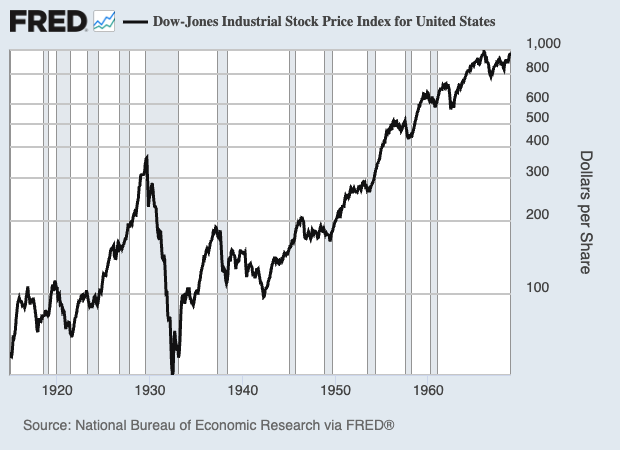
Let’s see if I have this right. I assure you that something will happen at some time, but I can’t say what, when or how bad it will be. This tells you nothing about being an investor.
That’s all for now. The retail sales report is due out on Thursday, but it looks like we won’t get it thanks to the shutdown. The inflation report is out next Friday, the 24th, and that also looks to be in jeopardy. I’ll have more for you in the next issue of CWS Market Review.
– Eddy
Posted by Eddy Elfenbein on October 14th, 2025 at 6:05 pm
The information in this blog post represents my own opinions and does not contain a recommendation for any particular security or investment. I or my affiliates may hold positions or other interests in securities mentioned in the Blog, please see my Disclaimer page for my full disclaimer.
-
Archives
- October 2026
- September 2026
- August 2026
- July 2026
- June 2026
- May 2026
- April 2026
- March 2026
- February 2026
- January 2026
- December 2025
- November 2025
- October 2025
- September 2025
- August 2025
- July 2025
- June 2025
- May 2025
- April 2025
- March 2025
- February 2025
- January 2025
- December 2024
- November 2024
- October 2024
- September 2024
- August 2024
- July 2024
- June 2024
- May 2024
- April 2024
- March 2024
- February 2024
- January 2024
- December 2023
- November 2023
- October 2023
- September 2023
- August 2023
- July 2023
- June 2023
- May 2023
- April 2023
- March 2023
- February 2023
- January 2023
- December 2022
- November 2022
- October 2022
- September 2022
- August 2022
- July 2022
- June 2022
- May 2022
- April 2022
- March 2022
- February 2022
- January 2022
- December 2021
- November 2021
- October 2021
- September 2021
- August 2021
- July 2021
- June 2021
- May 2021
- April 2021
- March 2021
- February 2021
- January 2021
- December 2020
- November 2020
- October 2020
- September 2020
- August 2020
- July 2020
- June 2020
- May 2020
- April 2020
- March 2020
- February 2020
- January 2020
- December 2019
- November 2019
- October 2019
- September 2019
- August 2019
- July 2019
- June 2019
- May 2019
- April 2019
- March 2019
- February 2019
- January 2019
- December 2018
- November 2018
- October 2018
- September 2018
- August 2018
- July 2018
- June 2018
- May 2018
- April 2018
- March 2018
- February 2018
- January 2018
- December 2017
- November 2017
- October 2017
- September 2017
- August 2017
- July 2017
- June 2017
- May 2017
- April 2017
- March 2017
- February 2017
- January 2017
- December 2016
- November 2016
- October 2016
- September 2016
- August 2016
- July 2016
- June 2016
- May 2016
- April 2016
- March 2016
- February 2016
- January 2016
- December 2015
- November 2015
- October 2015
- September 2015
- August 2015
- July 2015
- June 2015
- May 2015
- April 2015
- March 2015
- February 2015
- January 2015
- December 2014
- November 2014
- October 2014
- September 2014
- August 2014
- July 2014
- June 2014
- May 2014
- April 2014
- March 2014
- February 2014
- January 2014
- December 2013
- November 2013
- October 2013
- September 2013
- August 2013
- July 2013
- June 2013
- May 2013
- April 2013
- March 2013
- February 2013
- January 2013
- December 2012
- November 2012
- October 2012
- September 2012
- August 2012
- July 2012
- June 2012
- May 2012
- April 2012
- March 2012
- February 2012
- January 2012
- December 2011
- November 2011
- October 2011
- September 2011
- August 2011
- July 2011
- June 2011
- May 2011
- April 2011
- March 2011
- February 2011
- January 2011
- December 2010
- November 2010
- October 2010
- September 2010
- August 2010
- July 2010
- June 2010
- May 2010
- April 2010
- March 2010
- February 2010
- January 2010
- December 2009
- November 2009
- October 2009
- September 2009
- August 2009
- July 2009
- June 2009
- May 2009
- April 2009
- March 2009
- February 2009
- January 2009
- December 2008
- November 2008
- October 2008
- September 2008
- August 2008
- July 2008
- June 2008
- May 2008
- April 2008
- March 2008
- February 2008
- January 2008
- December 2007
- November 2007
- October 2007
- September 2007
- August 2007
- July 2007
- June 2007
- May 2007
- April 2007
- March 2007
- February 2007
- January 2007
- December 2006
- November 2006
- October 2006
- September 2006
- August 2006
- July 2006
- June 2006
- May 2006
- April 2006
- March 2006
- February 2006
- January 2006
- December 2005
- November 2005
- October 2005
- September 2005
- August 2005
- July 2005
 Eddy Elfenbein is a Washington, DC-based speaker, portfolio manager and editor of the blog Crossing Wall Street. His