CWS Market Review – September 15, 2026
(This is the free version of CWS Market Review. If you like what you see, then please sign up for the premium newsletter for $20 per month or $200 for the whole year. If you sign up today, you can see our two reports, “Your Handy Guide to Stock Orders” and “How Not to Get Screwed on Your Mortgage.”)
The Federal Reserve started its two-day meeting today. The meeting will conclude tomorrow at 2 pm ET when the central bank releases its policy statement.
Expectations for the Fed have changed dramatically and now it’s widely expected that the central bank will raise overnight borrowing costs by 0.25% to a range of 3.75% to 4%. Spoiler alert: That’s almost certainly what will happen.
Over the last several months, trying to predict what the Fed will do has been a raucous game. To hike or not to hike? Now there finally seems to be a broad consensus to expect a rate hike.
So what changed everyone’s mind? Two points. The recent jobs report, which was surprisingly strong, and last week’s CPI report both tipped the scales in favor of a rate hike. I’ll have more details on the CPI report in a bit.
Traders currently place the odds of a rate hike at more than 90%. After that, traders expect one more 0.25% hike before the end of the year. (Some even expect a third.)
The Fed hasn’t altered rates all year. If the Fed does raise rates, it will be the Fed’s first rate hike in more than three years.
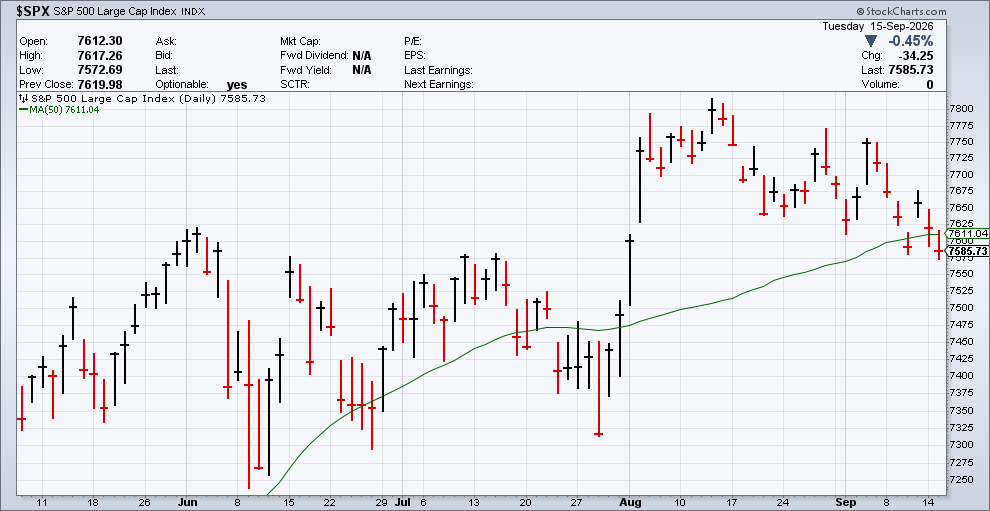
Last Friday, the S&P 500 snapped a four-day losing streak, and stocks fell again on Monday and today. The index is back below its 50-day moving average which has often been an omen for bad returns. The stock market finished Tuesday at its lowest close since July 31. The S&P 500 Value Index (SPYV) has outperformed the broader market in each of the last four sessions.
Thanks to higher oil prices, the energy sector has done quite well this year. The S&P 500 Energy Index (XLE) is up close to 50% this year. ConocoPillips (COP) hit a new 52-week high today. I caution investors that energy investing can be highly volatile. The XLE underperformed for nearly the entirety of the 2010s.
Cyclical stocks haven’t done particularly well recently. Both the S&P 500 Materials Index (XLB) and the S&P 500 Industrials Index (XLI) have lagged the market for much of this year. That could be a warning sign about the manufacturing sector.
Over the weekend, some major tech CEOs called for a slowdown of the development of AI. Frankly, I think much of the language has been unduly alarmist. Evan Hubinger, a researcher at Anthropic, believes there’s a greater than 10% chance that AI will lead to human extinction, as if I need more things to worry about.
Nevertheless, the Nasdaq Composite dropped sharply at Monday’s open, but it regained strength throughout the day. The Nasdaq has now outpaced the market for the last three weeks.
Inflation Rose 0.4% in August
On Friday, the Bureau of Labor Statistics said that inflation rose by 0.4% during August. That was in line with expectations. Over the last 12 months inflation is running at 3.4%.
If we just look at core inflation, which ignores food and energy prices, inflation was up by 0.3% last month. That was 0.1% higher than expected. Over the last 12 months, inflation is running at 2.4%.
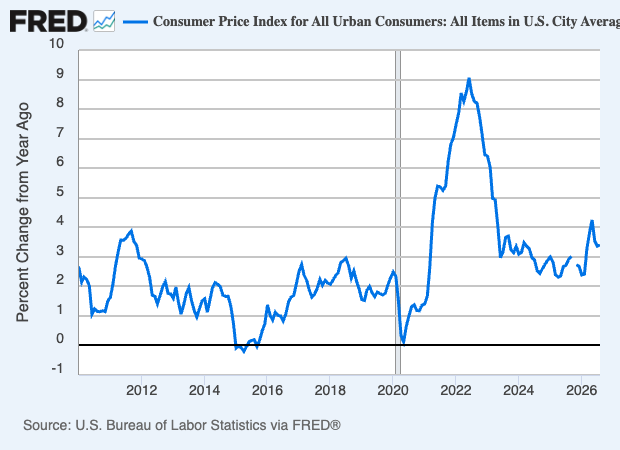
Not surprisingly, energy was a big factor in last month’s inflation. During August, energy prices were up 2.1%, and up 16.3% over the last year. Gasoline was up 27.4% last month and up 52% over the last year.
Here are some more details:
Food prices edged 0.1% higher as food at home costs held flat. The food index accelerated 2.7% annually.
Another significant factor was a 0.3% climb in shelter costs, which had moderated over the prior two months. Transportation services saw a 0.5% increase. Used cars and trucks rose 0.4% and new vehicle prices were up 0.3%, part of what appeared to be broad-based gains for the index. Tariff-sensitive apparel prices were flat and motor vehicle insurance fell 0.8%.
Before the CPI report, traders thought the odds of a rate hike this week were 70%. After the report, the odds jumped to 90%. With tomorrow’s policy statement, I’ll be curious to see how many dissenting votes there will be. President Trump has strongly advocated for lower rates. Fed Chairman Kevin Warsh has been unambiguously clear that he intends to get inflation back to 2%.
The most important opinion doesn’t come from any elected official. Instead, it’s what the bond market thinks, and lately, the bond market gods have been displeased. The yields on the 10-year Treasury recently broke above 5%.
Specifically, on Tuesday, the 10-year yield reached 5.041%, the highest level since July 2007. The yield on the 30-year Treasury got to its highest level since June 2007.
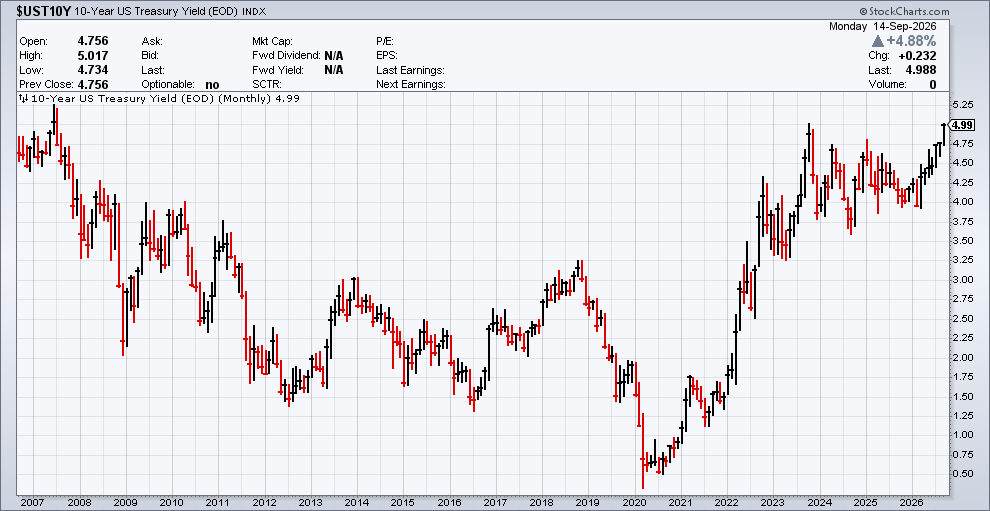
Jessica Riedl points out that in February, the Congressional Budget Office projected that it would take 30 years for the 10-year yield to get to 4.4%. Instead, it got to 5% in just seven months.
Each month, the Conference Board releases its report on consumer confidence. Gary Alexander points out an unusual divergence. Americans are very happy right now with their current condition, but they’re very concerned about the future.
In the last report, the Present Situation Index was at 121.2, (the baseline is 100). but the Expectations Index is down to 68.1. That’s a giant spread, and it’s getting wider.
In the last report, the Present Situation Index was up 6.8 points while the Expectations Index was down 5.8 points. Interestingly, many Americans are also optimistic about their own prospects for the next several months.
All this worry, to me, suggests that this is a good time to buy. Assuming, of course, we all don’t go extinct.
That’s all for now. The Fed’s decision will be out tomorrow afternoon. Then on Wednesday is the retail sales report. I’ll have more for you in the next issue of CWS Market Review.
– Eddy
Posted by Eddy Elfenbein on September 15th, 2026 at 5:38 pm
The information in this blog post represents my own opinions and does not contain a recommendation for any particular security or investment. I or my affiliates may hold positions or other interests in securities mentioned in the Blog, please see my Disclaimer page for my full disclaimer.
-
Archives
- September 2026
- August 2026
- July 2026
- June 2026
- May 2026
- April 2026
- March 2026
- February 2026
- January 2026
- December 2025
- November 2025
- October 2025
- September 2025
- August 2025
- July 2025
- June 2025
- May 2025
- April 2025
- March 2025
- February 2025
- January 2025
- December 2024
- November 2024
- October 2024
- September 2024
- August 2024
- July 2024
- June 2024
- May 2024
- April 2024
- March 2024
- February 2024
- January 2024
- December 2023
- November 2023
- October 2023
- September 2023
- August 2023
- July 2023
- June 2023
- May 2023
- April 2023
- March 2023
- February 2023
- January 2023
- December 2022
- November 2022
- October 2022
- September 2022
- August 2022
- July 2022
- June 2022
- May 2022
- April 2022
- March 2022
- February 2022
- January 2022
- December 2021
- November 2021
- October 2021
- September 2021
- August 2021
- July 2021
- June 2021
- May 2021
- April 2021
- March 2021
- February 2021
- January 2021
- December 2020
- November 2020
- October 2020
- September 2020
- August 2020
- July 2020
- June 2020
- May 2020
- April 2020
- March 2020
- February 2020
- January 2020
- December 2019
- November 2019
- October 2019
- September 2019
- August 2019
- July 2019
- June 2019
- May 2019
- April 2019
- March 2019
- February 2019
- January 2019
- December 2018
- November 2018
- October 2018
- September 2018
- August 2018
- July 2018
- June 2018
- May 2018
- April 2018
- March 2018
- February 2018
- January 2018
- December 2017
- November 2017
- October 2017
- September 2017
- August 2017
- July 2017
- June 2017
- May 2017
- April 2017
- March 2017
- February 2017
- January 2017
- December 2016
- November 2016
- October 2016
- September 2016
- August 2016
- July 2016
- June 2016
- May 2016
- April 2016
- March 2016
- February 2016
- January 2016
- December 2015
- November 2015
- October 2015
- September 2015
- August 2015
- July 2015
- June 2015
- May 2015
- April 2015
- March 2015
- February 2015
- January 2015
- December 2014
- November 2014
- October 2014
- September 2014
- August 2014
- July 2014
- June 2014
- May 2014
- April 2014
- March 2014
- February 2014
- January 2014
- December 2013
- November 2013
- October 2013
- September 2013
- August 2013
- July 2013
- June 2013
- May 2013
- April 2013
- March 2013
- February 2013
- January 2013
- December 2012
- November 2012
- October 2012
- September 2012
- August 2012
- July 2012
- June 2012
- May 2012
- April 2012
- March 2012
- February 2012
- January 2012
- December 2011
- November 2011
- October 2011
- September 2011
- August 2011
- July 2011
- June 2011
- May 2011
- April 2011
- March 2011
- February 2011
- January 2011
- December 2010
- November 2010
- October 2010
- September 2010
- August 2010
- July 2010
- June 2010
- May 2010
- April 2010
- March 2010
- February 2010
- January 2010
- December 2009
- November 2009
- October 2009
- September 2009
- August 2009
- July 2009
- June 2009
- May 2009
- April 2009
- March 2009
- February 2009
- January 2009
- December 2008
- November 2008
- October 2008
- September 2008
- August 2008
- July 2008
- June 2008
- May 2008
- April 2008
- March 2008
- February 2008
- January 2008
- December 2007
- November 2007
- October 2007
- September 2007
- August 2007
- July 2007
- June 2007
- May 2007
- April 2007
- March 2007
- February 2007
- January 2007
- December 2006
- November 2006
- October 2006
- September 2006
- August 2006
- July 2006
- June 2006
- May 2006
- April 2006
- March 2006
- February 2006
- January 2006
- December 2005
- November 2005
- October 2005
- September 2005
- August 2005
- July 2005
 Eddy Elfenbein is a Washington, DC-based speaker, portfolio manager and editor of the blog Crossing Wall Street. His