CWS Market Review – November 3, 2026
(This is the free version of CWS Market Review. If you like what you see, then please sign up for the premium newsletter for $20 per month or $200 for the whole year. If you sign up today, you can see our two reports, “Your Handy Guide to Stock Orders” and “How Not to Get Screwed on Your Mortgage.”)
Americans are headed off to the polls today. As usual, I’ll skip any politics, but I will note that historically, the mid-term elections have been a good time for the bulls. The low point in the presidential election cycle has historically been right now. Yesterday, the S&P 500 closed at its lowest level since July.
Since 1950, there have been 19 midterm elections, and stocks have gone up the following nine months and 12 months every time. Taking the midterm election day as the starting point, the average 12-month gain in those cycles was +15.1%.
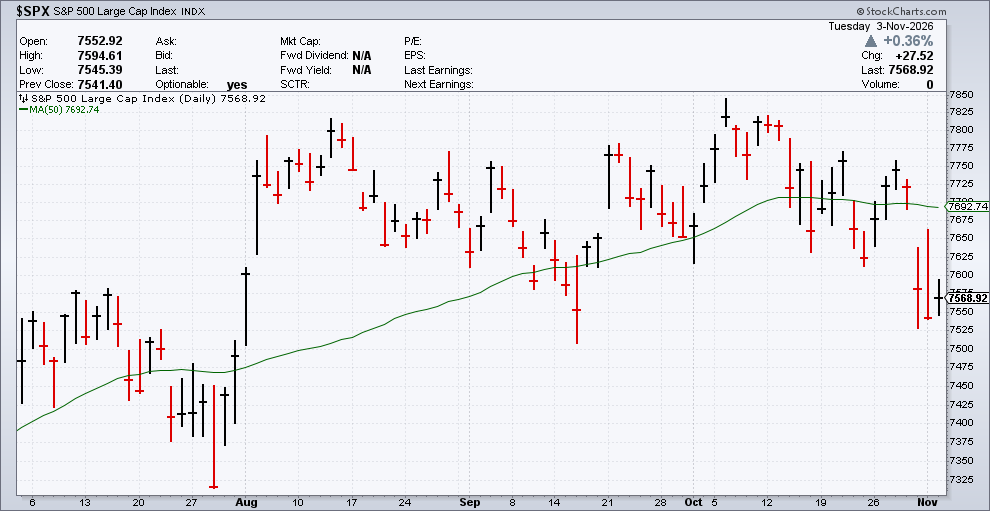
Last week, the Federal Reserve voted to leave interest rates alone. It looks like the Fed is leaning towards a rate hike next month, but we can’t say for certain just yet. One big event will come this Friday: the October jobs report. The last few reports have been unimpressive. Wall Street isn’t expecting much this time. A lousy report could delay the Fed’s rate-hiking plans.
The stock market continues its turn towards defense. This is an important change that investors should understand. After a long time of not doing so well, defensive stocks are suddenly popular.
For example, over the last month, healthcare stocks have done very well compared with the overall market. Since October 5, the S&P 500 ETF (SPY) is -2.6% while the Healthcare ETF (XLV) and Staples ETFs (XLP) are up 9.9% and 9.7% respectively.
Utilities (XLU), another key defensive sector, have also done well with a gain of 8.6%. I’ll caution you—pinpointing the start of a sector rotation is a tricky game, and you see many false positives. In fact, we saw one last summer. Still, this turn toward defensive is notable. For one, these sectors have trailed the market by so much for so long that you should expect some pushback. Also, once the cycle changes, it can last for a few years.
Q3 GDP Grew by 3.4%
The economic news has been surprisingly good. On Thursday, the Commerce Department said that the U.S. economy grew in annualized inflation-adjusted terms of 3.4% for Q3. That’s quite good. Wall Street had been expecting growth of 3.1%. In Q2, the economy grew by 2.2%.
We won’t get the earliest Q4 numbers until late January, but I think there’s a good chance that the U.S. grew by 50% in nominal terms over the last six years. Here are some details from Thursday’s report:
Consumer spending rose 3.8% in the third quarter, the same pace as the prior period. Gross private domestic investment soared 19.4%, driven by a 20.9% surge in equipment spending and an 8.4% jump on intellectual property products.
Real sales to private domestic purchasers, a proxy that Fed officials use for underlying demand, rose 4.9%, compared with a 4.6% increase in the second quarter.
With the GDP numbers, the government also releases the personal consumption expenditures price data which the Fed prefers to follow. For September, PCE prices rose by 0.5% which put the 12-month figures at 3.6%. That was the largest increase since March.
Core PCE was up 0.3% for the month and 3.1% for the last year. In September, consumer spending rose by 0.5% while personal income rose by 0.2%. Despite multiple reports of its imminent death, the U.S. economy continues to grow. I’ve often noticed that good economic news really upsets some people.
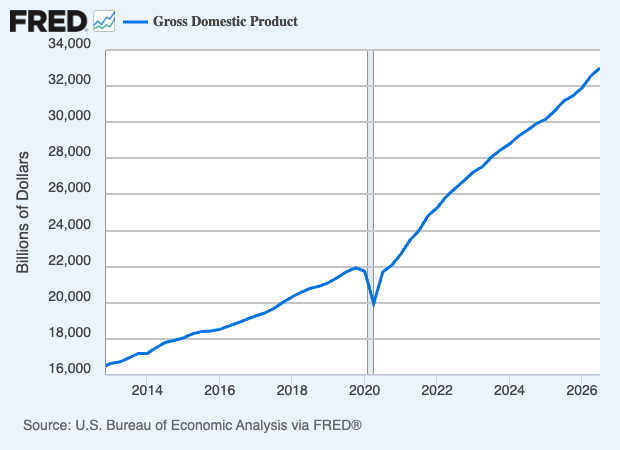
Here’s another shocking stat that we recently got: The U.S. poverty rate recently fell to its lowest point on record. According to the Census Bureau, the poverty line for a family of four is $32,649. The median household income increased 2.6% to $87,460.
It’s not just here but also around the world. The World Bank recently released a fascinating report. Between 2011 and 2023, a staggering 496 million people in India were lifted out of poverty. That averages over 110,000 people every day for 12 years. This is one of the largest declines in poverty on record, yet we rarely hear about this.
By poverty, we mean the Lower Middle-Income poverty line is listed as income of $4.20 per day. The numbers show that 57.7% of people had been living below this line. Now that share is down to 16.1%.
If we look at the extreme poverty line, which is $3 per day, then poverty fell from 27.1% to 2.6%.
What caused the decline? The World Bank said it was “mainly driven by strong consumption growth, rising employment, especially among women, and expanded social transfers, including food subsidies.”
To be sure, there are still vast wage differences in India. The top 10% makes about 13 times those of the bottom 10%, but there are reasons for optimism. Between 2017 and 2023, employment increased by about 134 million. The World Bank estimates that the share of people making less than $4.20 per share will fall from 14.2% now to 12.1 by 2028.
The European Economy Is Struggling
On Friday, Eurostat said that the eurozone economy grew by just 0.4% for Q3. That beat forecasts for growth of 0.2%, but it was less than Q2’s growth of 0.6%.
The German economy grew by 0.2% while Italy and Spain grew by 0.6%. The weak link was France whose economy shrank by 0.1%. The French are dealing “with soaring borrowing costs as investors balk at a political struggle to reduce its large budget deficit and mounting national debt.” Ireland was the big winner at 5.5% growth, but that number can be very volatile.
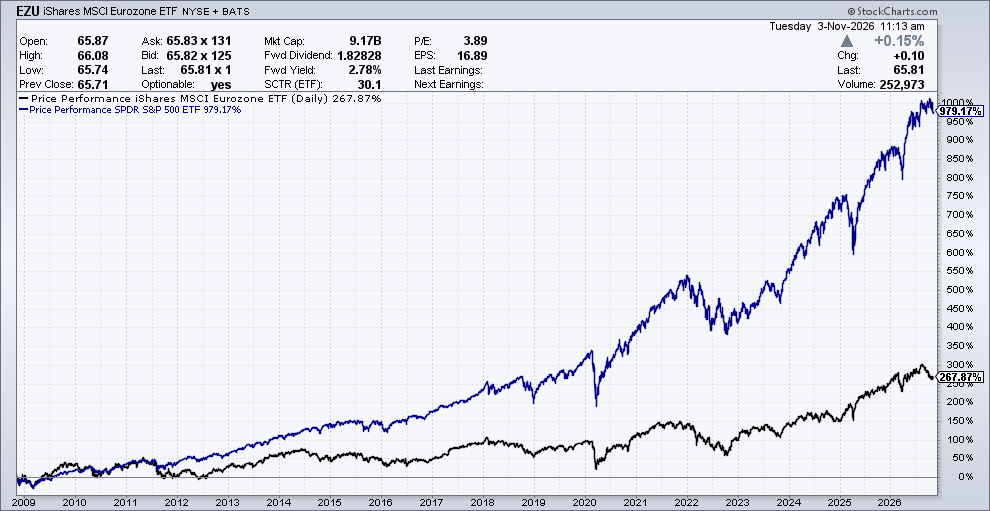
The eurozone faces many structural issues such as demographics, debt and energy costs. Here’s a look at the S&P 500 (blue) compared with the iShares MSCI Eurozone ETF (EZU).
On Thursday, Binance, which is the world’s largest crypto exchange, said it had been hacked and $6.3 billion in digital coins has gone missing.
On Thursday evening, Binance started to notice some unusual activity and massive withdrawals. The company held a series of emergency meetings. According to the New York Times, one conference call had over 100 boxes. It looks like the hackers had been planning this hack for months.
It’s really an old story just with modern technology. This was a hi-tech version of a bank heist. Binance suspended all withdrawals. This was the largest crypto heist of all time. All the signs are pointing to an elite North Korean hacking unit called TraderTraitor. North Korea doesn’t really have an economy in a traditional sense. Instead, it relies on hacking.
Here’s an hourly price chart of Bitcoin. You can see how sharply the price fell, but it soon stabilized.
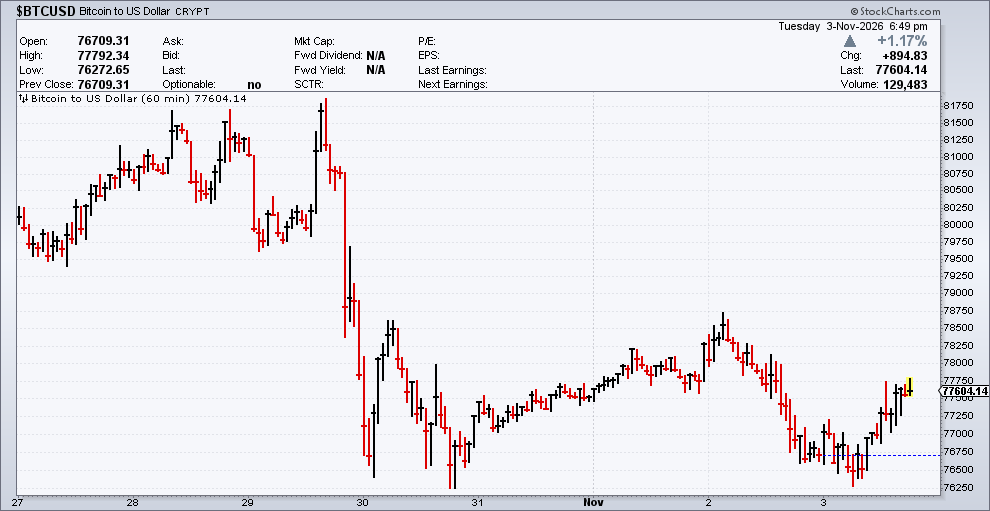
To its credit, Binance said it would cover all losses. The company said that it’s already been able to recover some losses. Sadly, this isn’t a new story. Last year, Bybit got hacked for a $1.5 billion loss.
Due to its secretive nature, crypto has often (and quite unfairly) been linked to crime. A few years ago, Binance pleaded guilty to anti-money laundering violations. The company had to fork over $4 billion to regulators, and Binance’s founder was sentenced to four years in prison. He was later pardoned by President Trump.
We’re in a new world where a hack happens, and it will take a while before we learn how much was lost. Binance said it had already replenished 98% of the affected assets.
That’s all for now. The October jobs report will be out Friday morning. Wall Street expects a gain of 55,000 new jobs. I’ll have more for you in the next issue of CWS Market Review.
– Eddy
Posted by Eddy Elfenbein on November 3rd, 2026 at 4:17 pm
The information in this blog post represents my own opinions and does not contain a recommendation for any particular security or investment. I or my affiliates may hold positions or other interests in securities mentioned in the Blog, please see my Disclaimer page for my full disclaimer.
-
Archives
- November 2026
- October 2026
- September 2026
- August 2026
- July 2026
- June 2026
- May 2026
- April 2026
- March 2026
- February 2026
- January 2026
- December 2025
- November 2025
- October 2025
- September 2025
- August 2025
- July 2025
- June 2025
- May 2025
- April 2025
- March 2025
- February 2025
- January 2025
- December 2024
- November 2024
- October 2024
- September 2024
- August 2024
- July 2024
- June 2024
- May 2024
- April 2024
- March 2024
- February 2024
- January 2024
- December 2023
- November 2023
- October 2023
- September 2023
- August 2023
- July 2023
- June 2023
- May 2023
- April 2023
- March 2023
- February 2023
- January 2023
- December 2022
- November 2022
- October 2022
- September 2022
- August 2022
- July 2022
- June 2022
- May 2022
- April 2022
- March 2022
- February 2022
- January 2022
- December 2021
- November 2021
- October 2021
- September 2021
- August 2021
- July 2021
- June 2021
- May 2021
- April 2021
- March 2021
- February 2021
- January 2021
- December 2020
- November 2020
- October 2020
- September 2020
- August 2020
- July 2020
- June 2020
- May 2020
- April 2020
- March 2020
- February 2020
- January 2020
- December 2019
- November 2019
- October 2019
- September 2019
- August 2019
- July 2019
- June 2019
- May 2019
- April 2019
- March 2019
- February 2019
- January 2019
- December 2018
- November 2018
- October 2018
- September 2018
- August 2018
- July 2018
- June 2018
- May 2018
- April 2018
- March 2018
- February 2018
- January 2018
- December 2017
- November 2017
- October 2017
- September 2017
- August 2017
- July 2017
- June 2017
- May 2017
- April 2017
- March 2017
- February 2017
- January 2017
- December 2016
- November 2016
- October 2016
- September 2016
- August 2016
- July 2016
- June 2016
- May 2016
- April 2016
- March 2016
- February 2016
- January 2016
- December 2015
- November 2015
- October 2015
- September 2015
- August 2015
- July 2015
- June 2015
- May 2015
- April 2015
- March 2015
- February 2015
- January 2015
- December 2014
- November 2014
- October 2014
- September 2014
- August 2014
- July 2014
- June 2014
- May 2014
- April 2014
- March 2014
- February 2014
- January 2014
- December 2013
- November 2013
- October 2013
- September 2013
- August 2013
- July 2013
- June 2013
- May 2013
- April 2013
- March 2013
- February 2013
- January 2013
- December 2012
- November 2012
- October 2012
- September 2012
- August 2012
- July 2012
- June 2012
- May 2012
- April 2012
- March 2012
- February 2012
- January 2012
- December 2011
- November 2011
- October 2011
- September 2011
- August 2011
- July 2011
- June 2011
- May 2011
- April 2011
- March 2011
- February 2011
- January 2011
- December 2010
- November 2010
- October 2010
- September 2010
- August 2010
- July 2010
- June 2010
- May 2010
- April 2010
- March 2010
- February 2010
- January 2010
- December 2009
- November 2009
- October 2009
- September 2009
- August 2009
- July 2009
- June 2009
- May 2009
- April 2009
- March 2009
- February 2009
- January 2009
- December 2008
- November 2008
- October 2008
- September 2008
- August 2008
- July 2008
- June 2008
- May 2008
- April 2008
- March 2008
- February 2008
- January 2008
- December 2007
- November 2007
- October 2007
- September 2007
- August 2007
- July 2007
- June 2007
- May 2007
- April 2007
- March 2007
- February 2007
- January 2007
- December 2006
- November 2006
- October 2006
- September 2006
- August 2006
- July 2006
- June 2006
- May 2006
- April 2006
- March 2006
- February 2006
- January 2006
- December 2005
- November 2005
- October 2005
- September 2005
- August 2005
- July 2005
 Eddy Elfenbein is a Washington, DC-based speaker, portfolio manager and editor of the blog Crossing Wall Street. His