Archive for 2008
-
Worst Percentage Days for the Dow
Eddy Elfenbein, September 30th, 2008 at 4:04 pmDate………………………………..% Chg
10/19/1987………………………..-22.61
10/28/1929………………………..-12.82
10/29/1929………………………..-11.73
11/6/1929………………………….-9.92
12/18/1899………………………..-8.72
8/12/1932………………………….-8.40
3/14/1907………………………….-8.29
10/26/1987………………………..-8.04
7/21/1933………………………….-7.84
10/18/1937………………………..-7.75
2/1/1917……………………………-7.24
10/27/1997………………………..-7.18
10/5/1932…………………………-7.15
9/17/2001…………………………-7.13
9/24/1931…………………………-7.07
7/20/1933…………………………-7.07
9/29/2008…………………………-6.98
7/30/1914…………………………-6.91
10/13/1989……………………….-6.91
1/8/1988…………………………..-6.85 -
The Dow Vs. the S&P 500
Eddy Elfenbein, September 29th, 2008 at 11:10 pmAs I mentioned before, the Dow held up much better than the S&P 500. The number 777 is already taken a title for today’s activity, but if the Dow had fallen the same percentage as the S&P 500, the loss would have been 981 points. The 181 basis point difference between the two indexes is one of the biggest gaps in history.
-
This Seems Appropriate
Eddy Elfenbein, September 29th, 2008 at 10:43 pm -
Flashback: WaMu Ad
Eddy Elfenbein, September 29th, 2008 at 10:35 pm
(Via: Wall Street Fighter) -
House to Wall Street: Drop Dead
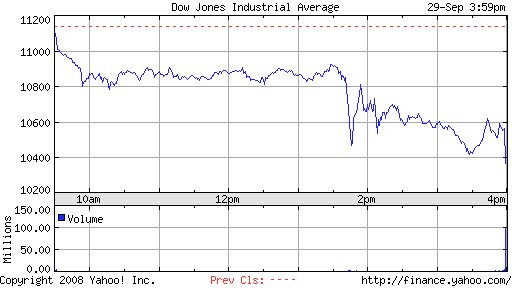
Eddy Elfenbein, September 29th, 2008 at 9:17 pmToday was the Dow’s worst point decline ever. The decline amounted to 777.68 points which is more than the Dow was worth at its 1982 low (btw, the Nasdaq closed at 1983 today). On a percentage basis, the Dow lost 6.98%.
Think about this: The sell-off erased $1.2 trillion off the stock market which was in response to a bailout plan of $700 billion.
The S&P 500 lost 106.62 points which is a total of 8.79%. That’s unusual that the Dow held up so much better than the S&P. Our Buy List was “only” down 6.11%.
By percentage terms, this was the worst selloff for the S&P 500 since 1987. My data only goes back to 1950, so it’s the second-worse sell-off since then.
By my records, this is 21st worst percentage decline for the Dow since the index began in 1896. Although, I saw a report from AP saying it was the 17th worst. The Christian Science Monitor said it was the 18th worst.
-
HR 3997
Eddy Elfenbein, September 29th, 2008 at 3:33 pmWell, I guess they were right..it was a partisan vote. Large sections of both parties voted against the bill. The Democrats voted 140-95. The Republicans voted 65-133.
Here’s the roll call. -
Crossing Wall Street: Tomorrow’s News Today, and Cheaper
Eddy Elfenbein, September 29th, 2008 at 3:25 pmI’m not going to say I called it. But I did, in fact, call it:
I’m going to be the first to call it, this bailout plan is going down. I don’t know how or when, but I don’t see this thing lasting. At best, it’s going to be dramatically revised.
The plan has all the hallmarks of something the American public hates. It’s too expensive. It’s secretive…we just woke up one day and were told we needed it. We don’t know if it will work. It seems un-American. -
The Nayes Have It
Eddy Elfenbein, September 29th, 2008 at 2:32 pmThe bailout package goes down 205-228. Ultimately, I think the “or else” predictions weren’t credible.
-
Should Lehman Have Been Allowed to Fail?
Eddy Elfenbein, September 29th, 2008 at 12:02 pmI certainly though so, but now the evidence may point the other way:
Lehman’s bankruptcy filing in the early hours of Monday, Sept. 15, sparked a chain reaction that sent credit markets into disarray. It accelerated the downward spiral of giant U.S. insurer American International Group Inc. and precipitated losses for everyone from Norwegian pensioners to investors in the Reserve Primary Fund, a U.S. money-market mutual fund that was supposed to be as safe as cash. Within days, the chaos enveloped even Wall Street pillars Goldman Sachs Group Inc. and Morgan Stanley. Alarmed U.S. officials rushed to unveil a more systemic solution to the crisis, leading to Sunday’s agreement with congressional leaders on a $700 billion financial-markets bailout plan.
The genesis and aftermath of Lehman’s downfall illustrate the difficult position policy makers are in as they grapple with a deepening financial crisis. They don’t want to be seen as too willing to step in and save financial institutions that got into trouble by taking big risks. But in an age where markets, banks and investors are linked through a web of complex and opaque financial relationships, the pain of letting a large institution go has proved almost overwhelming.
In hindsight, some critics say the systemic crisis that has emerged since the Lehman collapse could have been avoided if the government had stepped in. Before Lehman, federal officials had dealt with a series of financial brushfires in a way designed to keep troubled institutions such as Fannie Mae, Freddie Mac and Bear Stearns Cos. in business. Judging them as too big to fail, officials committed billions of taxpayer dollars to prop them up. Not so Lehman.One of the major problems with this mess is that we don’t know what we don’t know. If we had saved Lehman, would it have made things much better?
-
A Vote is Due Today
Eddy Elfenbein, September 29th, 2008 at 10:22 amIt looks like the House will vote today on the bailout plan. You can read the bill here. The market, however, is not in a good mood today. Ultimately, I’m sure the House will pass the plan. If credit markets recover, however is another matter.
-
Archives
- October 2026
- September 2026
- August 2026
- July 2026
- June 2026
- May 2026
- April 2026
- March 2026
- February 2026
- January 2026
- December 2025
- November 2025
- October 2025
- September 2025
- August 2025
- July 2025
- June 2025
- May 2025
- April 2025
- March 2025
- February 2025
- January 2025
- December 2024
- November 2024
- October 2024
- September 2024
- August 2024
- July 2024
- June 2024
- May 2024
- April 2024
- March 2024
- February 2024
- January 2024
- December 2023
- November 2023
- October 2023
- September 2023
- August 2023
- July 2023
- June 2023
- May 2023
- April 2023
- March 2023
- February 2023
- January 2023
- December 2022
- November 2022
- October 2022
- September 2022
- August 2022
- July 2022
- June 2022
- May 2022
- April 2022
- March 2022
- February 2022
- January 2022
- December 2021
- November 2021
- October 2021
- September 2021
- August 2021
- July 2021
- June 2021
- May 2021
- April 2021
- March 2021
- February 2021
- January 2021
- December 2020
- November 2020
- October 2020
- September 2020
- August 2020
- July 2020
- June 2020
- May 2020
- April 2020
- March 2020
- February 2020
- January 2020
- December 2019
- November 2019
- October 2019
- September 2019
- August 2019
- July 2019
- June 2019
- May 2019
- April 2019
- March 2019
- February 2019
- January 2019
- December 2018
- November 2018
- October 2018
- September 2018
- August 2018
- July 2018
- June 2018
- May 2018
- April 2018
- March 2018
- February 2018
- January 2018
- December 2017
- November 2017
- October 2017
- September 2017
- August 2017
- July 2017
- June 2017
- May 2017
- April 2017
- March 2017
- February 2017
- January 2017
- December 2016
- November 2016
- October 2016
- September 2016
- August 2016
- July 2016
- June 2016
- May 2016
- April 2016
- March 2016
- February 2016
- January 2016
- December 2015
- November 2015
- October 2015
- September 2015
- August 2015
- July 2015
- June 2015
- May 2015
- April 2015
- March 2015
- February 2015
- January 2015
- December 2014
- November 2014
- October 2014
- September 2014
- August 2014
- July 2014
- June 2014
- May 2014
- April 2014
- March 2014
- February 2014
- January 2014
- December 2013
- November 2013
- October 2013
- September 2013
- August 2013
- July 2013
- June 2013
- May 2013
- April 2013
- March 2013
- February 2013
- January 2013
- December 2012
- November 2012
- October 2012
- September 2012
- August 2012
- July 2012
- June 2012
- May 2012
- April 2012
- March 2012
- February 2012
- January 2012
- December 2011
- November 2011
- October 2011
- September 2011
- August 2011
- July 2011
- June 2011
- May 2011
- April 2011
- March 2011
- February 2011
- January 2011
- December 2010
- November 2010
- October 2010
- September 2010
- August 2010
- July 2010
- June 2010
- May 2010
- April 2010
- March 2010
- February 2010
- January 2010
- December 2009
- November 2009
- October 2009
- September 2009
- August 2009
- July 2009
- June 2009
- May 2009
- April 2009
- March 2009
- February 2009
- January 2009
- December 2008
- November 2008
- October 2008
- September 2008
- August 2008
- July 2008
- June 2008
- May 2008
- April 2008
- March 2008
- February 2008
- January 2008
- December 2007
- November 2007
- October 2007
- September 2007
- August 2007
- July 2007
- June 2007
- May 2007
- April 2007
- March 2007
- February 2007
- January 2007
- December 2006
- November 2006
- October 2006
- September 2006
- August 2006
- July 2006
- June 2006
- May 2006
- April 2006
- March 2006
- February 2006
- January 2006
- December 2005
- November 2005
- October 2005
- September 2005
- August 2005
- July 2005
 Eddy Elfenbein is a Washington, DC-based speaker, portfolio manager and editor of the blog Crossing Wall Street. His