Archive for 2009
-
Single Letter Ticker Symbols
Eddy Elfenbein, November 6th, 2009 at 6:17 pmCongratulations to Hyatt Hotels (H) on their recent IPO. They had the rare honor of getting a single-letter ticker symbol. There are only six left — I, J P, U, W and Z.
For possible future reference, the symbol CWS is also open. -
Bernstein’s Target for AMZN = $160
Eddy Elfenbein, November 6th, 2009 at 3:55 pmReally? Is that 160 U.S. dollars, or is it pesos?
I’ve been totally and completely wrong on Amazon (AMZN) but I won’t give in so easily. I do not get it’s current price of $125 which is 50 times next year’s earnings. The analyst at Bernstein sees it going to $160. -
Montana Farmers Fear a Buffett ‘Dictatorship’
Eddy Elfenbein, November 6th, 2009 at 3:26 pmThe WSJ reports on the fear of an Omahalebensraum:
Few states have more at stake in Warren Buffett’s acquisition of Burlington Northern Santa Fe than Montana. The company owns 90% of the state’s tracks, which are the primarily means for Montana farmers and coal miners to ship their goods across the country.
To get a sense of how the deal is being received in the Big Sky state, Deal Journal reached out to Alan Merrill, president Montana Farmers Union, who can watch Burlington Northern’s grain cars rumble along outside his Great Falls, Mont., office six or seven times a day.
For years, Merrill says, the state’s 11,000 farmers have complained about the monopoly that Burlington Northern holds over rail shipping in Montana. He hopes Buffett, who lives in the middle of corn-growing country in Omaha, Neb., will be sympathetic to farmers’ concerns about what they consider to be high rates on their barley and wheat shipments. -
Those Evil Drug Companies
Eddy Elfenbein, November 6th, 2009 at 12:05 pmBusiness Week reports:
On Oct. 8, Senator Al Franken (D-Minn.) introduced a bill proposing that drugmakers no longer be allowed to deduct marketing expenses from their taxes, as companies generally can. “This legislation will remove these benefits so pharmaceutical companies can focus on developing new drugs, not excessive marketing schemes,” Franken’s office said in a statement.
Developing new drugs is a great idea! Of course, that will requite money. Now where would that come from?
-
Today’s Jobs Report
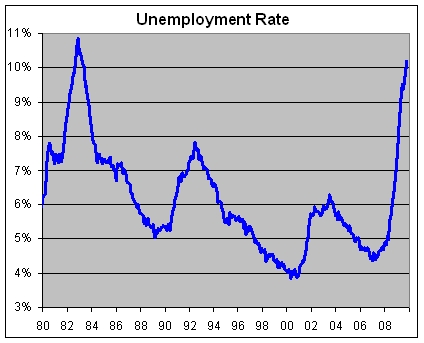
Eddy Elfenbein, November 6th, 2009 at 9:25 amUgh! Today’s jobs report was ugly. Hideous.
The nation’s unemployment rate is now up to 10.2% which is the highest in 26 years. Even though the economy may be growing, we’re not creating jobs. Here are some stats to consider. Over the past two years, the number of unemployed has jumped by 8.4 million to 15.7 million. The number of employed has dropped by 7.6 million and only 0.8 million have joined the workforce. Add the two together and you get the 8.4 million increase in unemployment.
However, that 0.8 million increase in the workforce is puny. During the same time, the civilian population grew by 3.8 million, meaning only about one-fifth of the increase joined the jobs market compared with the historical average of three-fifths.
The ratio of employed to the population is now 58.45%. Nine years ago, it was 64.24%. If we had the same rate today, over 13.6 million more people would be employed.
-
NYC Election By Precinct
Eddy Elfenbein, November 5th, 2009 at 11:27 pmThe New York Times has a great interactive map of the New York City Mayoral election at the precinct level. I love this kind of stuff. I could spend hours browsing through the boroughs.
I’m curious what the average victory margin is. After looking at the map, it seems like most them go 80% or more for either Bloomberg or Thompson. I noticed that one precinct in Brighton Beach voted for Bloomberg by 216 to 4. That’s so extreme that it makes me less likely to think it’s fraudulent. Cheaters aren’t that bold. Not too far away, there’s a precinct that voted for Thompson 212 to 22.
Ah, New York! You’re one big finely sliced Apple. -
Your Government at Work
Eddy Elfenbein, November 5th, 2009 at 6:40 pmConsumers have been saved from the evils of a corporate monopoly — in the pretzel industry.
Over in Europe, regulators are playing it tough with the likes of Sun Microsystems and Intel.
Here in the U.S., anti-trust regulators are cracking down on pretzels?
This afternoon, the small, family-owned pretzel company, Synders of Hanover, Penn., said it was scuttling its plans to acquire crosstown snack food maker Utz Quality Foods Inc. because it didn’t want to bare the cost of an escalating inquiry in into the deal by the Federal Trade Commission. According to Utz, the FTC had made a second request for information about its business.
“We knew that participating in another FTC request would put a strain on our company and ultimately distract us from what we are here to do every day, which is to provide high-quality snacks to our customers and serve our community,” said Utz chief executive Michael Rice in a statement.(HT: Vince Veneziani)
-
See a Pattern?
Eddy Elfenbein, November 5th, 2009 at 2:01 pmHere’s the S&P 500. I think I can make out a pattern of four rising humpy things. I have no idea what it means, but there you go.
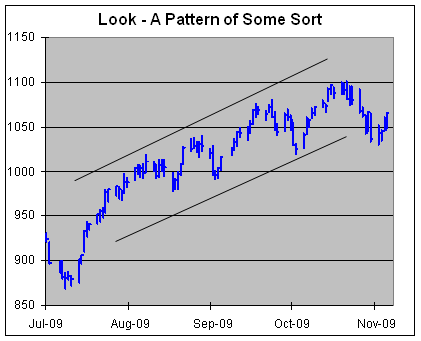
If the current humpy thing doesn’t pass the last humpy thing, then that probably won’t be good*. Unless of course, there’s a new and higher humpy thing. Bottom line: It remains to be seen.
* This how all technical analysis sounds to me. -
Sell In May and Go Away Didn’t Work
Eddy Elfenbein, November 5th, 2009 at 12:50 pmFrom Gary Alexander:
One of the most widely-touted market calendar myths is that you should “sell in May and go away.” This system apparently worked well from 1950 until 2004. The theory runs like this: Brokers love to enjoy the summer market doldrums at the beach and then come back after Labor Day to sell stocks, causing a scary decline. Then, in November, they buy back for year-end “window dressing” in a “Santa Claus Rally.”
According to the Stock Trader’s Almanac (2006 edition), the 55-year Dow gain (1950 to 2004) from November 1 to April 30 was nearly 50-fold (or +7.9% per year, on average), while you actually lost money (-5%) in the May 1 to October 31 period. Final tally: +4,900% in cold months vs. -5% in warm months. Practically, this means investing in stocks November 1 and switching to fixed income on May 1.
Sounds convincing! Alas, this hoary old theory didn’t work in 2009: The S&P 500 gained 18.7% from May to October, even including the disappointing 250-point Dow drop last Friday. In the previous six months – in the supposedly superior November 1 to April 30 period – the S&P fell 9.9%. Over the past seven years, the November-April gains have averaged 1%, while the May-October gains averaged +3.3%.
So, ask yourself: Do you really want to throw away the 3.3% average recent gains from May 1 to October 31, based on a theory that worked last century? And do bank CDs or Treasury bonds on the “sidelines” offer you anything better than a 6.6% annual rate? And don’t forget the tax consequences of short-term trading. If you’re trading in a taxable account, six-month switches can decimate your after-tax gains.
My answer: Don’t sell in May, and don’t go away. Switching sectors might be prudent, but not leaving stocks altogether. However, if you’re looking for a good time to buy, November is still #1, historically. -
Earnings from Moog and Becton, Dickinson
Eddy Elfenbein, November 5th, 2009 at 12:08 pmWe had two more Buy List earnings reports. Becton, Dickinson (BDX), which I like a lot, saw its earnings rise to $1.25 a share for its fiscal fourth quarter which matched estimates. They made $1.11 for last year’s fourth quarter. Wall Street expects earnings next year of $5.09 which works out to a growth rate of 3%. This means the stock is currently going for about 13 times earnings.
As I’ve mentioned before, I haven’t been very pleased with Moog (MOG-A) this year. The stock is down about 30% and it’s the worst performer on the Buy List. For this past quarter, the company earned 35 cents a share which was less than half what they made for last year’s third quarter. They missed Wall Street’s call by a penny a share. For the second quarter, they missed the Street by 10 cents a share.
The only good news is that Moog sees EPS ranging between $2.15 and $2.35 for next year, which means the stock is somewhat reasonably priced.
-
Archives
- September 2026
- August 2026
- July 2026
- June 2026
- May 2026
- April 2026
- March 2026
- February 2026
- January 2026
- December 2025
- November 2025
- October 2025
- September 2025
- August 2025
- July 2025
- June 2025
- May 2025
- April 2025
- March 2025
- February 2025
- January 2025
- December 2024
- November 2024
- October 2024
- September 2024
- August 2024
- July 2024
- June 2024
- May 2024
- April 2024
- March 2024
- February 2024
- January 2024
- December 2023
- November 2023
- October 2023
- September 2023
- August 2023
- July 2023
- June 2023
- May 2023
- April 2023
- March 2023
- February 2023
- January 2023
- December 2022
- November 2022
- October 2022
- September 2022
- August 2022
- July 2022
- June 2022
- May 2022
- April 2022
- March 2022
- February 2022
- January 2022
- December 2021
- November 2021
- October 2021
- September 2021
- August 2021
- July 2021
- June 2021
- May 2021
- April 2021
- March 2021
- February 2021
- January 2021
- December 2020
- November 2020
- October 2020
- September 2020
- August 2020
- July 2020
- June 2020
- May 2020
- April 2020
- March 2020
- February 2020
- January 2020
- December 2019
- November 2019
- October 2019
- September 2019
- August 2019
- July 2019
- June 2019
- May 2019
- April 2019
- March 2019
- February 2019
- January 2019
- December 2018
- November 2018
- October 2018
- September 2018
- August 2018
- July 2018
- June 2018
- May 2018
- April 2018
- March 2018
- February 2018
- January 2018
- December 2017
- November 2017
- October 2017
- September 2017
- August 2017
- July 2017
- June 2017
- May 2017
- April 2017
- March 2017
- February 2017
- January 2017
- December 2016
- November 2016
- October 2016
- September 2016
- August 2016
- July 2016
- June 2016
- May 2016
- April 2016
- March 2016
- February 2016
- January 2016
- December 2015
- November 2015
- October 2015
- September 2015
- August 2015
- July 2015
- June 2015
- May 2015
- April 2015
- March 2015
- February 2015
- January 2015
- December 2014
- November 2014
- October 2014
- September 2014
- August 2014
- July 2014
- June 2014
- May 2014
- April 2014
- March 2014
- February 2014
- January 2014
- December 2013
- November 2013
- October 2013
- September 2013
- August 2013
- July 2013
- June 2013
- May 2013
- April 2013
- March 2013
- February 2013
- January 2013
- December 2012
- November 2012
- October 2012
- September 2012
- August 2012
- July 2012
- June 2012
- May 2012
- April 2012
- March 2012
- February 2012
- January 2012
- December 2011
- November 2011
- October 2011
- September 2011
- August 2011
- July 2011
- June 2011
- May 2011
- April 2011
- March 2011
- February 2011
- January 2011
- December 2010
- November 2010
- October 2010
- September 2010
- August 2010
- July 2010
- June 2010
- May 2010
- April 2010
- March 2010
- February 2010
- January 2010
- December 2009
- November 2009
- October 2009
- September 2009
- August 2009
- July 2009
- June 2009
- May 2009
- April 2009
- March 2009
- February 2009
- January 2009
- December 2008
- November 2008
- October 2008
- September 2008
- August 2008
- July 2008
- June 2008
- May 2008
- April 2008
- March 2008
- February 2008
- January 2008
- December 2007
- November 2007
- October 2007
- September 2007
- August 2007
- July 2007
- June 2007
- May 2007
- April 2007
- March 2007
- February 2007
- January 2007
- December 2006
- November 2006
- October 2006
- September 2006
- August 2006
- July 2006
- June 2006
- May 2006
- April 2006
- March 2006
- February 2006
- January 2006
- December 2005
- November 2005
- October 2005
- September 2005
- August 2005
- July 2005
 Eddy Elfenbein is a Washington, DC-based speaker, portfolio manager and editor of the blog Crossing Wall Street. His