CWS Market Review – February 3, 2026
(This is the free version of CWS Market Review. If you like what you see, then please sign up for the premium newsletter for $20 per month or $200 for the whole year. If you sign up today, you can see our two reports, “Your Handy Guide to Stock Orders” and “How Not to Get Screwed on Your Mortgage.”)
Trump Selects Kevin Warsh to Lead the Fed
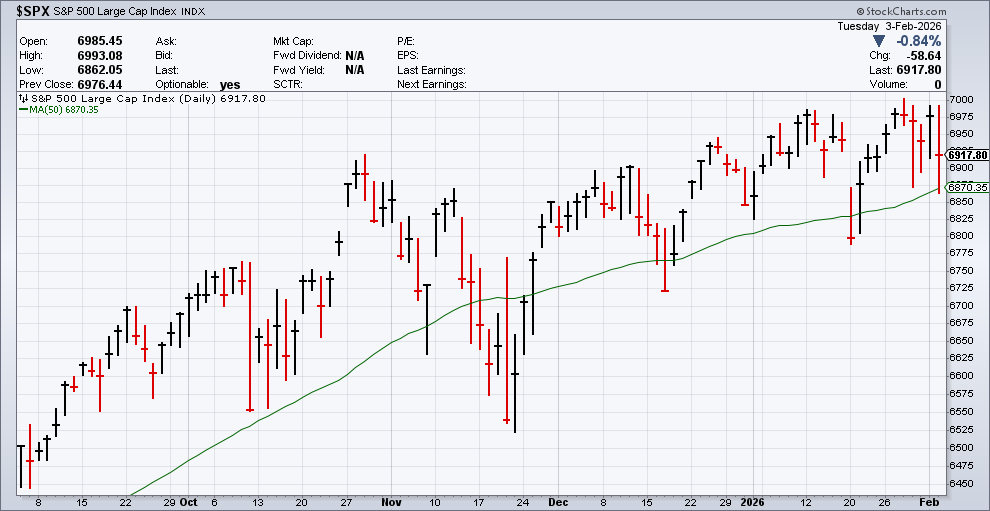
One week ago, the S&P 500 closed at a new all-time high. Since then, the index broke above 7,000, but it hasn’t been able to close above that level.
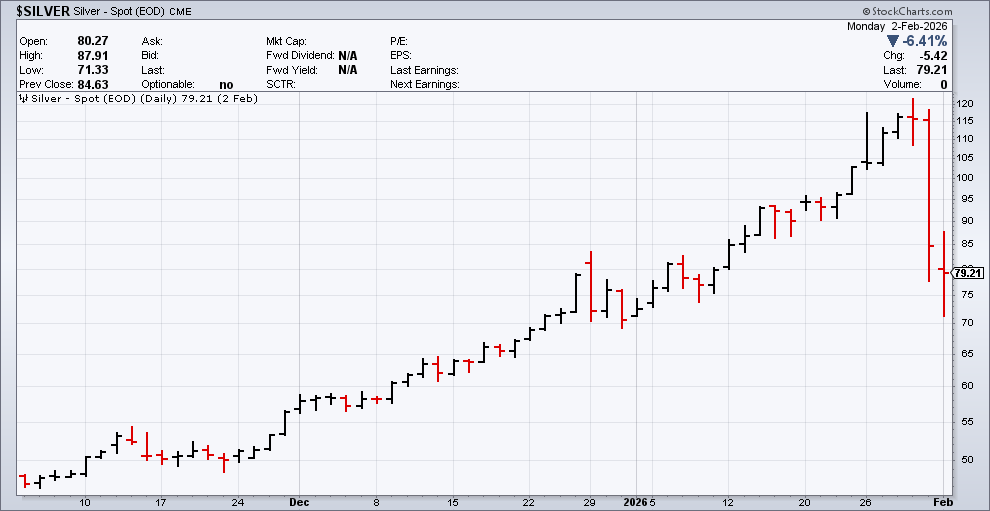
In last week’s issue, I mentioned the big bull market in silver. Well, that came to an abrupt end on Friday as the price of silver plunged on world markets.
By the end of Friday’s trading, silver had lost 27%. That was the white metal’s biggest one-day loss in 45 years. Silver dropped again on Monday. Last week, silver got as high as $120 an ounce, then as low as $71 an ounce. Gold dropped sharply as well.
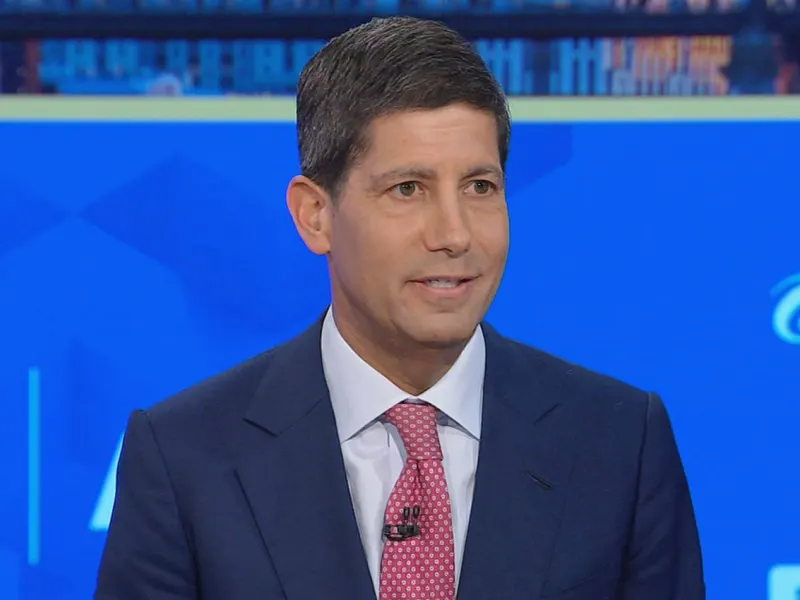
So what caused gold and silver to fall off a cliff? On Friday, President Trump nominated Kevin Warsh to be the next chairman of the Federal Reserve. He’s seen as a more “hawkish” candidate than what had been expected. Gold and silver love lower interest rates, but higher rates are their kryptonite.
In many ways, the selection of Warsh is both a conventional choice and a very unconventional choice. Warsh is largely within the mainstream of economic thought. Plus, he’s already served on the Federal Reserve board. In fact, he was the youngest member in the Fed’s history, and he helped shape the Fed’s response to the financial crisis. Warsh is currently a senior fellow at the Hoover Institution at Stanford.
Warsh still needs to be confirmed by the Senate but that shouldn’t be a major obstacle, and the betting markets appear to agree. If confirmed, Warsh would be leading a Fed that’s at an important juncture. Jerome Powell has been harshly criticized by President Trump who wants to see much lower interest rates. While inflation has subsided in recent months, it’s still above the Fed’s target of 2%. Jerome Powell’s term ends in May.
Warsh will likely face some doubts from members of Congress as to his independence from political pressure. Historically, the Fed has tried to distance itself from political pressures, but these efforts have not always been successful.
Of course, the Fed is also facing an investigation by the Justice Department for actions surrounding the Fed’s new building. I suspect this won’t get far. Thom Tillis, a Republican senator of North Carolina, said he wouldn’t support any nominee until the DOJ’s investigation has concluded.
For much of his career, Warsh was been seen as an inflation hawk, meaning someone who has favored higher interest rates. That probably helped cause the big drop in gold and silver. Only recently has Warsh been critical of higher rates. He has also said that tariffs will not lead to higher inflation.
On Truth Social, President Trump said of Warsh, “He will go down as one of the GREAT Fed Chairmen, maybe the best.” Bear in mind that we don’t get new Fed Chairs very often. In the last 75 years, there have only been eight Fed chairs.
President Trump has often said that he wanted to fire Jerome Powell, but that’s a tricky area legally. The president probably can’t fire a Fed chair over a simple policy dispute. In fact, the Supreme Court is currently looking at the case of Lisa Cook, a Fed governor, whom Trump wanted to fire from the Fed. The Supreme Court appears to be leaning against Trump’s decision.
We should also remember that the Federal Reserve isn’t just one person. The Federal Open Market Committee, which sets interest rate policy, is a 19-member committee. Even with that, only 12 members are voting members. The 12 are composed of the seven Federal Reserve board members plus five regional bank presidents. The head of the New York Fed is a permanent member, and the four other seats rotate.
The Fed recently voted to keep interest rates between 3.5% and 3.75%. Two members dissented. They wanted lower rates immediately. Futures traders currently expect the Fed to cut rates two more times this year.
Mr. Warsh has been very critical of the Fed in recent years. In particular, he blames the Fed for missing the surge in inflation during Covid. He was also against the Fed’s quantitative easing policies.
Now here’s where things get interesting. Warsh’s father-in-law is Ronald Lauder who is an heir to the Estee Lauder fortune. Lauder is estimated to be worth $5 billion. He’s been a big supporter of President Trump and a major financial backer of Republican candidates. In 1989, he ran for mayor of New York City but lost in the primary to Rudy Giuliani. It’s been reported that he encouraged Donald Trump to buy Greenland. Obviously, Warsh can’t be assumed to share his father-in-law’s views, but I’m sure Congress will ask him.
I expect Warsh to be confirmed by the Senate and he will generally try to steer the Fed toward lowering interest rates, but Warsh may not always get his way. Historically, reality has an odd way of interfering with the bold plans of money politics.
Speaking of which, my friend Gary Alexander notes that this time of year has been notable for several important events in the history of gold, silver and money. Here’s a sample:
At 9:30 on February 5, 1894, J.P. Morgan stormed into President Cleveland’s White House office and demanded an audience. After cooling his heels while Cleveland called the Treasury for details on what this invasion might mean, Morgan was ushered in. By now, the U.S. only had $9-million in gold to meet claims, and there were $12-million in current drafts against a shrinking supply, so President Cleveland sheepishly asked Morgan, “Well, sir, what would you suggest?” This comment passed the power of the purse from the White House to Morgan and Wall Street. In short order, Morgan saved the Treasury with an infusion of gold from London. From 1895 to his death in 1913, Morgan served as America’s central banker – and he did a better job than the Federal Reserve did in its first 20-years, from 1913 to 1933.
This Friday, the government will release the January jobs report. The last few job reports haven’t been that good. In its last policy statement, the Fed noted that “job gains have remained low, and the unemployment rate has shown some signs of stabilization.”
The ADP payroll report is due out tomorrow. For that report, Wall Street expects to see a gain of 45,000 jobs. For Friday, economists estimate that the economy created 60,000 net new jobs in January. They’re also pegging the unemployment rate at 4.4%.
For hourly average earnings, economists expect to see a gain of 0.3% for last month, and a 3.7% gain for the last 12 months. This is an important stat. Wage growth has a way of quickly becoming business revenue and that becomes a profit. If employment continues to be weak, that may help the interest rate doves on the FOMC.
This continues to be a good earnings season for Wall Street. The S&P 500 is on pace to post earnings growth of 11.9% for Q4. If this holds up, it will be the fifth quarter in a row that the index has delivered a double-digit increase in profits. The last time it reported five straight quarters of 10% or more earnings growth was in 2017 and 2018. Analysts currently expect the S&P 500 to have double-digit earnings growth for all four quarters of 2026.
Analysts have been busy raising their Q4 earnings estimates. At the end of Q3, Wall Street had been expecting earnings growth for Q4 of just 7.2%. By the end of Q4, that forecast was raised to 8.34%. Now it’s at 11.9%. For the tech sector, Q4 earnings growth is tracking at 29.8%.
The overall net profit margin is currently running at 13.2%. That’s very high. If it holds, it will stand as the highest profit margin since FactSet started tracking this data in 2009. The current record is 13.1% which happened last quarter.
Technology has increased its profit margin from 26.8% last year to 29.0% this year. Industrials are up to 12.5% from 10.7% last year. Wall Street expects to see profit margins get even higher. By Q3, analysts expect profits to be over 14%.
That’s all for now. Expect more earnings news this week. We also have the big jobs report on Friday. I’ll have more for you in the next issue of CWS Market Review.
– Eddy
P.S. From S&P Global Intelligence: Over the past 59 years, the median combined final score of the Super Bowl has been 47 points. When the two teams score 47 or more points, the S&P 500 posts an average return of +17.8%. When the combined score is less than 47 points, the average return is only +6.6%.
Go offense!
Posted by Eddy Elfenbein on February 3rd, 2026 at 5:40 pm
The information in this blog post represents my own opinions and does not contain a recommendation for any particular security or investment. I or my affiliates may hold positions or other interests in securities mentioned in the Blog, please see my Disclaimer page for my full disclaimer.
-
Archives
- July 2026
- June 2026
- May 2026
- April 2026
- March 2026
- February 2026
- January 2026
- December 2025
- November 2025
- October 2025
- September 2025
- August 2025
- July 2025
- June 2025
- May 2025
- April 2025
- March 2025
- February 2025
- January 2025
- December 2024
- November 2024
- October 2024
- September 2024
- August 2024
- July 2024
- June 2024
- May 2024
- April 2024
- March 2024
- February 2024
- January 2024
- December 2023
- November 2023
- October 2023
- September 2023
- August 2023
- July 2023
- June 2023
- May 2023
- April 2023
- March 2023
- February 2023
- January 2023
- December 2022
- November 2022
- October 2022
- September 2022
- August 2022
- July 2022
- June 2022
- May 2022
- April 2022
- March 2022
- February 2022
- January 2022
- December 2021
- November 2021
- October 2021
- September 2021
- August 2021
- July 2021
- June 2021
- May 2021
- April 2021
- March 2021
- February 2021
- January 2021
- December 2020
- November 2020
- October 2020
- September 2020
- August 2020
- July 2020
- June 2020
- May 2020
- April 2020
- March 2020
- February 2020
- January 2020
- December 2019
- November 2019
- October 2019
- September 2019
- August 2019
- July 2019
- June 2019
- May 2019
- April 2019
- March 2019
- February 2019
- January 2019
- December 2018
- November 2018
- October 2018
- September 2018
- August 2018
- July 2018
- June 2018
- May 2018
- April 2018
- March 2018
- February 2018
- January 2018
- December 2017
- November 2017
- October 2017
- September 2017
- August 2017
- July 2017
- June 2017
- May 2017
- April 2017
- March 2017
- February 2017
- January 2017
- December 2016
- November 2016
- October 2016
- September 2016
- August 2016
- July 2016
- June 2016
- May 2016
- April 2016
- March 2016
- February 2016
- January 2016
- December 2015
- November 2015
- October 2015
- September 2015
- August 2015
- July 2015
- June 2015
- May 2015
- April 2015
- March 2015
- February 2015
- January 2015
- December 2014
- November 2014
- October 2014
- September 2014
- August 2014
- July 2014
- June 2014
- May 2014
- April 2014
- March 2014
- February 2014
- January 2014
- December 2013
- November 2013
- October 2013
- September 2013
- August 2013
- July 2013
- June 2013
- May 2013
- April 2013
- March 2013
- February 2013
- January 2013
- December 2012
- November 2012
- October 2012
- September 2012
- August 2012
- July 2012
- June 2012
- May 2012
- April 2012
- March 2012
- February 2012
- January 2012
- December 2011
- November 2011
- October 2011
- September 2011
- August 2011
- July 2011
- June 2011
- May 2011
- April 2011
- March 2011
- February 2011
- January 2011
- December 2010
- November 2010
- October 2010
- September 2010
- August 2010
- July 2010
- June 2010
- May 2010
- April 2010
- March 2010
- February 2010
- January 2010
- December 2009
- November 2009
- October 2009
- September 2009
- August 2009
- July 2009
- June 2009
- May 2009
- April 2009
- March 2009
- February 2009
- January 2009
- December 2008
- November 2008
- October 2008
- September 2008
- August 2008
- July 2008
- June 2008
- May 2008
- April 2008
- March 2008
- February 2008
- January 2008
- December 2007
- November 2007
- October 2007
- September 2007
- August 2007
- July 2007
- June 2007
- May 2007
- April 2007
- March 2007
- February 2007
- January 2007
- December 2006
- November 2006
- October 2006
- September 2006
- August 2006
- July 2006
- June 2006
- May 2006
- April 2006
- March 2006
- February 2006
- January 2006
- December 2005
- November 2005
- October 2005
- September 2005
- August 2005
- July 2005
 Eddy Elfenbein is a Washington, DC-based speaker, portfolio manager and editor of the blog Crossing Wall Street. His