CWS Market Review – March 10, 2026
(This is the free version of CWS Market Review. If you like what you see, then please sign up for the premium newsletter for $20 per month or $200 for the whole year. If you sign up today, you can see our two reports, “Your Handy Guide to Stock Orders” and “How Not to Get Screwed on Your Mortgage.”)
We’re now in the second week of Operation Epic Fury, and the economic fallout is becoming very apparent. The most prominent is certainly the big rise in the price of oil.
The Strait of Hormuz is basically shut down and roughly one-fifth of the world’s oil supply goes through there, as does a lot of fertilizer.
Since the start of military operations, oil has rallied significantly. The price for one barrel of West Texas crude nearly got to $120. That’s up from $57 per barrel at the start of the year. Oil fell sharply on Tuesday after President Trump said the fighting is “going to be ended soon.”
I’ll caution you that traders tend to move fast and quickly overdo it. If the war ends suddenly, then I’d expect oil to pull back, and it could be quick.
On social media, the President Trump wrote:
Short term oil prices, which will drop rapidly when the destruction of the Iran nuclear threat is over, is a very small price to pay for U.S.A., and World, Safety and Peace. ONLY FOOLS WOULD THINK DIFFERENTLY!President DJT
We’ll see, but higher oil prices are already working their way through the economy. In economic terms, rising oil prices act like a tax on consumer spending. Over the past week, the average price at the pump has increased by 51 cents per gallon.
Here’s a look at West Texas crude:

During the day yesterday, the S&P 500 drifted as low as 6,636. That’s more than 5.2% below its intra-day high from a little over one month ago. It’s certainly not a gigantic move, but it’s very different from most of the behavior of the market over the last year.
Overall, the market has been relatively calm given the headlines this week. That’s not unusual. After Pearl Harbor, the stock market slid until April 1942. The ultimate low came on April 28, 1942, 10 days after Jimmy Doolittle’s daring raid over Tokyo. After that, the market had an incredible run for the next 24 years.
As it turns out, yesterday was the 17th anniversary of the big 2009 low. That was probably the best buying opportunity in the last 40 years. Since then, the S&P 500 Total Return Index (which includes dividends) is up 13-fold. If you recall, there were a lot of negative voices back then.

Americans seem more pessimistic on the economy than the numbers would suggest. Pew Research recently found that just 28% of Americans rate the economy as excellent or good while 72% rate it fair or poor.
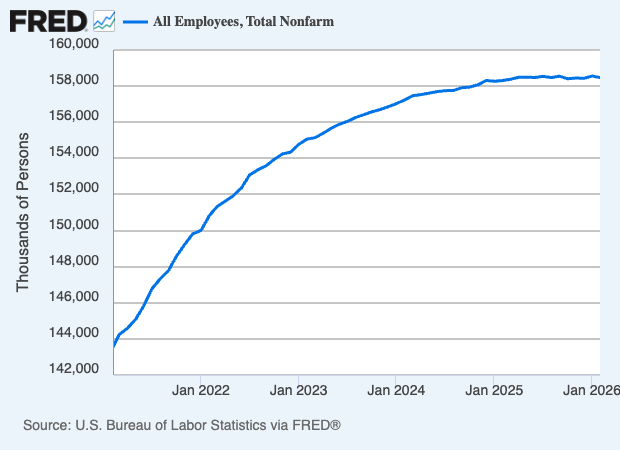
Last Friday, we got the big jobs report for February. The Labor Department said that the number of jobs in the country fell by 92,000 in February. That was below Wall Street’s estimate for a gain of 50,000 jobs. Some of this can be blamed on the weather and the government shutdown, but not all of it. No matter how you slice it, this was not a good jobs report.
On top of that, the jobs number for January was revised lower to a gain of 126,000 jobs. The economy has now shed jobs in three of the last five months. In December, the economy lost 17,000 jobs. This chart shows that job growth is cresting.
One good piece of news is that hourly wages rose by 0.4% in February. Wall Street had been expecting an increase of just 0.1%. Over the last year, wages rose by 3.8% which is more than inflation. I thought it was interesting that Kohl’s (KSS) reported earnings this morning and its revenue number was lower than expected. The retailer has been working hard to turn itself around.
The jobs report also said that the unemployment rate ticked up to 4.4%. The unemployment rate is close to a five-year high. The broader U-6 rate fell to 7.9%. The labor force participation rate fell to 62%, which is its lowest since December 2021.
The jobs market has been helped by growth in the number of jobs in the healthcare sector, but even that took a hit thanks to a strike at Kaiser Permanente.
Information services, a sector hit by artificial intelligence-related cuts, also lost jobs, down 11,000 as part of a 12-month trend in which the sector has lost an average of 5,000 per month. Manufacturing saw a loss of 12,000, despite tariffs aimed at reshoring jobs from overseas.
Federal government employment also fell, off 10,000 for the month. President Donald Trump’s efforts to pare federal payrolls has seen a slide of 330,000 jobs, or 11% of the total workforce, since October 2024, a few months before Trump took office, according to the BLS.
Transportation and warehousing saw a reduction of 11,000. Social assistance was one of the few sectors posting a gain, up 9,000. The weather-sensitive construction industry lost 11,000 after surging by 48,000 in January.
The Federal Reserve meets again next week, and it’s very doubtful they’ll make any move, up or down, on interest rates. In fact, they probably won’t do anything in April and June as well.
As of now, the expectations are that we’ll get a rate cut in July or September. The curveball is inflation. If the events in Iran lead to a bump in prices, especially a long bump, that could give the Fed cold feet about making any rate cuts for the rest of this year.
We’ll learn more tomorrow when the government releases the inflation report for September. Wall Street expects to see headline and core inflation of 0.2% for February. I hope that would give more heft to the interest rate doves inside the Fed.
Stock Focus: National Presto
I always enjoy bringing little-known stocks to you. This week, I’m featuring National Presto (NPK) of Eau Claire, Wisconsin. The company is now in its 121st year of operations.
Going by the name, you might think National Presto makes equipment for magicians. Not quite. NPK has one of the more unusual business combinations I know of. The company makes small household appliances (slow cookers, fryers, skillets, etc.). They also make ammo for the War Department. National Presto also has a safety business which makes smoke detectors and carbon monoxide alarms.
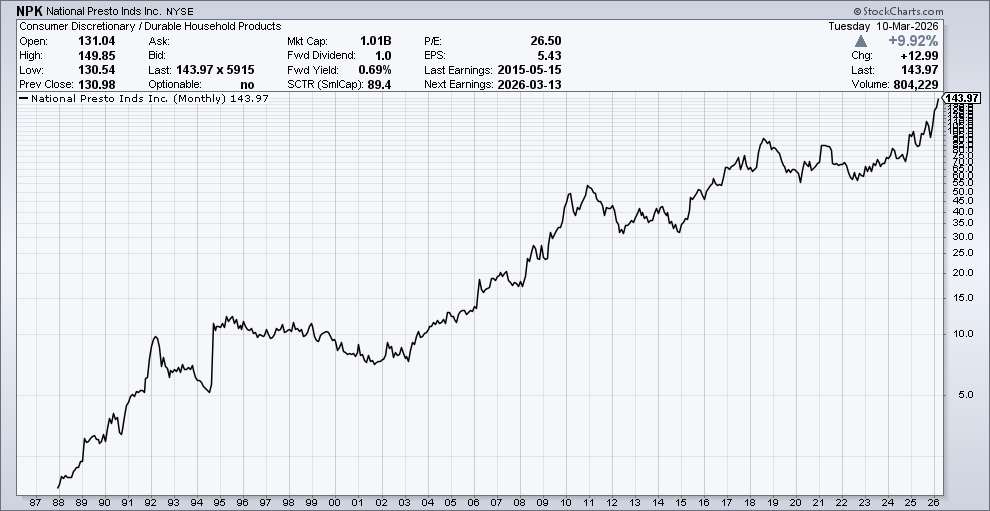
It’s an odd fit, but it seems to work. The shares hit another new all-time high today. Since 1988, shares of NPK are up more than 85-fold. Even with all that growth, NPK still has a market value of $1 billion. Best of all, the stock isn’t followed by a single analyst on Wall Street. The stock is already up nearly 40% this year.
Last year, their defense sales rose by 42%. At the end of the year, their defense business backlog stood at $1.4 billion. That’s up from $1.1 billion one year ago.
That’s all for now. The next jobs report will be due out this Friday, March 13. I’ll have more for you in the next issue of CWS Market Review.
– Eddy
Posted by Eddy Elfenbein on March 10th, 2026 at 6:12 pm
The information in this blog post represents my own opinions and does not contain a recommendation for any particular security or investment. I or my affiliates may hold positions or other interests in securities mentioned in the Blog, please see my Disclaimer page for my full disclaimer.
-
Archives
- October 2026
- September 2026
- August 2026
- July 2026
- June 2026
- May 2026
- April 2026
- March 2026
- February 2026
- January 2026
- December 2025
- November 2025
- October 2025
- September 2025
- August 2025
- July 2025
- June 2025
- May 2025
- April 2025
- March 2025
- February 2025
- January 2025
- December 2024
- November 2024
- October 2024
- September 2024
- August 2024
- July 2024
- June 2024
- May 2024
- April 2024
- March 2024
- February 2024
- January 2024
- December 2023
- November 2023
- October 2023
- September 2023
- August 2023
- July 2023
- June 2023
- May 2023
- April 2023
- March 2023
- February 2023
- January 2023
- December 2022
- November 2022
- October 2022
- September 2022
- August 2022
- July 2022
- June 2022
- May 2022
- April 2022
- March 2022
- February 2022
- January 2022
- December 2021
- November 2021
- October 2021
- September 2021
- August 2021
- July 2021
- June 2021
- May 2021
- April 2021
- March 2021
- February 2021
- January 2021
- December 2020
- November 2020
- October 2020
- September 2020
- August 2020
- July 2020
- June 2020
- May 2020
- April 2020
- March 2020
- February 2020
- January 2020
- December 2019
- November 2019
- October 2019
- September 2019
- August 2019
- July 2019
- June 2019
- May 2019
- April 2019
- March 2019
- February 2019
- January 2019
- December 2018
- November 2018
- October 2018
- September 2018
- August 2018
- July 2018
- June 2018
- May 2018
- April 2018
- March 2018
- February 2018
- January 2018
- December 2017
- November 2017
- October 2017
- September 2017
- August 2017
- July 2017
- June 2017
- May 2017
- April 2017
- March 2017
- February 2017
- January 2017
- December 2016
- November 2016
- October 2016
- September 2016
- August 2016
- July 2016
- June 2016
- May 2016
- April 2016
- March 2016
- February 2016
- January 2016
- December 2015
- November 2015
- October 2015
- September 2015
- August 2015
- July 2015
- June 2015
- May 2015
- April 2015
- March 2015
- February 2015
- January 2015
- December 2014
- November 2014
- October 2014
- September 2014
- August 2014
- July 2014
- June 2014
- May 2014
- April 2014
- March 2014
- February 2014
- January 2014
- December 2013
- November 2013
- October 2013
- September 2013
- August 2013
- July 2013
- June 2013
- May 2013
- April 2013
- March 2013
- February 2013
- January 2013
- December 2012
- November 2012
- October 2012
- September 2012
- August 2012
- July 2012
- June 2012
- May 2012
- April 2012
- March 2012
- February 2012
- January 2012
- December 2011
- November 2011
- October 2011
- September 2011
- August 2011
- July 2011
- June 2011
- May 2011
- April 2011
- March 2011
- February 2011
- January 2011
- December 2010
- November 2010
- October 2010
- September 2010
- August 2010
- July 2010
- June 2010
- May 2010
- April 2010
- March 2010
- February 2010
- January 2010
- December 2009
- November 2009
- October 2009
- September 2009
- August 2009
- July 2009
- June 2009
- May 2009
- April 2009
- March 2009
- February 2009
- January 2009
- December 2008
- November 2008
- October 2008
- September 2008
- August 2008
- July 2008
- June 2008
- May 2008
- April 2008
- March 2008
- February 2008
- January 2008
- December 2007
- November 2007
- October 2007
- September 2007
- August 2007
- July 2007
- June 2007
- May 2007
- April 2007
- March 2007
- February 2007
- January 2007
- December 2006
- November 2006
- October 2006
- September 2006
- August 2006
- July 2006
- June 2006
- May 2006
- April 2006
- March 2006
- February 2006
- January 2006
- December 2005
- November 2005
- October 2005
- September 2005
- August 2005
- July 2005
 Eddy Elfenbein is a Washington, DC-based speaker, portfolio manager and editor of the blog Crossing Wall Street. His