CWS Market Review – August 11, 2026
(This is the free version of CWS Market Review. If you like what you see, then please sign up for the premium newsletter for $20 per month or $200 for the whole year. If you sign up today, you can see our two reports, “Your Handy Guide to Stock Orders” and “How Not to Get Screwed on Your Mortgage.”)
The U.S. Economy Lost 23,000 Jobs Last Month
Last Friday, the S&P 500 closed at a new all-time high of 7,757.64. Although the index did wander above that level on Monday and Tuesday, it wasn’t able to close at another new high. Since its recent low on March 30, the market has rallied more than 22%.
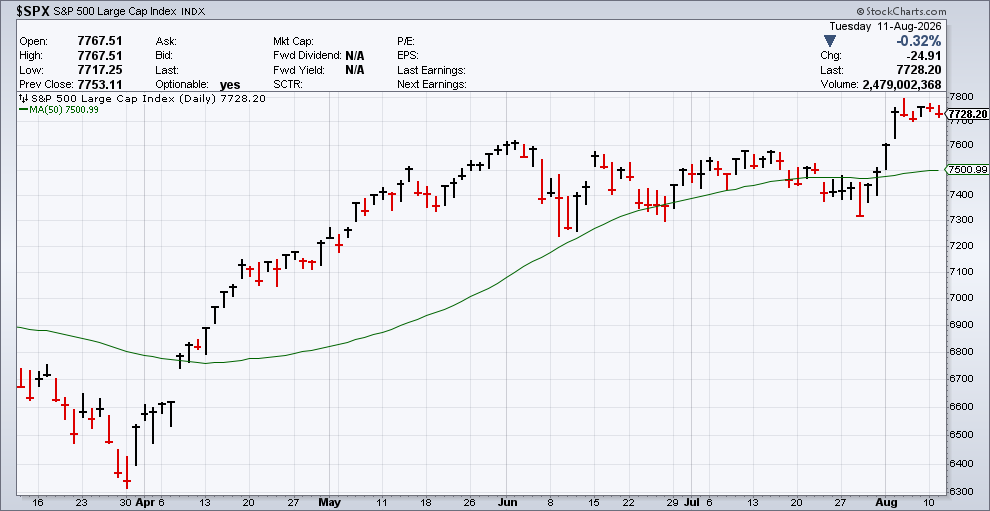
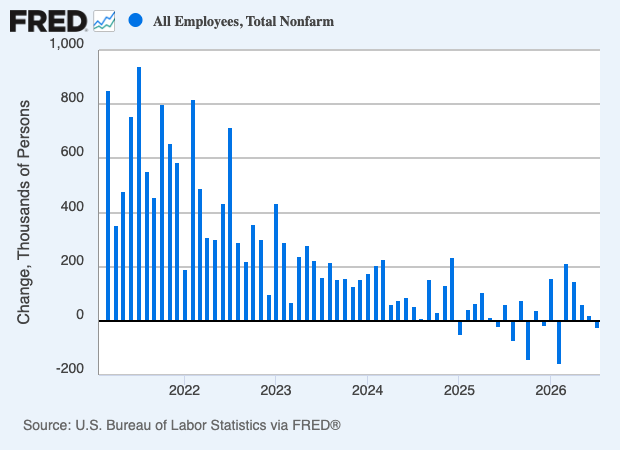
Will the rally continue? That’s hard to say, but we do know that the labor market has hit a rough patch. On Friday, the government released its jobs report for July, and it wasn’t very good. The report said that the U.S. economy unexpectedly lost 23,000 new jobs last month. Wall Street had been expecting a gain of 83,000.
The losses were driven by a drop of 53,000 government jobs. The jobs number for June was revised downward by 20,000, and the figure for May was lowered by 66,000.
Despite the number of jobs lost, the unemployment rate fell to 4.1%. That was partially due to fewer Americans looking for work. The labor force participation rate fell to 61.4%. That’s the lowest participation rate in five years. Except for Covid, this is the lowest labor force participation rate in 50 years.
Here are some more details from the report:
The drop was led by a 50,000-job decline in local government education and a loss of 19,000 retail jobs. Financial activities also posted a fall of 14,000 and leisure and hospitality lost 40,000, a possible consequence of the World Cup tournament ending.
Healthcare, which has been the leading sector for job creation, rose by 22,000, which was below its 12-month average of 36,000. Construction also saw an increase of 22,000.
Private payrolls did increase for the month, up 30,000 as government jobs declined by 53,000.
While jobs held flat, worker pay also saw virtually no gain during the month. Average hourly earnings increased by just 2 cents, bringing the 12-month average down to 3.2%, below the forecast increase of 3.5% and the lowest since May 2021.
That last part concerns me. The U.S. economy can run past just about any disruption, assuming worker pay continues to rise. If not, that means fewer shoppers which means lower revenue for businesses. Right now, average hourly earnings are barely keeping pace with inflation. Nearly all the wage gains folks are getting are eaten up by inflation.
Here’s a look at the dwindling pace of job creation:
We’ll learn more tomorrow when the government releases the CPI report for July. For July, Wall Street expects headline inflation to be up by 0.1% and core inflation to be up by 0.2%.
Last week, the Federal Reserve voted to keep interest rates unchanged. However, there were three dissenting votes from members who wanted to raise rates immediately. The recent jobs report isn’t helping them make their case.
The Fed’s next meeting is scheduled for mid-September, and futures traders are evenly split. Half are expecting a 0.25% rate increase while the other half expects rates to stay the same. Not too long ago, a September rate hike was widely assumed. Not anymore.
For the October meeting, the odds of a rate hike have risen to 63%. There are still a lot of doubters out there. It’s very possible that over the next year, the Fed votes to hike rates only one or two times.
Michael Burry Versus Palantir
You may be familiar with the name of Dr. Michael Burry. He’s a hedge fund manager who spotted the subprime mortgage crisis and profited enormously from the wreckage in the financial system. Burry was featured in both the book and movie The Big Short.
He’s had a new target in the form of Palantir Technologies (PLTR). Burry thinks the stock is overvalued. Very, very overvalued. Burry has said that over the long term, Palantir will be less than $1 per share. He’s been betting against Palantir since last year.
I must credit Burry for putting his money where his mouth is. He’s bought March 2027 put options in the mid-$100 range. Burry has already covered some of his short positions at $107, but he has opened it up again.
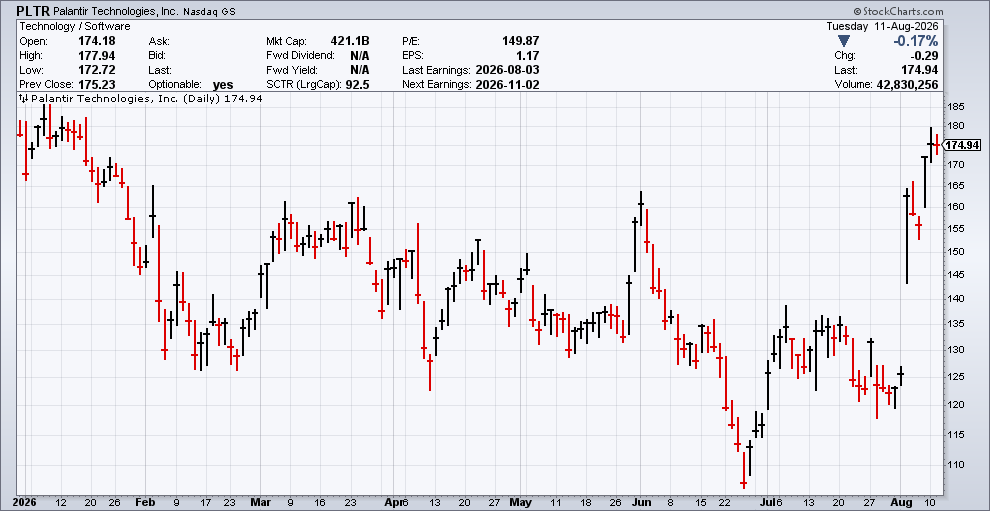
Is Palantir over-priced? Of course it is. PLTR is going for about 100 times cash flow. That’s nuts, but Wall Street loves nutty things. As we know, just because something is overpriced doesn’t mean it can’t or won’t become even more overpriced. Burry also points to a growing number of off-balance sheet items.
Burry had been running a hedge fund called Scion Asset Management which he later shut down. Now Dr. Burry mostly communicates with investors via his Substack, Cassandra Unchained.
Burry has criticized the high valuation of many AI stocks, but he’s been particularly critical of Palantir. He’s also criticized its business model and even its management team. He’s also highlighted the stock-based compensation that Palantir has used.
The problem for Burry, and his legions of followers, is that Palantir is doing very well. In its recent Q2 earnings report, PLTR said its revenues nearly doubled to $1.9 billion. The demand is being driven by heavy demand for its Artificial Intelligence Platform (AIP).
Over the last 12 months, Palantir has made about $3 billion on revenue of $6 billion. The company has a net margin of close to 50%. For this year, the company expects revenues of $8.1 billion and operating income of nearly $5 billion. The company has a ton of cash and zero debt.
Of course, Burry doesn’t need PLTR to fall to $1 to make a huge amount of money. Even if it gets to $100 or so, he’ll make a nice haul.
Palantir’s CEO Alex Karp has called the short position “super weird” and “batshit crazy.” (My apologies for the crude language, but this is Wall Street.)
Burry’s short bet has been highly volatile. Last Tuesday, the stock jumped more than 30% on very strong earnings. The stock has also done well after being praised by President Trump on Truth Social. At one time, the stock has been down more than 40% on the year. As of right now, it’s nearly flat on the year.
What’s my take? I’m not going near the thing. Burry is most probably correct that we’re in an AI bubble, but there’s always the issue of when the bubble will pop. Lots of people knew we were in a housing bubble, but the timing was hard to get right.
The most dangerous guru is not the guy who’s always wrong but the person who was once briefly correct.
Also, bubbles may not be the death knell of a stock. If you bought Amazon (AMZN) at the top, you would have lost 95% of your money, but the stock is still up 50-fold from its top.
I’m especially leery of shorting Palantir given its profitability. Shorting a rapidly growing company based on valuation does not seem like a sound strategy. I’m staying far away. By the way, Burry also owns Zoetis (ZTS) which is a former Buy List stock.
That’s all for now. The July CPI report is due out tomorrow morning. I’ll have more for you in the next issue of CWS Market Review.
– Eddy
Posted by Eddy Elfenbein on August 11th, 2026 at 6:07 pm
The information in this blog post represents my own opinions and does not contain a recommendation for any particular security or investment. I or my affiliates may hold positions or other interests in securities mentioned in the Blog, please see my Disclaimer page for my full disclaimer.
-
Archives
- October 2026
- September 2026
- August 2026
- July 2026
- June 2026
- May 2026
- April 2026
- March 2026
- February 2026
- January 2026
- December 2025
- November 2025
- October 2025
- September 2025
- August 2025
- July 2025
- June 2025
- May 2025
- April 2025
- March 2025
- February 2025
- January 2025
- December 2024
- November 2024
- October 2024
- September 2024
- August 2024
- July 2024
- June 2024
- May 2024
- April 2024
- March 2024
- February 2024
- January 2024
- December 2023
- November 2023
- October 2023
- September 2023
- August 2023
- July 2023
- June 2023
- May 2023
- April 2023
- March 2023
- February 2023
- January 2023
- December 2022
- November 2022
- October 2022
- September 2022
- August 2022
- July 2022
- June 2022
- May 2022
- April 2022
- March 2022
- February 2022
- January 2022
- December 2021
- November 2021
- October 2021
- September 2021
- August 2021
- July 2021
- June 2021
- May 2021
- April 2021
- March 2021
- February 2021
- January 2021
- December 2020
- November 2020
- October 2020
- September 2020
- August 2020
- July 2020
- June 2020
- May 2020
- April 2020
- March 2020
- February 2020
- January 2020
- December 2019
- November 2019
- October 2019
- September 2019
- August 2019
- July 2019
- June 2019
- May 2019
- April 2019
- March 2019
- February 2019
- January 2019
- December 2018
- November 2018
- October 2018
- September 2018
- August 2018
- July 2018
- June 2018
- May 2018
- April 2018
- March 2018
- February 2018
- January 2018
- December 2017
- November 2017
- October 2017
- September 2017
- August 2017
- July 2017
- June 2017
- May 2017
- April 2017
- March 2017
- February 2017
- January 2017
- December 2016
- November 2016
- October 2016
- September 2016
- August 2016
- July 2016
- June 2016
- May 2016
- April 2016
- March 2016
- February 2016
- January 2016
- December 2015
- November 2015
- October 2015
- September 2015
- August 2015
- July 2015
- June 2015
- May 2015
- April 2015
- March 2015
- February 2015
- January 2015
- December 2014
- November 2014
- October 2014
- September 2014
- August 2014
- July 2014
- June 2014
- May 2014
- April 2014
- March 2014
- February 2014
- January 2014
- December 2013
- November 2013
- October 2013
- September 2013
- August 2013
- July 2013
- June 2013
- May 2013
- April 2013
- March 2013
- February 2013
- January 2013
- December 2012
- November 2012
- October 2012
- September 2012
- August 2012
- July 2012
- June 2012
- May 2012
- April 2012
- March 2012
- February 2012
- January 2012
- December 2011
- November 2011
- October 2011
- September 2011
- August 2011
- July 2011
- June 2011
- May 2011
- April 2011
- March 2011
- February 2011
- January 2011
- December 2010
- November 2010
- October 2010
- September 2010
- August 2010
- July 2010
- June 2010
- May 2010
- April 2010
- March 2010
- February 2010
- January 2010
- December 2009
- November 2009
- October 2009
- September 2009
- August 2009
- July 2009
- June 2009
- May 2009
- April 2009
- March 2009
- February 2009
- January 2009
- December 2008
- November 2008
- October 2008
- September 2008
- August 2008
- July 2008
- June 2008
- May 2008
- April 2008
- March 2008
- February 2008
- January 2008
- December 2007
- November 2007
- October 2007
- September 2007
- August 2007
- July 2007
- June 2007
- May 2007
- April 2007
- March 2007
- February 2007
- January 2007
- December 2006
- November 2006
- October 2006
- September 2006
- August 2006
- July 2006
- June 2006
- May 2006
- April 2006
- March 2006
- February 2006
- January 2006
- December 2005
- November 2005
- October 2005
- September 2005
- August 2005
- July 2005
 Eddy Elfenbein is a Washington, DC-based speaker, portfolio manager and editor of the blog Crossing Wall Street. His