CWS Market Review – August 25, 2026
(This is the free version of CWS Market Review. If you like what you see, then please sign up for the premium newsletter for $20 per month or $200 for the whole year. If you sign up today, you can see our two reports, “Your Handy Guide to Stock Orders” and “How Not to Get Screwed on Your Mortgage.”)
The Fed Meets in Jackson Hole
This weekend, the Federal Reserve will host its annual shindig in Jackson Hole, Wyoming. Historically, the Fed has used Jackson Hole to announce major policy changes. Kevin Warsh will be speaking to the conference on Friday.
An important issue facing Warsh is how much information the Fed is providing. Warsh has tried to tamp down on the practice of investors betting on any change in the Fed’s behavior from clues buried in the Fed’s communications. (I remember when people looked at the size of Alan Greenspan’s briefcase for clues.)
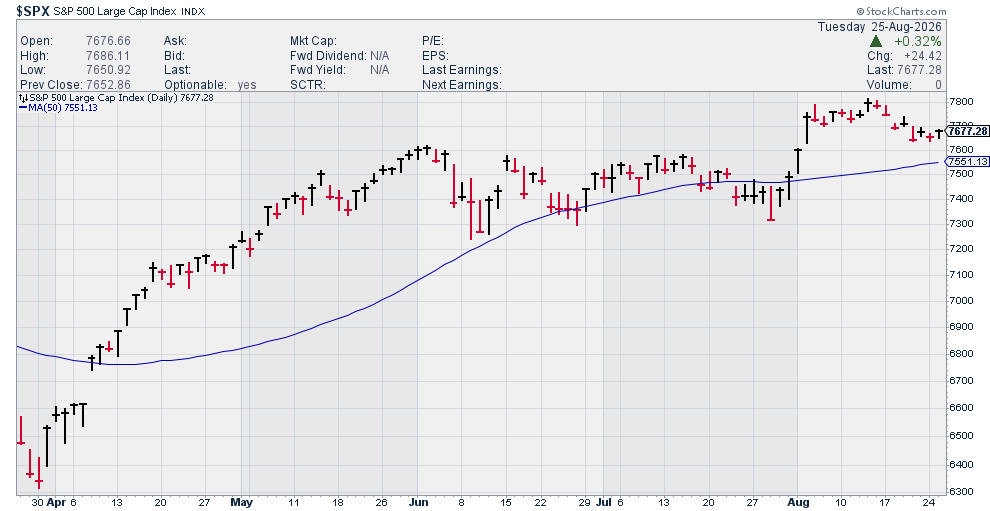
For example, Warsh has pared back the regular post-meeting policy statements. He’s also not a fan of the Summary of Economic Projections. I think Warsh is correct on this; however, it’s left critics to say there isn’t enough information coming from the Fed. It’s not that Warsh is trying to hide information. Instead, he wants to downplay the information that may not be so important, or worse, misleading.
Warsh has a firm stance that inflation will get back to the Fed’s target of 2%. That hasn’t happened in more than five years. Personally, I’m not so worried about hitting an arbitrary target, as long as the Fed is broadly opposed to inflation.
Warsh was criticized by some for a shaky post-meeting press conference. Oddly enough, that makes Warsh’s point that investors should not be investigating the press conference for supposedly hidden clues. After Warsh spoke, bond prices dropped.
I will be curious to see if Warsh has anything to say about the Treasury’s plan to buy back long-dated Treasury bonds. What if the Fed raises short-term rates at the same time the Treasury issues larger sales of short-term Treasury bills? Traditionally, the yield curve has been the Fed’s territory.
I also want to hear what Warsh has to say about a potentially slowing economy. Is this a bump in the road, or a larger problem? Overall, I support Warsh’s approach. Of course, he hasn’t faced a serious challenge. At least, not yet.
Should We Walk Away From Our Debt?
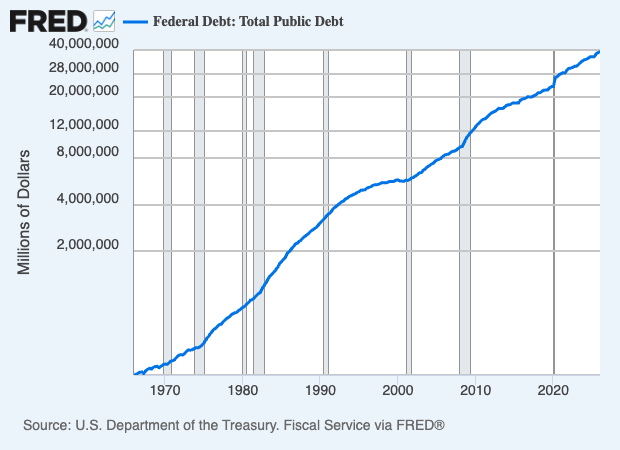
The U.S. federal debt recently hit $40 trillion. That’s more than $120,000 per person, including children.
The total debt is a staggering figure, and it shows few signs of slowing down. The debt prompted an unusual essay in the New York Times. Paul Vigna, the author of the essay and a talented writer on all things financial, suggests an old solution. A very old solution.
Vigna suggests an amargi. Nope, I’ve never heard of it either. According to Vigna, ancient societies had an amargi which was “a blanket declaration of public debt cancellation.”
Hmmm. I have to admit that I’m not exactly keen on this idea. In general, I don’t think answers to modern finance can be found in the teachings of the ancient Sumerians (no offense to any Sumerian, ancient or not).
Vigna writes:
About 4,400 years ago, a Mesopotamian king named Enmetena issued an edict. Essentially all public debts, he declared, were canceled. (Amargi typically left debts between merchants in place.) People who had been sold into bondage were freed. Similar edicts gave back land to farmers who had lost it to creditors.
One finance professor called it “Probably the worst op-ed I’ve ever read in the New York Times.” Indeed, debt can be a big problem for any country, and its compounding nature can be especially cruel. Vigna says, “amargi was a relief valve, a final rebalancing tool.”
My concern is that in the modern age, no one can simply will debt away. Debt forgiveness is when both parties agree. If only one party agrees, then it’s called … well, theft. What happens when the U.S., or any country, tries to borrow again? If they try, any future creditor will demand a sizable risk premium which would make their debt problems even worse.
There’s also the issue of credibility. Governments work for the people, not the other way around. If the government makes a promise, which borrowing money is, they should honor it. I realize it’s old fashioned, but to many of us, honor is important.
Vigna writes:
The reason the practice often worked in the first place was because the ancient world understood something about our monetary system we have mostly forgotten: Money is an invented social construct. It isn’t real, not in the way a tree or a stone is real. The system of money and credit is a thing humans made up. It’s a record-keeping device for distributing resources. And since money is a human creation, we can alter it when needed.
It’s true that money isn’t real — it’s a shared fiction — but the actions underlying money are very real. Vigna seems to think we can do away with debt and not have to worry about the obvious ramifications.
People are right to be concerned about the debt, but a better solution would be to manage our finances more responsibly and pay off our debt. We’ve done it before. From 1995 to 2001, the federal debt as a percentage of GDP fell from 65% to 44%, and we did it without the help of King Enmetena. We just have to learn how to say “no”.
The Decline and Fall of Situational Awareness
One of the worst curses that can afflicted a young money manager is to be right and early. That certainly was the case in 2022 when a 24-year-old named Leopold Aschenbrenner started a hedge fund called Situational Awareness. Aschenbrenner had an interesting backstory. He had been fired from OpenAI where he was accused of leaking company secrets.
Situational Awareness was dedicated to AI investments, and the fund was a smash hit. Aschenbrenner raised tons of money and the returns were outstanding. In 2025, the fund made more than 200%.
The fund borrowed heavily to make even larger bets. But when he came to New York, Aschenbrenner faced a cooler reception. He was grilled by seasoned investors and seemed to have little idea that his investments could all go wrong. I guess I’m lucky in that I lived through events that were once thought impossible right up until the moment they happened.
Goldman Sachs told Aschenbrenner to pay back some of the fund’s debt. This was a problem. The only way they could do that was to sell some of their holdings. As a result, the fund had a fire sale of its assets. The mass selling quickly turned popular assets into high-risk dangerous stocks.
For example, the fund shorted Adobe (ADBE), a stock I happen to like. The stock did indeed go down, but it hasn’t been driven out of business as many predicted. In fact, shares of Adobe have had a nice rebound.
Aschenbrenner eventually reached a deal with Citadel, the hedge fund kingpin. Kenneth Griffin agreed to buy Aschenbrenner’s assets at a steep discount. According to a source in the New York Times, Situational Awareness dropped from $30 billion in assets to $8 billion. In my opinion, they got off light. It could have been much worse.
This week, we learned that the SEC is investigating the mess Situational Awareness made. The SEC has sent subpoenas to the banks that the fund worked with. They told the banks to hold on to any information they have regarding Situational Awareness. To be clear, the fund hasn’t been accused of doing anything wrong.
Situational Awareness was a major client of firms including Bank of America, Citi, Goldman Sachs and JPMorgan Chase. The fund still owns Anthropic which will be going public sometime soon.
That’s all for now. Tomorrow, the government will update its report on GDP growth for the second quarter. The initial report pegged Q2 growth at 1.5%. That’s not so hot. I’ll have more for you in the next issue of CWS Market Review.
– Eddy
Posted by Eddy Elfenbein on August 25th, 2026 at 4:39 pm
The information in this blog post represents my own opinions and does not contain a recommendation for any particular security or investment. I or my affiliates may hold positions or other interests in securities mentioned in the Blog, please see my Disclaimer page for my full disclaimer.
-
Archives
- October 2026
- September 2026
- August 2026
- July 2026
- June 2026
- May 2026
- April 2026
- March 2026
- February 2026
- January 2026
- December 2025
- November 2025
- October 2025
- September 2025
- August 2025
- July 2025
- June 2025
- May 2025
- April 2025
- March 2025
- February 2025
- January 2025
- December 2024
- November 2024
- October 2024
- September 2024
- August 2024
- July 2024
- June 2024
- May 2024
- April 2024
- March 2024
- February 2024
- January 2024
- December 2023
- November 2023
- October 2023
- September 2023
- August 2023
- July 2023
- June 2023
- May 2023
- April 2023
- March 2023
- February 2023
- January 2023
- December 2022
- November 2022
- October 2022
- September 2022
- August 2022
- July 2022
- June 2022
- May 2022
- April 2022
- March 2022
- February 2022
- January 2022
- December 2021
- November 2021
- October 2021
- September 2021
- August 2021
- July 2021
- June 2021
- May 2021
- April 2021
- March 2021
- February 2021
- January 2021
- December 2020
- November 2020
- October 2020
- September 2020
- August 2020
- July 2020
- June 2020
- May 2020
- April 2020
- March 2020
- February 2020
- January 2020
- December 2019
- November 2019
- October 2019
- September 2019
- August 2019
- July 2019
- June 2019
- May 2019
- April 2019
- March 2019
- February 2019
- January 2019
- December 2018
- November 2018
- October 2018
- September 2018
- August 2018
- July 2018
- June 2018
- May 2018
- April 2018
- March 2018
- February 2018
- January 2018
- December 2017
- November 2017
- October 2017
- September 2017
- August 2017
- July 2017
- June 2017
- May 2017
- April 2017
- March 2017
- February 2017
- January 2017
- December 2016
- November 2016
- October 2016
- September 2016
- August 2016
- July 2016
- June 2016
- May 2016
- April 2016
- March 2016
- February 2016
- January 2016
- December 2015
- November 2015
- October 2015
- September 2015
- August 2015
- July 2015
- June 2015
- May 2015
- April 2015
- March 2015
- February 2015
- January 2015
- December 2014
- November 2014
- October 2014
- September 2014
- August 2014
- July 2014
- June 2014
- May 2014
- April 2014
- March 2014
- February 2014
- January 2014
- December 2013
- November 2013
- October 2013
- September 2013
- August 2013
- July 2013
- June 2013
- May 2013
- April 2013
- March 2013
- February 2013
- January 2013
- December 2012
- November 2012
- October 2012
- September 2012
- August 2012
- July 2012
- June 2012
- May 2012
- April 2012
- March 2012
- February 2012
- January 2012
- December 2011
- November 2011
- October 2011
- September 2011
- August 2011
- July 2011
- June 2011
- May 2011
- April 2011
- March 2011
- February 2011
- January 2011
- December 2010
- November 2010
- October 2010
- September 2010
- August 2010
- July 2010
- June 2010
- May 2010
- April 2010
- March 2010
- February 2010
- January 2010
- December 2009
- November 2009
- October 2009
- September 2009
- August 2009
- July 2009
- June 2009
- May 2009
- April 2009
- March 2009
- February 2009
- January 2009
- December 2008
- November 2008
- October 2008
- September 2008
- August 2008
- July 2008
- June 2008
- May 2008
- April 2008
- March 2008
- February 2008
- January 2008
- December 2007
- November 2007
- October 2007
- September 2007
- August 2007
- July 2007
- June 2007
- May 2007
- April 2007
- March 2007
- February 2007
- January 2007
- December 2006
- November 2006
- October 2006
- September 2006
- August 2006
- July 2006
- June 2006
- May 2006
- April 2006
- March 2006
- February 2006
- January 2006
- December 2005
- November 2005
- October 2005
- September 2005
- August 2005
- July 2005
 Eddy Elfenbein is a Washington, DC-based speaker, portfolio manager and editor of the blog Crossing Wall Street. His