Author Archive
-
Jos. A. Bank Beats By Three Cents
Eddy Elfenbein, November 30th, 2011 at 9:28 amAnother great quarter from Jos. A. Bank Clothiers ($JOSB). The company just reported fiscal Q3 earnings of 54 cents per share which was three cents more than the Street was expecting.
Revenues rose 20.9% to $209.6 million. That’s more than $14 million more than the consensus. Comparable store sales rose by an impressive 14.6%.
JOSB has now grown earnings for 40 of the last 41 quarters including the last 22 in a row. The company also offered a warning about the start of the fourth quarter. Here’s what they had to say:
JoS. A. Bank Clothiers, Inc. announces that net income for the third quarter of fiscal year 2011 increased 19.3% to $15.0 million as compared with net income of $12.6 million for the third quarter of fiscal year 2010. Earnings per share for the third quarter of fiscal year 2011 increased 20.0% to $0.54 per share as compared with earnings per share of $0.45 for the third quarter of fiscal year 2010. The third quarter of fiscal year 2011 ended October 29, 2011; the third quarter of fiscal year 2010 ended October 30, 2010.
Total sales for the third quarter of fiscal year 2011 increased 21.0% to $209.6 million from $173.3 million in the third quarter of fiscal year 2010, while comparable store sales increased 14.6% and Direct Marketing sales increased 28.6%.
Comparing the first nine months of fiscal year 2011 with the first nine months of fiscal year 2010, net income increased 18.9% to $53.3 million as compared to $44.9 million and earnings per share increased 18.6% to $1.91 per share as compared to $1.61 per share. Total sales for the first nine months of fiscal year 2011 increased 17.4% to $633.6 million from $539.8 million for the first nine months of fiscal year 2010, while comparable store sales increased 9.9% and Direct Marketing sales increased 26.1%.
“We are pleased to report another solid sales and earnings performance for the third quarter of fiscal year 2011 with sales growth of 21.0% and earnings growth of 19.3%. With this quarter’s results, we have achieved earnings growth in 40 of the past 41 quarters when compared to the respective prior year periods, including 22 quarters in a row,” stated R. Neal Black, President and CEO of JoS. A. Bank Clothiers, Inc. “The fourth quarter, compared to a very strong performance last year, has started out more slowly than we had planned. November comparable store sales declined, while our direct segment sales increased, compared to the same period last year. As a result, we have adjusted our December merchandising and marketing plans for stores. We believe our efforts will be effective and appealing to our customers. Therefore we remain cautiously optimistic for the outcome of this year’s fourth quarter,” continued Mr. Black.
Update: The shares are down today due to the warning mentioned above.
-
The Fed’s Statement on Today’s News
Eddy Elfenbein, November 30th, 2011 at 9:12 amHere’s the statement from the Federal Reserve:
The Bank of Canada, the Bank of England, the Bank of Japan, the European Central Bank, the Federal Reserve, and the Swiss National Bank are today announcing coordinated actions to enhance their capacity to provide liquidity support to the global financial system. The purpose of these actions is to ease strains in financial markets and thereby mitigate the effects of such strains on the supply of credit to households and businesses and so help foster economic activity.
These central banks have agreed to lower the pricing on the existing temporary U.S. dollar liquidity swap arrangements by 50 basis points so that the new rate will be the U.S. dollar overnight index swap (OIS) rate plus 50 basis points. This pricing will be applied to all operations conducted from December 5, 2011. The authorization of these swap arrangements has been extended to February 1, 2013. In addition, the Bank of England, the Bank of Japan, the European Central Bank, and the Swiss National Bank will continue to offer three-month tenders until further notice.
As a contingency measure, these central banks have also agreed to establish temporary bilateral liquidity swap arrangements so that liquidity can be provided in each jurisdiction in any of their currencies should market conditions so warrant. At present, there is no need to offer liquidity in non-domestic currencies other than the U.S. dollar, but the central banks judge it prudent to make the necessary arrangements so that liquidity support operations could be put into place quickly should the need arise. These swap lines are authorized through February 1, 2013.
Federal Reserve Actions
The Federal Open Market Committee has authorized an extension of the existing temporary U.S. dollar liquidity swap arrangements with the Bank of Canada, the Bank of England, the Bank of Japan, the European Central Bank, and the Swiss National Bank through February 1, 2013. The rate on these swap arrangements has been reduced from the U.S. dollar OIS rate plus 100 basis points to the OIS rate plus 50 basis points. In addition, as a contingency measure, the Federal Open Market Committee has agreed to establish similar temporary swap arrangements with these five central banks to provide liquidity in any of their currencies if necessary. Further details on the revised arrangements will be available shortly.U.S. financial institutions currently do not face difficulty obtaining liquidity in short-term funding markets. However, were conditions to deteriorate, the Federal Reserve has a range of tools available to provide an effective liquidity backstop for such institutions and is prepared to use these tools as needed to support financial stability and to promote the extension of credit to U.S. households and businesses.
Information on Related Actions Being Taken by Other Central Banks
Information on the actions to be taken by other central banks is available on the following websites:Frequently Asked Questions: U.S. Dollar and Foreign Currency Liquidity Swaps
-
ADP Says The Economy Added 206,000 Jobs Last Month
Eddy Elfenbein, November 30th, 2011 at 9:07 amWhat’s also helping the pre-market optimism today is the news that according to ADP ($ADP), the U.S. economy created 206,000 jobs last month. Economists had been expecting a gain of 130,000.
The ADP report comes out just two days before we get the official numbers from the government. I’m usually not a big fan of the ADP numbers but I have to admit that they got it close last time. For October, ADP said that there were 110,000 new jobs. Then the government said it was 104,000. Incidentally, ADP revised the October figure up to 130,000.
-
Stocks Poised to Boom Today
Eddy Elfenbein, November 30th, 2011 at 8:52 amThe futures markets currently indicate that stocks will rally big-time today on the news the Fed is teaming up with other central banks to “lower the pricing on the existing temporary liquidity swap arrangements by 50 basis points.” Also, Kourtney Kardashian is expecting again, though the first news piece is probably a lot more important. Skipping all the econo-speak, the idea is that the central banks will provide liquidity to Europe.
My suspicion, again, is that this isn’t what’s wrong. The problem isn’t a lack of liquidity, though that’s nice to have. The problem is that there’s too much debt and that has to be wound down. That process is going to be long and painful. What the world central banks are doing is almost like pouring high-grade gasoline into a car that doesn’t have any wheels. Now they’re baffled that it doesn’t seem to be doing the trick.
The immediate market reaction will be that all the “risk assets” will go much higher, and that’s what we’re going to see today. Expect big moves in gold and cyclicals.
The other news is that China is lowering the reserve requirement for its banks. The mess in Europe has clearly been hurting China. For the third quarter, the Chinese economy plunged all the way down to a growth of, ready for this, 9.1%. Don’t laugh; that’s actually the slowest pace in two years.
So the People’s Bank of China has said that it’s cutting the reserve ratio for banks their by 0.5%. Check out this chart which shows that Chinese exports to Europe have been “falling off a cliff.”
-
Morning News: November 30, 2011
Eddy Elfenbein, November 30th, 2011 at 5:20 amEuro-Area Ministers Agree on Bond Guarantees, Seek Larger IMF Role
Ratings Firms Misread Signs of Greek Woes
Company Bond Sales Plunge as Trust in Banks Fades
ECB’s Noyer: Policy Makers Need To Stabilize European Bond Market
Danes Look to German Model After Housing Bubble
Greece’s Piraeus Bank Posts Losses On Higher Provisions
BOJ’s Nishimura Warns of Risk of Broad Credit Crunch
S.&P. Cuts Its Ratings for 15 Banks
Boeing’s Albaugh Expects Long-Term Benefits From AMR Bankruptcy Filing
Ranbaxy Without Lipitor May Have to Rely on India Drug Sales
Facebook May Be Forced to Go Public Amid Market Gloom
At Diamond Foods, Accounting Weighs on Pringles Deal
Empire State Building’s Controlling Owner Malkin May Go Public as a REIT
Samsung Defeats Apple-Sought Ban in Australia
Paul Kedrosky: Some Upbeat Microsoft News
James Altucher: 5 Unusual Things I Learned from Isaac Asimov
Be sure to follow me on Twitter.
-
From The Onion’s Stockwatch
Eddy Elfenbein, November 29th, 2011 at 6:19 pmJPMorgan Chase (JPM)
$34.90 (+$0.72) (+ 2.1%) The financial world was shaken today when CEO Jamie Dimon stated that the Occupy Wall Street movement had significantly eaten into the banking titan’s profits, announced Chase would have to drastically reformulate its business plan, and then paused a beat before saying, just kidding, they made a record $17.4 billion last year.
-
My Quick Take on Jefferies
Eddy Elfenbein, November 29th, 2011 at 12:58 pmA number of you have asked my opinion on Jefferies ($JEF). My short answer is that the stock is very undervalued, particularly at $9.50, though it’s still cheap at $11.
However, even if it’s fully valued (about $15 per share), I don’t think it’s a great stock to own.
-
Becton Raises Dividend
Eddy Elfenbein, November 29th, 2011 at 12:41 pmThe S&P 500 is back above 1,200 and our Buy List is currently up 0.40% on the day. Reynolds American ($RAI), our boring high-yield stock, just broke $41 which is an all-time high.
I said in the CWS Market Review from October 14th that I expected to see Becton, Dickinson ($BDX) raise its dividend for the 39th year in a row. I neglected to mention it this last week, but Becton did indeed raise its quarterly dividend from 41 cents to 45 cents per share. Based on the new dividend, the stock now yields 2.5%.
-
Some Cautious Signs for Optimism
Eddy Elfenbein, November 29th, 2011 at 10:55 amThe economic news continues to be…not horrible. Today we learned that consumer confidence had its biggest jump in more than eight years.
New homes figures are still terrible, but they increased a tiny bit last month. Here’s an interesting fact I didn’t know: “Each home built creates an average of three jobs for a year and generates about $90,000 in tax revenue, according to the National Association of Home Builders.”
While initial jobless claims rose last week, that was up from a seven-month low.
The big news this week will be Friday’s jobs report. The unemployment rate is currently stuck at 9%. The economy has slowly added new jobs but it’s barely kept pace with the natural growth of the population. Wall Street’s forecast for the November jobs report is that the jobless rate will be at 9% and that the economy created 120,000 new jobs. For the last 10 months, the unemployment rate has bounced between 8.83% and 9.18%.
I’m also looking forward to Thursday’s ISM report. Wall Street expects a reading of 51.5 which isn’t strong but any reading above 50 means that the economy is expanding.
-
AMR Files for Bankruptcy
Eddy Elfenbein, November 29th, 2011 at 10:13 amA few years ago, someone had run the numbers and found that the historical profits of the airline industry added up to less than zero. In other words, in aggregate, one person paying another person to be flown on an airplane had been at less than cost.
The sad fact is that airlines are often terrible investments. Even Warren Buffett lost money on the airlines. He said that if a stockbroker had been at Kitty Hawk, he would have shot the plane down.
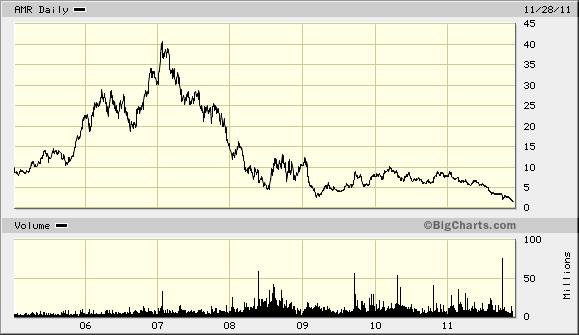
Today we get the news that AMR ($AMR), the parent of American Airlines, has filed for bankruptcy. This is particularly sad for American since it had been the only legacy carrier that hadn’t filed for bankruptcy. In early 2007, the stock had been over $40 per share. Yesterday it closed at $1.62. The airline has lost money for the last three years in a row.
I’m not sure what it is about airlines that have made them such poor investments. They seem to have endless union trouble. They’re hurt by price wars. They’ve managed to be hurt by both regulation and deregulation.
A few years ago, Money Magazine celebrated its 30th anniversary by looking at which stocks had been the best performers over the previous 30 years. Interestingly, the #1 stock over the three decades came from the worst-performing industry. The stock was Southwest Airlines ($LUV).
-
Archives
- June 2026
- May 2026
- April 2026
- March 2026
- February 2026
- January 2026
- December 2025
- November 2025
- October 2025
- September 2025
- August 2025
- July 2025
- June 2025
- May 2025
- April 2025
- March 2025
- February 2025
- January 2025
- December 2024
- November 2024
- October 2024
- September 2024
- August 2024
- July 2024
- June 2024
- May 2024
- April 2024
- March 2024
- February 2024
- January 2024
- December 2023
- November 2023
- October 2023
- September 2023
- August 2023
- July 2023
- June 2023
- May 2023
- April 2023
- March 2023
- February 2023
- January 2023
- December 2022
- November 2022
- October 2022
- September 2022
- August 2022
- July 2022
- June 2022
- May 2022
- April 2022
- March 2022
- February 2022
- January 2022
- December 2021
- November 2021
- October 2021
- September 2021
- August 2021
- July 2021
- June 2021
- May 2021
- April 2021
- March 2021
- February 2021
- January 2021
- December 2020
- November 2020
- October 2020
- September 2020
- August 2020
- July 2020
- June 2020
- May 2020
- April 2020
- March 2020
- February 2020
- January 2020
- December 2019
- November 2019
- October 2019
- September 2019
- August 2019
- July 2019
- June 2019
- May 2019
- April 2019
- March 2019
- February 2019
- January 2019
- December 2018
- November 2018
- October 2018
- September 2018
- August 2018
- July 2018
- June 2018
- May 2018
- April 2018
- March 2018
- February 2018
- January 2018
- December 2017
- November 2017
- October 2017
- September 2017
- August 2017
- July 2017
- June 2017
- May 2017
- April 2017
- March 2017
- February 2017
- January 2017
- December 2016
- November 2016
- October 2016
- September 2016
- August 2016
- July 2016
- June 2016
- May 2016
- April 2016
- March 2016
- February 2016
- January 2016
- December 2015
- November 2015
- October 2015
- September 2015
- August 2015
- July 2015
- June 2015
- May 2015
- April 2015
- March 2015
- February 2015
- January 2015
- December 2014
- November 2014
- October 2014
- September 2014
- August 2014
- July 2014
- June 2014
- May 2014
- April 2014
- March 2014
- February 2014
- January 2014
- December 2013
- November 2013
- October 2013
- September 2013
- August 2013
- July 2013
- June 2013
- May 2013
- April 2013
- March 2013
- February 2013
- January 2013
- December 2012
- November 2012
- October 2012
- September 2012
- August 2012
- July 2012
- June 2012
- May 2012
- April 2012
- March 2012
- February 2012
- January 2012
- December 2011
- November 2011
- October 2011
- September 2011
- August 2011
- July 2011
- June 2011
- May 2011
- April 2011
- March 2011
- February 2011
- January 2011
- December 2010
- November 2010
- October 2010
- September 2010
- August 2010
- July 2010
- June 2010
- May 2010
- April 2010
- March 2010
- February 2010
- January 2010
- December 2009
- November 2009
- October 2009
- September 2009
- August 2009
- July 2009
- June 2009
- May 2009
- April 2009
- March 2009
- February 2009
- January 2009
- December 2008
- November 2008
- October 2008
- September 2008
- August 2008
- July 2008
- June 2008
- May 2008
- April 2008
- March 2008
- February 2008
- January 2008
- December 2007
- November 2007
- October 2007
- September 2007
- August 2007
- July 2007
- June 2007
- May 2007
- April 2007
- March 2007
- February 2007
- January 2007
- December 2006
- November 2006
- October 2006
- September 2006
- August 2006
- July 2006
- June 2006
- May 2006
- April 2006
- March 2006
- February 2006
- January 2006
- December 2005
- November 2005
- October 2005
- September 2005
- August 2005
- July 2005
 Eddy Elfenbein is a Washington, DC-based speaker, portfolio manager and editor of the blog Crossing Wall Street. His