-
Earnings Season So Far
Posted by Eddy Elfenbein on January 31st, 2011 at 4:03 pmThis earnings season is shaping up to be a good one. Here are some numbers via Zacks:
*4Q earnings season off to strong start, with 206 of the S&P 500 reports in, median surprise of 4.28% and surprise ratio of 3.73 for EPS, 1.53% and 2.94 for revenues.
*Reported (206 firms) fourth quarter earnings growth of 31.2%, expected (294 firms) year-over-year growth of 19.5% for the vast majority of firms yet to report. On the Revenue side, 7.88% growth reported, but decline of 1.37% expected for those yet to report.
*Full-year total earnings for the S&P 500 expected to jump 43.3% in 2010, 14.7% further in 2011. Growth to continue in 2012 with total net income expected to rise 12.0%.
*Total revenues for the S&P 500 expected to rise 6.09% in 2010, 4.77% in 2011, and 4.89% in 2012. Excluding Financials, revenues expected to be up 8.99% in 2010, 5.97% in 2011 and 5.45% in 2012.
*Revisions ratio for full S&P 500 at 1.98 for 2011, at 1.82 for 2012 — both very bullish readings. Ratio of firms with rising to falling mean estimates at 2.05 for 2011, 1.66 for 2012, also very positive readings. Total revisions activity expanding rapidly, making the revisions ratios more significant.
*S&P 500 earned $544.3 billion in 2009, expected to earn $782.9 billion in 2010, $898.1 billion in 2011. In 2012, the 500 are collectively expected to earn $1.0057 Trillion.
*S&P 500 earned $57.68 in 2009: $82.62 in 2010 and $94.77 in 2011 expected, bottom-up. For 2012, $106.17 expected in early read. Puts P/Es at 15.7x for 2010, and 13.7x for 2011 and 12.2x for 2012. -
CWS Buy List Earnings Calendar
Posted by Eddy Elfenbein on January 31st, 2011 at 1:55 pmHere’s an update of our earnings calendar. So far, every stock but one has beaten Wall Street’s earnings forecast.
Company Symbol Date EPS Est EPS JPMorgan Chase JPM 14-Jan $0.99 $1.12 Gilead Sciences GILD 25-Jan $0.94 $0.95 Johnson & Johnson JNJ 25-Jan $1.03 $1.03 Stryker SYK 25-Jan $0.91 $0.93 Abbott Laboratories ABT 26-Jan $1.29 $1.30 Deluxe Corp. DLX 27-Jan $0.71 $0.78 Nicholas Financial NICK 27-Jan n/a $0.38 Ford Motor F 28-Jan $0.48 $0.30 Moog MOG-A 31-Jan $0.63 $0.73 AFLAC AFL 1-Feb $1.35 Fiserv FISV 3-Feb $1.07 Reynolds American RAI 3-Feb $0.61 Sysco SYY 7-Feb $0.47 Becton, Dickinson BDX 8-Feb $1.29 Wright Express WXS 10-Feb $0.71 -
The Ford Story
Posted by Eddy Elfenbein on January 31st, 2011 at 1:03 pmVia the WSJ’s MarketBeat blog, I came across this piece on Ford (F) written by Itay Michaeli of Citigroup.
No, although the Q4 miss may (at least temporarily) take some of the premium out of the stock. The Ford investment story has revolved around product, market share gains and robust pricing—metrics that were alive and well in Q4. What we learned is that Ford’s margins weren’t immune from seasonal pressures (as consensus implied) and that commodity/structural costs remain clear 2011 headwinds. Ultimately, if Ford continues to execute on its global strategy, Q4’10 won’t be remembered as a turning point. To that, we remain positive on Ford’s 2011 product cadence, but do believe GM gains an advantage in 2012-14—one of the factors behind our Hold rating on Ford.
-
Moog Beat Earnings By 10 Cents
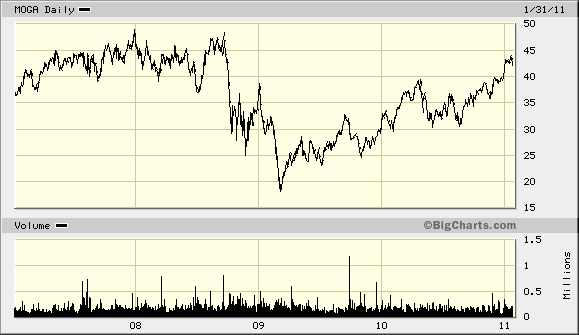
Posted by Eddy Elfenbein on January 31st, 2011 at 9:47 amWe’re getting the week off to a good start. Moog (MOG-A) just announced that it creamed Wall Street’s estimates.
For the their fiscal Q1, Moog earned 73 cents per share which was 10 cents more than Wall Street’s expectations.
That’s not all. The company also raised its estimate for 2011. Moog now sees full-year earnings-per-share coming in at $2.75 compared with their earlier forecast of $2.70.
First-quarter revenue rose 12 percent to $554 million. Aircraft segment sales were up 12 percent at $196 million, helped by commercial aircraft parts.
OEM (original equipment maker) production revenues were up for Boeing — from a ramp-up in 787 Dreamliner hardware deliveries — and Airbus, its main customers, the company said in a statement.
Boeing recently delayed the initial delivery of the Dreamliner to the third quarter from the first.
-
Our Miserable Performance on Friday
Posted by Eddy Elfenbein on January 31st, 2011 at 9:39 amI want to spend a moment on our performance on Friday. What else can I say? The Buy List was absolutely killed. Unlike other folks on the Internet, I refuse to hide my lousy performance.
The 20 stocks on the Buy List dropped 2.78% compared with a loss of 1.79% for the S&P 500. That 0.99% underperformance is one of our worst showings in a long time.
The major culprit was Ford (F) which lost 13.41%, but that wasn’t the only big loser. Deluxe (DLX) lost 5.09% and Bed Bath & Beyond (BBBY) lost 4.03%. Every stock except for Medtronic (MDT) closed lower.
Fortunately, the Buy List is still ahead of the market for the year. We’re now up 2.59% compared with 1.49% for the S&P 500.
-
Morning News: January 31, 2011
Posted by Eddy Elfenbein on January 31st, 2011 at 7:41 amMoody’s Cuts Egypt Bonds Citing Political Tensions
Hang Seng Indexes to Launch Hong Kong’s “VIX”
Crude Oil Gains in New York on Egyptian Protests; Brent Retreats
European Financials Defy Sovereign Debt Crisis in January Rally
Growth Stocks May Fizzle in U.S. Rebound as Market Favors Value
Honda Raises Profit Forecast on U.S. Sales Outlook
Toshiba Swings To Black In Oct-Dec As Flash Business Counteracts Strong Yen
Chrysler Reports $199 Million Quarterly Loss as Vehicle Shipments Decline
Massey Energy Is to Be Sold to Alpha Natural Resources
Cnooc Adds to Chesapeake Energy Stake
Hearst to Buy Lagardere’s Magazine Unit for $889 Million
Leigh Drogen: Singapore Trending
-
The King’s Actual Speech
Posted by Eddy Elfenbein on January 28th, 2011 at 10:42 pmThe movie The King’s Speech shows King George VI’s speech at the beginning of World War II. Colin Firth does a great job and will probably win an Oscar.
Here’s the actual speech:
-
Ugh!
Posted by Eddy Elfenbein on January 28th, 2011 at 7:59 pmThe trading day is over and Ford lost 13.41%. Ugh–today was a total wipeout.
Mind you, I still like the stock. This is one of those times where
lazinessthe rules of the Buy List will probably help us out. Look for Ford to recover.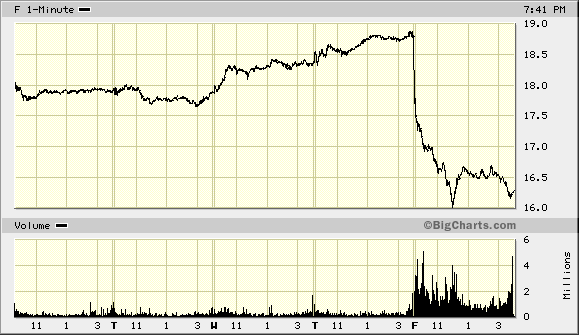
-
Why Did Ford Miss So Badly?
Posted by Eddy Elfenbein on January 28th, 2011 at 12:17 pmShares of Ford (F) are getting smacked down today in a serious way.
How could Wall Street have missed so badly? Phil LeBeau, the auto guy at CNBC, writes:
Ford says there are four factors that may explain why analysts were off. They include:
* lower volume
* higher investment costs for manufacturing and advertising a new model launch (Explorer)
* high commodity costs
* Ford Europe being unprofitable.
All fair points.
But aren’t these factors Wall Street analysts should have caught?
Conversely, shouldn’t Ford have done a better job guiding Wall Street throughout the quarter about these factors shifting?
The answer to both is yes. To quote a long time follower of Ford on Wall St., “There’s plenty of blame to go around for this earnings miss. Ford and the analysts were not on the same page, and both are to blame.”
For the momentum stock investor who has piled into Ford shares recently, this miss hurts. The stock is getting whacked and it’s likely to feel pressure for a while.
But long term, has much changed at Ford? No. The trajectory at Ford is still very positive, and there are plenty of reasons to remain bullish on Ford. For the first time since 2008, it has more cash than debt, it’s profit per vehicle is strong, and its outlook for 2011 is moving higher. To quote an analyst who tracks Ford, “There’s still a lot to like about where Alan Mulally is taking this company.”
True. But today investors are paying the price for shares of Ford getting ahead of themselves and a big earnings miss that has many shaking their heads.
-
Q4 GDP Growth = 3.2%
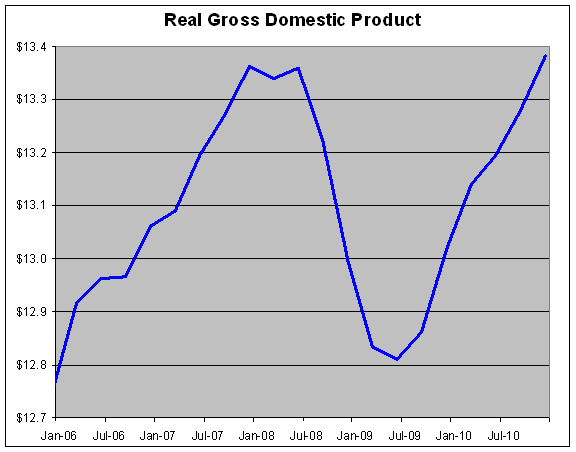
Posted by Eddy Elfenbein on January 28th, 2011 at 9:40 amThe Commerce Department reported this morning that the U.S. economy expanded by 3.2% in real terms for the fourth quarter of 2010. In my opinion, this was another disappointing number. Economists were expecting growth of 3.5%.
There are, however, some promising details in the report. For example, consumer spending, which represents about 70% of the economy, rose by 4.4%. That’s the fastest rate in five years. Final sales rose by 7.1% which is its fastest rate since 1984.
For the last five years, real GDP growth has been 2.67%, 1.95%, 0.00%, -2.63% and 2.86%. Real GDP for the fourth quarter of 2010 finally surpassed the peak quarter of real GDP from the fourth quarter of 2007, albeit very narrowly. In three years’ time, the economy has expanded by a grand total of 0.14%.
-
Archives
- October 2026
- September 2026
- August 2026
- July 2026
- June 2026
- May 2026
- April 2026
- March 2026
- February 2026
- January 2026
- December 2025
- November 2025
- October 2025
- September 2025
- August 2025
- July 2025
- June 2025
- May 2025
- April 2025
- March 2025
- February 2025
- January 2025
- December 2024
- November 2024
- October 2024
- September 2024
- August 2024
- July 2024
- June 2024
- May 2024
- April 2024
- March 2024
- February 2024
- January 2024
- December 2023
- November 2023
- October 2023
- September 2023
- August 2023
- July 2023
- June 2023
- May 2023
- April 2023
- March 2023
- February 2023
- January 2023
- December 2022
- November 2022
- October 2022
- September 2022
- August 2022
- July 2022
- June 2022
- May 2022
- April 2022
- March 2022
- February 2022
- January 2022
- December 2021
- November 2021
- October 2021
- September 2021
- August 2021
- July 2021
- June 2021
- May 2021
- April 2021
- March 2021
- February 2021
- January 2021
- December 2020
- November 2020
- October 2020
- September 2020
- August 2020
- July 2020
- June 2020
- May 2020
- April 2020
- March 2020
- February 2020
- January 2020
- December 2019
- November 2019
- October 2019
- September 2019
- August 2019
- July 2019
- June 2019
- May 2019
- April 2019
- March 2019
- February 2019
- January 2019
- December 2018
- November 2018
- October 2018
- September 2018
- August 2018
- July 2018
- June 2018
- May 2018
- April 2018
- March 2018
- February 2018
- January 2018
- December 2017
- November 2017
- October 2017
- September 2017
- August 2017
- July 2017
- June 2017
- May 2017
- April 2017
- March 2017
- February 2017
- January 2017
- December 2016
- November 2016
- October 2016
- September 2016
- August 2016
- July 2016
- June 2016
- May 2016
- April 2016
- March 2016
- February 2016
- January 2016
- December 2015
- November 2015
- October 2015
- September 2015
- August 2015
- July 2015
- June 2015
- May 2015
- April 2015
- March 2015
- February 2015
- January 2015
- December 2014
- November 2014
- October 2014
- September 2014
- August 2014
- July 2014
- June 2014
- May 2014
- April 2014
- March 2014
- February 2014
- January 2014
- December 2013
- November 2013
- October 2013
- September 2013
- August 2013
- July 2013
- June 2013
- May 2013
- April 2013
- March 2013
- February 2013
- January 2013
- December 2012
- November 2012
- October 2012
- September 2012
- August 2012
- July 2012
- June 2012
- May 2012
- April 2012
- March 2012
- February 2012
- January 2012
- December 2011
- November 2011
- October 2011
- September 2011
- August 2011
- July 2011
- June 2011
- May 2011
- April 2011
- March 2011
- February 2011
- January 2011
- December 2010
- November 2010
- October 2010
- September 2010
- August 2010
- July 2010
- June 2010
- May 2010
- April 2010
- March 2010
- February 2010
- January 2010
- December 2009
- November 2009
- October 2009
- September 2009
- August 2009
- July 2009
- June 2009
- May 2009
- April 2009
- March 2009
- February 2009
- January 2009
- December 2008
- November 2008
- October 2008
- September 2008
- August 2008
- July 2008
- June 2008
- May 2008
- April 2008
- March 2008
- February 2008
- January 2008
- December 2007
- November 2007
- October 2007
- September 2007
- August 2007
- July 2007
- June 2007
- May 2007
- April 2007
- March 2007
- February 2007
- January 2007
- December 2006
- November 2006
- October 2006
- September 2006
- August 2006
- July 2006
- June 2006
- May 2006
- April 2006
- March 2006
- February 2006
- January 2006
- December 2005
- November 2005
- October 2005
- September 2005
- August 2005
- July 2005
 Eddy Elfenbein is a Washington, DC-based speaker, portfolio manager and editor of the blog Crossing Wall Street. His