-
Lincare and WR Berkley
Posted by Eddy Elfenbein on October 21st, 2008 at 12:26 pmTwo notes from the Buy List to pass on. First, Lincare (LNCR) reported third-quarter earnings of 76 cents a share, which beat estimates by four cents a share. The company earned 66 cents a share for last year’s third quarter, so that’s pretty decent growth. Earnings were squeezed by a 6% cut in Medicare prices.
There’s also some trouble on the horizon.Revenue and earnings also were impacted by a change in ordering patterns for certain inhalation drugs by customers worried they were going to lose Medicare coverage for these drugs. Some patients placed large orders in June in an effort to get their drugs ahead of the Medicare change, which has since been delayed until Nov. 1.
Wall Street currently sees Lincare’s 2009 earnings falling by 27%.
The other news is that WR Berkley (WRB) said it expects to post a loss for the third quarter between 15 and 20 cents a share. Operating earnings, which is more important for insurance companies, will be between 70 and 75 cents a share. The company is taking an after-tax loss due to the hurricanes. The company also got screwed from owning preferred stock in Fannie and Freddie. WR Berkley is already up about 40% from its panic low on October 10. -
Fed Chairs for Obama
Posted by Eddy Elfenbein on October 21st, 2008 at 9:52 amThe Bearded One has stepped into the minefield and, apparently, endorsed Obama. Or at least, the Democrats’ stimulus idea. Perhaps Ben just wants four more years as Fed Chair. Is Princeton that bad?
While the Fed chief said any stimulus should be “well targeted,” even a general endorsement amounts to a political green light. Mr. Bernanke certainly knows that Mr. Obama and Democrats on Capitol Hill are talking about some $300 billion in new “stimulus” spending, while President Bush and Republicans are resisting. And by saying any help should “limit longer-term effects” on the federal deficit, he had to know he was reinforcing Democratic opposition to permanent tax cuts.
That probably wasn’t a smart move, and I seem to recall Bernanke saying he would try to avoid such actions. One of my complaints about Alan Greenspan was the way he injected himself into policy debates. Still, I don’t see any reason why the Fed Chair can’t give his opinion on fiscal matters.
On an interesting side note, Monica Langley points out in today’s WSJ that Obama is now BFF with 81-year-old Paul Volcker.On Tuesday, Mr. Volcker is scheduled to appear on the campaign trail with Sen. Obama for the first time. At a round-table discussion with voters in Lake Worth, Fla., he’ll “give his view on the state of the economy and the credit markets, and what needs to be done to fix them,” says one campaign adviser. Longtime Fed watchers are amused that Mr. Volcker, known for his muttered statements during Fed meetings in the 1980s, will be in a political role on the stump.
For Mr. Volcker, a connection with Sen. Obama could help burnish his record as Fed chairman. The cigar-chomping central banker from 1979 to 1987, he received blame for driving up interest rates and tipping the U.S. into the deepest recession since the Great Depression. But Mr. Volcker is just as well known for taming the runaway inflation of that era. His stock has risen in recent months as his gruff warnings about the risks of deregulating the financial sector have come to look prescient. His successor’s reputation, meanwhile, has come under a cloud. Alan Greenspan is under criticism that the low interest rates and deregulatory ideology of his tenure contributed to today’s crisis. -
Financial Crisis Hits Journalism
Posted by Eddy Elfenbein on October 20th, 2008 at 9:25 amCredit crisis hits America’s farmers
Financial Crisis Hits Moscow’s Wealthy and Fancy
Crisis hits Aussies’ holiday plans
Wall Street Crisis Hits Maine Housing Agency
Credit crisis hits Sands’ Macau resort plan
Crisis hits art world in auction flop
Economic Crisis Hits Northwestern, “We Ok, Though,” Bienen Reassures
Financial Crisis Hits Hungary Hard
Crisis hits Asia’s love affair with luxury
Financial crisis hits common man hard
Financial Crisis Hits Billionaires
Global credit crisis hits the poor, hard
Economic crisis hits home in Brookline
Stallion Fees Sink as Financial Crisis Hits Thoroughbred Market
Financial crisis hits pheasant and partridge shooting
Financial crisis hits your morning joe
Economic Crisis Hits NY’s Northern Suburbs Hard
Crisis hits Maine lobster industry
Credit crisis hits Harrisburg incinerator
Global financial crisis hits undertakers
Mortgage Crisis Hits Queens Especially Hard (FYI: They mean the borough)
Credit Crisis Hits Canada
Financial crisis hits many where it hurts the most
Elite Nightclubs Empty as Crisis Hits Oligarchs
Credit crisis hits feeder, stocker cattle -
CEO Pay at the Nine Government-Owned Banks
Posted by Eddy Elfenbein on October 20th, 2008 at 8:36 amHere’s the 2007 CEO compensation at the nine banks that have been semi-nationalized:
Merrill Lynch
John Thain
$83,092,713
Goldman Sachs
Lloyd Blankfein
$53,965,418
Morgan Stanley
John Mack
$41,734,815
J.P. Morgan Chase
James Dimon
$28,856,330
Bank of New York Mellon
Robert Kelly
$20,515,810
State Street
Ronald Logue
$19,551,400
Wells Fargo
Richard Kovacevich
$18,510,694
Citigroup
Vikram Pandit*
$3,160,000
Bank of America
Kenneth Lewis
$20,040,000
Total: $289,427,180
* Pandit was promoted to CEO in Dec. 2007, 8 months after joining Citigroup.This, of course, doesn’t include taxes.
-
Go TED Go
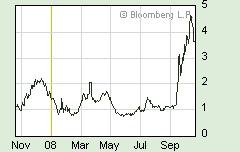
Posted by Eddy Elfenbein on October 20th, 2008 at 7:48 amThe TED spread is down to 327.
-
More Misery in Earnings
Posted by Eddy Elfenbein on October 20th, 2008 at 7:03 amIf I had to guess, I’d say the economy is in a recession right now. That’s not exactly a brilliant insight. It seems pretty obvious just by looking at equity prices.
Next week, the government will deliver its first report on Q3 GDP and I’m expecting a dismal number. Or rather, whenever we get the final report on Q3 GDP, I expect a dismal number. The problem with GDP reports is that they’re subject to constant revising, so it takes along time, several years in fact, to find out how well the economy is really doing.
A better measure is the unemployment rate. This, too, is imperfect, but it’s good at giving us a look at direction. And that direction has been nothing but down recently. The jobless rate reached 4.4% last March and got to 6.1% in September. If the rate gets to 8%, and we’re already nearly halfway there, that would be a 25-year high. I think 8% is very possible.
We’ll also get a good look at how the economy did in the third-quarter from corporate earnings. This week, one third of the companies in the S&P 500 report. Earnings for the S&P 500 will probably drop about 10% for the third quarter. There’s a lot of guesswork involved but the earnings declines will most likely continue through the first half of 2009.
The Wall Street Journal notes:Top-down estimates of 2009 earnings range anywhere from $87 a share down to $60 a share. An average of a handful of such forecasts is that earnings will fall roughly 10% next year to about $73 a share. Thus, Wall Street’s consensus may be overestimating earnings by at least 25%. Still, that means the S&P is trading at about 13 times forward earnings — also a relative bargain.
That forecast also assumes earnings will bottom early next year, resulting in at least a 10-quarter earnings decline of 30% from the 2007 peak to their trough. That would roughly match the 1989-91 earnings downturn, which also started with financials, lasted 10 quarters and shaved about 24% off earnings.The problem with looking at this market isn’t valuations. Equity prices were never in a bubble. The problem was that fundamentals cracked, and we don’t yet know where bottom is.
-
Minorities and the Housing Market
Posted by Eddy Elfenbein on October 20th, 2008 at 3:47 amI was doing some research on any connection between the rise of minority homeownership and the crash of the housing market. Personally. I’m skeptical but I’m open to the facts. I guess it’s a hot issue judging by these two quotes.
Barry Ritholtz:The four biggest problem areas for housing (by price decreases) are: Phoenix, Arizona; Las Vegas, Nevada; Miami, Florida, and San Diego, California. Explain exactly how these affluent, non-minority regions were impacted by the Community Reinvesment Act?
About half of all mortgages for blacks and Hispanics are subprime, versus roughly one-sixth for whites. Not surprisingly, the biggest home price collapses have occurred in heavily Hispanic cities such as Las Vegas, Miami, Phoenix, and Los Angeles.
I don’t have anything profound to add, but I thought it was interesting to come across this two quotes within a few minutes of each other.
-
CWS: The Most Accuratest Blog in the World
Posted by Eddy Elfenbein on October 17th, 2008 at 3:03 pmZignals did an analysis of the TickerSense Blogger Sentiment Poll. I’m proud say that your humble blogger is, by far, the most accurate prognosticator.
Well, there’s one small caveat. I made my opinion known in just one of the 19 weeks ( but I was right)!
Full disclosure: I have zero memory of making that call. -
Bank of England to Cut Rates
Posted by Eddy Elfenbein on October 17th, 2008 at 2:52 pmThe Bank of England is poised to cut interest rates to their lowest level since ’94.
That would be 1694. -
“Who Put This Dick on My Back?”
Posted by Eddy Elfenbein on October 17th, 2008 at 2:29 pm
-
Archives
- October 2026
- September 2026
- August 2026
- July 2026
- June 2026
- May 2026
- April 2026
- March 2026
- February 2026
- January 2026
- December 2025
- November 2025
- October 2025
- September 2025
- August 2025
- July 2025
- June 2025
- May 2025
- April 2025
- March 2025
- February 2025
- January 2025
- December 2024
- November 2024
- October 2024
- September 2024
- August 2024
- July 2024
- June 2024
- May 2024
- April 2024
- March 2024
- February 2024
- January 2024
- December 2023
- November 2023
- October 2023
- September 2023
- August 2023
- July 2023
- June 2023
- May 2023
- April 2023
- March 2023
- February 2023
- January 2023
- December 2022
- November 2022
- October 2022
- September 2022
- August 2022
- July 2022
- June 2022
- May 2022
- April 2022
- March 2022
- February 2022
- January 2022
- December 2021
- November 2021
- October 2021
- September 2021
- August 2021
- July 2021
- June 2021
- May 2021
- April 2021
- March 2021
- February 2021
- January 2021
- December 2020
- November 2020
- October 2020
- September 2020
- August 2020
- July 2020
- June 2020
- May 2020
- April 2020
- March 2020
- February 2020
- January 2020
- December 2019
- November 2019
- October 2019
- September 2019
- August 2019
- July 2019
- June 2019
- May 2019
- April 2019
- March 2019
- February 2019
- January 2019
- December 2018
- November 2018
- October 2018
- September 2018
- August 2018
- July 2018
- June 2018
- May 2018
- April 2018
- March 2018
- February 2018
- January 2018
- December 2017
- November 2017
- October 2017
- September 2017
- August 2017
- July 2017
- June 2017
- May 2017
- April 2017
- March 2017
- February 2017
- January 2017
- December 2016
- November 2016
- October 2016
- September 2016
- August 2016
- July 2016
- June 2016
- May 2016
- April 2016
- March 2016
- February 2016
- January 2016
- December 2015
- November 2015
- October 2015
- September 2015
- August 2015
- July 2015
- June 2015
- May 2015
- April 2015
- March 2015
- February 2015
- January 2015
- December 2014
- November 2014
- October 2014
- September 2014
- August 2014
- July 2014
- June 2014
- May 2014
- April 2014
- March 2014
- February 2014
- January 2014
- December 2013
- November 2013
- October 2013
- September 2013
- August 2013
- July 2013
- June 2013
- May 2013
- April 2013
- March 2013
- February 2013
- January 2013
- December 2012
- November 2012
- October 2012
- September 2012
- August 2012
- July 2012
- June 2012
- May 2012
- April 2012
- March 2012
- February 2012
- January 2012
- December 2011
- November 2011
- October 2011
- September 2011
- August 2011
- July 2011
- June 2011
- May 2011
- April 2011
- March 2011
- February 2011
- January 2011
- December 2010
- November 2010
- October 2010
- September 2010
- August 2010
- July 2010
- June 2010
- May 2010
- April 2010
- March 2010
- February 2010
- January 2010
- December 2009
- November 2009
- October 2009
- September 2009
- August 2009
- July 2009
- June 2009
- May 2009
- April 2009
- March 2009
- February 2009
- January 2009
- December 2008
- November 2008
- October 2008
- September 2008
- August 2008
- July 2008
- June 2008
- May 2008
- April 2008
- March 2008
- February 2008
- January 2008
- December 2007
- November 2007
- October 2007
- September 2007
- August 2007
- July 2007
- June 2007
- May 2007
- April 2007
- March 2007
- February 2007
- January 2007
- December 2006
- November 2006
- October 2006
- September 2006
- August 2006
- July 2006
- June 2006
- May 2006
- April 2006
- March 2006
- February 2006
- January 2006
- December 2005
- November 2005
- October 2005
- September 2005
- August 2005
- July 2005
 Eddy Elfenbein is a Washington, DC-based speaker, portfolio manager and editor of the blog Crossing Wall Street. His