-
Earnings from AFLAC and Fiserv
Posted by Eddy Elfenbein on January 30th, 2006 at 10:33 pmAfter the bell, two of our Buy List stocks reported earnings. AFLAC (AFL) said that it netted of 59 cents a share (excluding charges) for the fourth quarter. This was slightly below Wall Street’s forecast of 63 cents a share. However, AFLAC lost three cents a share due to currency translation. The company does most of its business in Japan.
AFLAC is one of my favorite stocks. It’s one of those stocks that consistently delivers. The company also reiterated its EPS growth forecast of 15%-16% for this fiscal year, and raised its dividend from 11 cents to 13 cents a share.
Don’t let the earnings miss fool you, this was a good quarter for AFLAC. Assuming AFLAC earns $2.92 a share for this year, the stock is going for a very reasonable 16 times earnings, which is in line with its growth rate. This is a solid, steady grower. I wish I knew how to quit this stock.
The other stock, Fiserv (FISV), reported earnings of 81 cents a share. Discounting the company’s newly acquired check-processing operations Fiserv earned 56 cents a share which was in line with analysts’ estimates. The company said that it expects to earn $2.46 to $2.53 a share for this year, so it’s trading around 18 times earnings. This is another high-quality stock.
In today’s market, Sysco (SYY) finished 6.2% higher. Only five of our 20 stocks rose, but Sysco’s big day helped the Buy List eek out a 0.03% gain. The S&P 500 rose 0.12%.
Our next earnings report is SEI Investments (SEIC) which is due on Wednesday. Expeditors (EXPD) is also due soon, but they haven’t said what day.
And finally, CNN reported:The latest Census Bureau report shows median prices for new residences sold in December fell 1.5 percent from the previous month to $221,800. Half of the homes sold for more than the median, the rest for less.
-
Earnings Guidance
Posted by Eddy Elfenbein on January 30th, 2006 at 1:26 pmFrom Hoku Scientific (HOKU):
Based upon projections, the Company expects net income to be in the range of a loss to break even or slightly profitable.
I’m glad that’s all cleared up.
-
Today is All about Energy Stocks
Posted by Eddy Elfenbein on January 30th, 2006 at 12:50 pmEnergy stocks are rallying and everything else is barely moving. This has become typical of the market in the past few years. Energy stocks either lead the market or trail it badly, while the rest of the market bounces along.
Here’s how the sector ETFs are performing today:
Energy (XLE) +2.52%
Tech (XLK) +0.37%
Materials (XLB) +0.22%
Industrial (XLI) +0.19%
Discretionary (XLY) +0.06%
Staples(XLP) -0.13%
Finance (XLF) -0.12%
Health care (XLV) -0.15%
Utility (XLU) -0.46% -
Sysco is up 5%
Posted by Eddy Elfenbein on January 30th, 2006 at 11:03 amThanks to ExxonMobil (XOM), today is another big day for the energy sector. Interestingly, ExxonMobil launched a preemptive public relations blitz and took out ads in several newspapers defending its profits.
Incidentally, Friday was another good day for the Buy List. We followed up Thursday’s impressive rally, which was our best day of the year, with our second-best day of the year.
For today, only five stocks on the Buy List are higher, but thanks to big rallies from Sysco (SYY) and Expeditors (EXPD), the Buy List as a whole is slightly in the black so far. Sysco is up nearly 5%, and Expeditors is at a new high. -
Risk is Relative
Posted by Eddy Elfenbein on January 30th, 2006 at 10:34 amIn the New York Times, Virginia Postrel had an interesting article on risk. She notes the work of Professor Shane Frederick of MIT who’s studied how people have different conceptions of risk. Risk truly is in the eye of the beholder.
Professor Frederick devised a simple math test in which all the answers are counter-intuitive. He found a very strong correlation between test answers and a person’s perception of risk.“Even when it actually hurts you on average to take the gamble, the smart people, the high-scoring people, actually like it more,” Professor Frederick said in an interview. Almost a third of high scorers preferred a 1 percent chance of $5,000 to a sure $60.
They are also more patient, particularly when the difference, and the implied interest rate, is large. Choosing $3,400 this month over $3,800 next month implies an annual discount rate of 280 percent. Yet only 35 percent of low scorers — those who missed every question — said they would wait, while 60 percent of high scorers preferred the later, bigger payoff.
Men and women also show different results. “Expressed loosely,” he writes, “being smart makes women patient and makes men take more risks.”You can see Professor Frederick’s original article here.
-
Sysco’s Earnings
Posted by Eddy Elfenbein on January 30th, 2006 at 9:48 amToday will be another busy day for earnings. ExxonMobil (XOM) reported that it earned $10 billion for the fourth quarter. According to Reuters, the company’s profit last year was larger than the economies of 125 countries.
Sysco (SYY) reported that it earned 33 cents a share, but had a charge of four cents a share due to stock options. Including that charge, Wall Street was expecting 37 cents a share. Sales also came in above expectations.
AFLAC (AFL) and Fiserv (FISV) will report after the close.
Dell’s (DELL) CEO said that its sales will grow faster than the market’s. The company is going to hire another 5,000 people in India, bringing its total in that country to 15,000. -
A Look at the Long Term
Posted by Eddy Elfenbein on January 27th, 2006 at 2:18 pmHere’s a question for you.
Including dividends and inflation, what’s the average rate of return for the broad stock market?
12%?
15%?
Not even close. Over the last 80 years, the real return of equities is just 7.1%. Pretty small. At that rate, you’ll double your money every 10.1 years.
I don’t think most investors realize how small the historical rate of return is.
Below is an interesting graph I made, but bear with me, it takes some explaining. I took the 80-year real return data and divided it by a line growing at 7% a year. By doing this, the unusual bull and bear periods stand out a lot better.
(If you’re confused, think of it this way: When this line is moving straight, equities are growing at 7% a year. Also, the line roughly begins and ends at 1.0.)
Interestingly, the 1987 crash only appears as a rather minor blip. From 2000-2002, the line gave back everything it gained from 1995 to 2000. Six years ago, it was hard to tell people that this isn’t normal. Now I think you can see what an outlier that period was.
It looks like there’s only been three truly great bull markets: one in the late-20’s, another in the early-50’s and another from 1982-2000.
I also think it’s interesting that the peaks and troughs are fairly symmetrical (1942 and 1982, 1966 and 2000).

-
Happy 250th Birthday Mozart
Posted by Eddy Elfenbein on January 27th, 2006 at 12:45 pm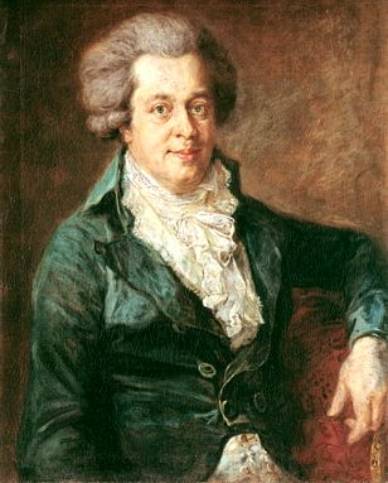
Wolfgang Amadeus Mozart was born in Salzburg on January 27, 1756. During his life, he wrote over 600 works. His output was astounding; 41 symphonies, 21 operas, 15 masses, 12 violin concertos, 27 concert arias, 17 piano sonatas, 26 string quartets and much, much more. He did it all in 35 short years.
Tom Lehrer said, “when Mozart was my age, he had been dead for two years.” -
Biomet Up 6%
Posted by Eddy Elfenbein on January 27th, 2006 at 11:34 amAnother good day for us. Biomet (BMET) is soaring. The shares are up over 6% today. Varian Medical (VAR) is up another 4% today. The stock is up 19% for us this year. Donaldson (DCI) is up to a new 52-week high, and Fiserv (FISV) is up over 3%. There’s still 4-1/2 hours of trading but this is a nice finish to week.
-
GDP Report
Posted by Eddy Elfenbein on January 27th, 2006 at 9:55 amToday, the government released its first report on fourth-quarter GDP growth. They released a GDP report at the end of each month, so this report will be revised twice more.
According to today’s report, the economy grew by 1.1% (annualized) for the last three months of 2005. That’s pretty bad and it’s about half of what economists were expecting.
Until now, the economy had delivered over 3.3% growth for ten straight quarters. So I guess we shouldn’t be too greedy. Also, this was positive growth so we can say that the economy isn’t receding.
The economy has grown at a faster rate over the last 3-1/2 years than it did during the 1990’s.
Reuters is declaring: “GDP growth at weakest in three years.” That’s accurate, but that headline can be used, on average, once every three years. For any set of 12 quarters, one will have to be the weakest. Of course, only three quarters ago we were being warned about the “Slowest GDP growth in 2 years.”
-
Archives
- June 2026
- May 2026
- April 2026
- March 2026
- February 2026
- January 2026
- December 2025
- November 2025
- October 2025
- September 2025
- August 2025
- July 2025
- June 2025
- May 2025
- April 2025
- March 2025
- February 2025
- January 2025
- December 2024
- November 2024
- October 2024
- September 2024
- August 2024
- July 2024
- June 2024
- May 2024
- April 2024
- March 2024
- February 2024
- January 2024
- December 2023
- November 2023
- October 2023
- September 2023
- August 2023
- July 2023
- June 2023
- May 2023
- April 2023
- March 2023
- February 2023
- January 2023
- December 2022
- November 2022
- October 2022
- September 2022
- August 2022
- July 2022
- June 2022
- May 2022
- April 2022
- March 2022
- February 2022
- January 2022
- December 2021
- November 2021
- October 2021
- September 2021
- August 2021
- July 2021
- June 2021
- May 2021
- April 2021
- March 2021
- February 2021
- January 2021
- December 2020
- November 2020
- October 2020
- September 2020
- August 2020
- July 2020
- June 2020
- May 2020
- April 2020
- March 2020
- February 2020
- January 2020
- December 2019
- November 2019
- October 2019
- September 2019
- August 2019
- July 2019
- June 2019
- May 2019
- April 2019
- March 2019
- February 2019
- January 2019
- December 2018
- November 2018
- October 2018
- September 2018
- August 2018
- July 2018
- June 2018
- May 2018
- April 2018
- March 2018
- February 2018
- January 2018
- December 2017
- November 2017
- October 2017
- September 2017
- August 2017
- July 2017
- June 2017
- May 2017
- April 2017
- March 2017
- February 2017
- January 2017
- December 2016
- November 2016
- October 2016
- September 2016
- August 2016
- July 2016
- June 2016
- May 2016
- April 2016
- March 2016
- February 2016
- January 2016
- December 2015
- November 2015
- October 2015
- September 2015
- August 2015
- July 2015
- June 2015
- May 2015
- April 2015
- March 2015
- February 2015
- January 2015
- December 2014
- November 2014
- October 2014
- September 2014
- August 2014
- July 2014
- June 2014
- May 2014
- April 2014
- March 2014
- February 2014
- January 2014
- December 2013
- November 2013
- October 2013
- September 2013
- August 2013
- July 2013
- June 2013
- May 2013
- April 2013
- March 2013
- February 2013
- January 2013
- December 2012
- November 2012
- October 2012
- September 2012
- August 2012
- July 2012
- June 2012
- May 2012
- April 2012
- March 2012
- February 2012
- January 2012
- December 2011
- November 2011
- October 2011
- September 2011
- August 2011
- July 2011
- June 2011
- May 2011
- April 2011
- March 2011
- February 2011
- January 2011
- December 2010
- November 2010
- October 2010
- September 2010
- August 2010
- July 2010
- June 2010
- May 2010
- April 2010
- March 2010
- February 2010
- January 2010
- December 2009
- November 2009
- October 2009
- September 2009
- August 2009
- July 2009
- June 2009
- May 2009
- April 2009
- March 2009
- February 2009
- January 2009
- December 2008
- November 2008
- October 2008
- September 2008
- August 2008
- July 2008
- June 2008
- May 2008
- April 2008
- March 2008
- February 2008
- January 2008
- December 2007
- November 2007
- October 2007
- September 2007
- August 2007
- July 2007
- June 2007
- May 2007
- April 2007
- March 2007
- February 2007
- January 2007
- December 2006
- November 2006
- October 2006
- September 2006
- August 2006
- July 2006
- June 2006
- May 2006
- April 2006
- March 2006
- February 2006
- January 2006
- December 2005
- November 2005
- October 2005
- September 2005
- August 2005
- July 2005
 Eddy Elfenbein is a Washington, DC-based speaker, portfolio manager and editor of the blog Crossing Wall Street. His