-
Morning News: October 27, 2016
Posted by Eddy Elfenbein on October 27th, 2016 at 7:42 amChina’s Slowing Industrial Profits Show Rising Debt Hampering Economy
U.K. Economy Wins Round One of Brexit Before Real Test Begins
Did Brexit Kill the British IPO Market?
Deutsche Bank Warns of Tough Times Ahead Due To U.S. Fine
Nissan Commits to Build New Models in Britain, Securing 7,000 Jobs
Ford Profit Falls Less Than Forecast Aided by Cost Controls
Twitter Beats Revenue, User Estimates and Cuts 9% of Workforce
China Logistics Company Raises $1.4 Billion in U.S. IPO
Qualcomm to Buy NXP Semiconductors For About $47 Billion Including Debt
VW Brand’s Massive Slump in Profit Sparks More Calls for Cost Cuts
Here’s The Big Problem Some Analysts Have With Tesla’s Results
Barclays Posts 35% Jump in Profit on Bond-Trading Revenue
AT&T Needs the Time Warner Content Factory to Survive
Cullen Roche: The Pitfalls of the Passive Investing Marketing Pitch
Jeff Miller: Things I Don’t Care About — And Neither Should You!!
Be sure to follow me on Twitter.
-
Fiserv Earned $1.14 per Share
Posted by Eddy Elfenbein on October 26th, 2016 at 4:09 pmAfter the closing bell, Fiserv (FISV) reported Q3 earnings of $1.14 per share, one penny more than expectations.
”Strong operating performance in the quarter drove double-digit adjusted earnings per share growth and excellent free cash flow,” said Jeffery Yabuki, President and Chief Executive Officer of Fiserv. “Outstanding sales results in the quarter should provide additional market momentum and growth.”
Here are some highlights:
• Adjusted revenue increased 5 percent in both the third quarter and first nine months to $1.31 billion and $3.86 billion, respectively, compared to the prior year periods.
• Internal revenue growth for the company was 4 percent in the third quarter, driven by 5 percent growth in the Payments segment and 2 percent growth in the Financial segment.
• Internal revenue growth for the company was 4 percent in the first nine months of 2016, led by 6 percent growth in the Payments segment and 1 percent growth in the Financial segment.
• Adjusted earnings per share increased 11 percent in the third quarter to $1.14 and 15 percent in the first nine months of 2016 to $3.28 compared to the prior year periods.
• Adjusted operating margin decreased 30 basis points to 32.8 percent in the quarter and increased 20 basis points to 32.2 percent in the first nine months compared to the prior year periods.
• Free cash flow increased 12 percent to $747 million in the first nine months of 2016 compared to the prior year period.
• Sales performance increased 34 percent in the quarter and 21 percent in the first nine months of 2016 compared to the prior year periods.
• The company repurchased 3.1 million shares of common stock for $329 million in the third quarter and 9.3 million shares of common stock for $933 million in the first nine months of 2016. As of September 30, 2016, the company had 8.1 million remaining shares authorized for repurchase.
For all of 2016, Fiserv expects EPS between $4.43 and $4.46. That means Q4 EPS between $1.15 and $1.18. Wall Street had been expecting $1.16.
“We continue to expect strong operating results despite a slight shortfall in revenue growth for the year. We anticipate revenue growth to accelerate in the fourth quarter and into 2017,” said Yabuki.
-
Biogen Beats Estimates
Posted by Eddy Elfenbein on October 26th, 2016 at 9:19 amThis morning, Biogen (BIIB) reported Q3 earnings of $5.19 per share. That’s a very strong number. Wall Street had been expecting $4.97 per share.
All across the board, Biogen had a very good quarter. Their star drug is Tecfidera. Last quarter, Tecfidera sales grew 10% to just over $1 billion.
Chief Executive George Scangos announced in July he would beleaving the company, allowing a new chief to lead the company as it works to reignite growth. The biotechnology giant has also drawn takeover interest from drug companies such as Merck Co. andAllergan PLC, The Wall Street Journal reported in August.
Overall for the third quarter, Biogen reported a profit of $1.03 billion, or $4.71 a share, up from $965.6 million, or $4.15 a share, a year earlier. Excluding the restructuring charges, among other items, per-share earnings rose to $5.19 from $4.48.
Total revenue rose 6% to $2.96 billion. Analysts had projected adjusted earnings of $4.97 a share on sales of $2.91 billion, according to Thomson Reuters.
The shares are up about 3.3% today.
-
Morning News: October 26, 2016
Posted by Eddy Elfenbein on October 26th, 2016 at 6:35 amThe Chinese Politics Of The Chem China – Syngenta Deal
Oil Price Declines Weigh on European Markets
U.S. Judge Approves $14.7 Billion Settlement in VW Diesel Scandal
Privacy Rule Imperils Data Riches as AT&T Pursues Time Warner
Airbus to Ramp Up Deliveries in Bid to Meet Earnings Targets
Bayer CEO Defends Planned Acquisition of Monsanto
Apple Predicts a Big Holiday Bounce After Its Biggest Rival, Samsung, Falters
Hyundai Motor’s Profit Tumbles to a Record Low
Lockheed Martin’s Quarterly Profit Handily Beats Estimates
IBM Watson Lends Brains to Slack’s Chatbot
Chipotle Outlines New Initiatives to Speed Recovery
Toyota to Recall 5.8 Million Cars in Japan, China, Europe Over Takata Airbags
Goldman Hopes You Won’t Notice How Many People It’s Laying Off
Howard Lindzon: Millennials and Retail: The Myth of Shut-in Nation
Be sure to follow me on Twitter.
-
Earnings from Express Scripts and CR Bard
Posted by Eddy Elfenbein on October 25th, 2016 at 5:10 pmAfter the closing bell, Express Scripts (ESRX) reported Q3 earnings of $1.74 per share. That matched Wall Street’s estimate on the nose. The company had previously given us a range of $1.72 to $1.76 per share.
Now for guidance. Express narrowed its full-year range from $6.33 – $6.43 per share to $6.36 – $6.42 per share. That translates to Q4 earnings of $1.84 to $1.90 per share. Wall Street had been expecting $1.85 per share. This was a good quarter for ESRX.
“The healthcare industry demands that we stay ahead of future trends and deliver solutions to emerging issues facing today’s market,” said Tim Wentworth, CEO and President. “Doing so deepens the trusted relationships we have built with our clients, resulting in another strong year in terms of client retention and new sales.”
Express also narrowed its expected retention rate for next year from 96% – 98% to 97% – 98%. It sounds minor but it’s very good to see.
CR Bard (BCR) reported Q3 earnings of $2.64 per share. That’s up 16% from last year, and it easily topped Wall Street’s estimate of $2.56 per share.
Timothy M. Ring, chairman and chief executive officer, commented, “The results this quarter demonstrate the continued strength of the economic engine of our business. We continue to increase investments in geographies, products, platforms, and programs that we believe can drive revenue growth longer term. During this period of increased investment in 2016, we have also been able to deliver attractive bottom-line returns for shareholders. We have increased our full-year financial guidance every quarter this year, and we are doing so again today. We expect a strong finish to what has been a very strong year for us so far.”
Bard now expects full-year sales growth of 8% to 9%. Excluding currency, that’s 9% to 10%. For earnings, Bard sees profits ranging between $10.23 and $10.28 per share. Their previous range was $10.10 to $10.20 per share. Wall Street had been expecting $10.17 per share.
Bard’s new range implies Q4 guidance of $2.70 to $2.75 per share. Wall Street had been expecting $2.74 per share. This was an excellent quarter for Bard.
-
Wabtec Earns 94 Cents per Share
Posted by Eddy Elfenbein on October 25th, 2016 at 8:09 amThis morning, Wabtec (WAB) reported Q3 earnings of 94 cents per share which was five cents below expectations.
The company also revised its guidance:
Based on its year-to-date results and outlook for the rest of the year, Wabtec updated its full-year 2016 guidance as follows: Revenues are now expected to be down about 12 percent compared to 2015, and earnings per diluted share are now expected to be between $4.00-$4.04. This guidance does not include costs for restructuring activities or expenses related to the Faiveley Transport acquisition. Faiveley Transport is a global supplier of high added value integrated systems for the railway industry with annual revenues of about $1.2 billion.
Raymond T. Betler, Wabtec’s president and chief executive officer, said: “Our transit business continues to perform well, while the freight markets remain challenging due to overall rail industry conditions and the sluggish global economy. We have continued to focus on controlling what we can by aggressively reducing costs, generating cash and investing in our growth opportunities, including acquisitions. At the same time, we are progressing toward completion of the Faiveley Transport acquisition and remain excited by its growth and improvement opportunities.”
WAB had previously lowered its full-year guidance to a range of $4 to $4.20 per share. The previous range had been $4.30 to $4.50 per share.
-
Morning News: October 25, 2016
Posted by Eddy Elfenbein on October 25th, 2016 at 7:11 amGerman Business Climate Hits 2-1/2 Year High in October
Samsung and Hyundai Troubles Weigh on South Korea’s GDP
Another Day, Another Record Low for the Chinese Yuan
U.S. Said to Be Closing in on Venezuelan Asset Seizures, Charges
AT&T’s Ambitious Advertising Plans With Time Warner Deal
Apple Boosted by IPhone 7 Demand, Slowing Pace of Sales Decline
Buick Up, Honda And Subaru Down, Says Consumer Reports
ChemChina Ready For Concessions To Clinch Delayed Syngenta Deal in 2017
New York Times Company Buys The Wirecutter
DuPont Boosts Profit Forecast Amid Rise in Revenue
Baker Hughes Posts Bigger Loss On Impairment Charges
Even Tata CEOs Said to Be Kept in Dark Over Chairman’s Ouster
Self-Driving Truck’s First Mission: A Beer Run
Roger Nusbaum: Big Merger Monday
Jeff Carter: Where VCs Are Putting Their Money
Be sure to follow me on Twitter.
-
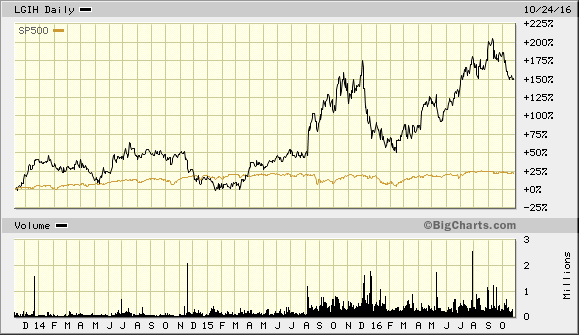
LGI Homes (LGIH)
Posted by Eddy Elfenbein on October 24th, 2016 at 11:52 amThe WSJ highlights LGI Homes (LGIH), a Texas-based homebuilder. Unlike others in the industry, LGI focuses on entry-level homes, and is seeing a booming business.
The key: LGI’s extensive marketing operation. The company sends out 400,000 targeted fliers each week to apartment complexes and other rental units within a 25-mile radius of its new home developments.
“Tired of paying rent?” reads one LGI flier from the Phoenix area. “Own a new home for $799/mo.”
LGI also notes in its fliers that its homes may not require a down payment. That is because home buyers may be able to qualify for rural home buyer programs run by the U.S. Department of Agriculture or loans from the U.S. Department of Veterans Affairs.
To close the deal, LGI instructs prospective buyers to call a toll-free number to set up an appointment for viewing a home.
“They know what they’re paying on rent, and if that number on the flier is lower, that’s going to open their eyes,” said Rick Palacios Jr., director of research at John Burns Real Estate Consulting.
The WSJ notes that the company is experiencing very rapid growth. LGI builds its homes in more remote areas in order to keep costs down. According to the WSJ, LGI’s average sale price is $197,450. That “compares with $362,000 and $290,400 for large builders Lennar Corp. and D.R. Horton Inc., respectively.”
-
The Changing Nature of the Investment Business
Posted by Eddy Elfenbein on October 24th, 2016 at 10:46 amI wanted to highlight these three recent news items because they all demonstrate major trends changing the investment industry.
Hedge Fund Investors Withdrew $28.2 Billion in Third Quarter
The Dying Business of Picking Stocks
How Banks Are Losing Clients to Their Own Employees
Number of hedge funds, mutual funds, ETFs: 28,700
Number of Starbucks locations: 23,768
— Morgan Housel (@morganhousel) October 24, 2016
It’s true. Nowadays, they’ll pretty much let ANYONE start an ETF.
-
Morning News: October 24, 2016
Posted by Eddy Elfenbein on October 24th, 2016 at 7:09 amChinese State-owned Banks Seen Selling Dollars to Shore Up Yuan
EU Presses Walloons Over Key Canada Trade Deal Ceta
Italy’s Monte dei Paschi Set to Approve Business Plan
These Banks Just Made a Huge Leap in International Blockchain Transactions
Who’s Behind the Deal Between AT&T and Time Warner?
TD Ameritrade, Toronto-Dominion Buy Scottrade for $4 Billion
Microsoft to Hike UK Enterprise Prices After Brexit Pounds Sterling
These 2 Major Aircraft Gear Makers Have Agreed to a $6.4 Billion Merger
Dick’s Wins Auction for U.S. Business of Bankrupt Golfsmith
Philips Profit Lifted by Health-Care Business
China Oceanwide Joins Spree With $2.7 Billion Genworth Bid
Chinese Firm Says Its Cameras Were Used to Take Down Internet
Cullen Roche: Three Things I Think I Think
Jeff Miller: When Will the Trading Range Be Broken?
Be sure to follow me on Twitter.
-
Archives
- September 2026
- August 2026
- July 2026
- June 2026
- May 2026
- April 2026
- March 2026
- February 2026
- January 2026
- December 2025
- November 2025
- October 2025
- September 2025
- August 2025
- July 2025
- June 2025
- May 2025
- April 2025
- March 2025
- February 2025
- January 2025
- December 2024
- November 2024
- October 2024
- September 2024
- August 2024
- July 2024
- June 2024
- May 2024
- April 2024
- March 2024
- February 2024
- January 2024
- December 2023
- November 2023
- October 2023
- September 2023
- August 2023
- July 2023
- June 2023
- May 2023
- April 2023
- March 2023
- February 2023
- January 2023
- December 2022
- November 2022
- October 2022
- September 2022
- August 2022
- July 2022
- June 2022
- May 2022
- April 2022
- March 2022
- February 2022
- January 2022
- December 2021
- November 2021
- October 2021
- September 2021
- August 2021
- July 2021
- June 2021
- May 2021
- April 2021
- March 2021
- February 2021
- January 2021
- December 2020
- November 2020
- October 2020
- September 2020
- August 2020
- July 2020
- June 2020
- May 2020
- April 2020
- March 2020
- February 2020
- January 2020
- December 2019
- November 2019
- October 2019
- September 2019
- August 2019
- July 2019
- June 2019
- May 2019
- April 2019
- March 2019
- February 2019
- January 2019
- December 2018
- November 2018
- October 2018
- September 2018
- August 2018
- July 2018
- June 2018
- May 2018
- April 2018
- March 2018
- February 2018
- January 2018
- December 2017
- November 2017
- October 2017
- September 2017
- August 2017
- July 2017
- June 2017
- May 2017
- April 2017
- March 2017
- February 2017
- January 2017
- December 2016
- November 2016
- October 2016
- September 2016
- August 2016
- July 2016
- June 2016
- May 2016
- April 2016
- March 2016
- February 2016
- January 2016
- December 2015
- November 2015
- October 2015
- September 2015
- August 2015
- July 2015
- June 2015
- May 2015
- April 2015
- March 2015
- February 2015
- January 2015
- December 2014
- November 2014
- October 2014
- September 2014
- August 2014
- July 2014
- June 2014
- May 2014
- April 2014
- March 2014
- February 2014
- January 2014
- December 2013
- November 2013
- October 2013
- September 2013
- August 2013
- July 2013
- June 2013
- May 2013
- April 2013
- March 2013
- February 2013
- January 2013
- December 2012
- November 2012
- October 2012
- September 2012
- August 2012
- July 2012
- June 2012
- May 2012
- April 2012
- March 2012
- February 2012
- January 2012
- December 2011
- November 2011
- October 2011
- September 2011
- August 2011
- July 2011
- June 2011
- May 2011
- April 2011
- March 2011
- February 2011
- January 2011
- December 2010
- November 2010
- October 2010
- September 2010
- August 2010
- July 2010
- June 2010
- May 2010
- April 2010
- March 2010
- February 2010
- January 2010
- December 2009
- November 2009
- October 2009
- September 2009
- August 2009
- July 2009
- June 2009
- May 2009
- April 2009
- March 2009
- February 2009
- January 2009
- December 2008
- November 2008
- October 2008
- September 2008
- August 2008
- July 2008
- June 2008
- May 2008
- April 2008
- March 2008
- February 2008
- January 2008
- December 2007
- November 2007
- October 2007
- September 2007
- August 2007
- July 2007
- June 2007
- May 2007
- April 2007
- March 2007
- February 2007
- January 2007
- December 2006
- November 2006
- October 2006
- September 2006
- August 2006
- July 2006
- June 2006
- May 2006
- April 2006
- March 2006
- February 2006
- January 2006
- December 2005
- November 2005
- October 2005
- September 2005
- August 2005
- July 2005
 Eddy Elfenbein is a Washington, DC-based speaker, portfolio manager and editor of the blog Crossing Wall Street. His