-
Morning News: January 28, 2016
Posted by Eddy Elfenbein on January 28th, 2016 at 7:08 amJapan’s Economy Minister Resigns Over Money Scandal, Denies Bribery
Saudi Arabia Keeps Pumping Oil, Despite Financial and Political Risks
Oil Producer Azerbaijan in Talks for International Aid
How Will Higher Interest Rates Impact Your Finances?
Deutsche Bank Loses Ground in Trading as Overhaul Tested
EU Considering Probe of Google Tax Deal in UK
Ford’s 2015 Profit Jumps on Stronger Sales
Samsung Elec Warns of Difficult 2016 as Smartphone Troubles Spread
Facebook Reports Soaring Revenue, Buoyed by Mobile Ads
Time Warner Cable’s Revenue, Profit Beat Estimates
Bristol Myers Guidance Tops Estimates
How a High-Flying Lawyer Botched His Big Case Against GM
Joshua Brown: What Is Beijing Trying to Signal to Us?
Roger Nusbaum: Crude Oil Is Not Going Out of Business
Be sure to follow me on Twitter.
-
Today’s Fed Statement
Posted by Eddy Elfenbein on January 27th, 2016 at 2:01 pmNo rate change as expected. Here’s today’s statement:
Information received since the Federal Open Market Committee met in December suggests that labor market conditions improved further even as economic growth slowed late last year. Household spending and business fixed investment have been increasing at moderate rates in recent months, and the housing sector has improved further; however, net exports have been soft and inventory investment slowed. A range of recent labor market indicators, including strong job gains, points to some additional decline in underutilization of labor resources. Inflation has continued to run below the Committee’s 2 percent longer-run objective, partly reflecting declines in energy prices and in prices of non-energy imports. Market-based measures of inflation compensation declined further; survey-based measures of longer-term inflation expectations are little changed, on balance, in recent months.
Consistent with its statutory mandate, the Committee seeks to foster maximum employment and price stability. The Committee currently expects that, with gradual adjustments in the stance of monetary policy, economic activity will expand at a moderate pace and labor market indicators will continue to strengthen. Inflation is expected to remain low in the near term, in part because of the further declines in energy prices, but to rise to 2 percent over the medium term as the transitory effects of declines in energy and import prices dissipate and the labor market strengthens further. The Committee is closely monitoring global economic and financial developments and is assessing their implications for the labor market and inflation, and for the balance of risks to the outlook.
Given the economic outlook, the Committee decided to maintain the target range for the federal funds rate at 1/4 to 1/2 percent. The stance of monetary policy remains accommodative, thereby supporting further improvement in labor market conditions and a return to 2 percent inflation.
In determining the timing and size of future adjustments to the target range for the federal funds rate, the Committee will assess realized and expected economic conditions relative to its objectives of maximum employment and 2 percent inflation. This assessment will take into account a wide range of information, including measures of labor market conditions, indicators of inflation pressures and inflation expectations, and readings on financial and international developments. In light of the current shortfall of inflation from 2 percent, the Committee will carefully monitor actual and expected progress toward its inflation goal. The Committee expects that economic conditions will evolve in a manner that will warrant only gradual increases in the federal funds rate; the federal funds rate is likely to remain, for some time, below levels that are expected to prevail in the longer run. However, the actual path of the federal funds rate will depend on the economic outlook as informed by incoming data.
The Committee is maintaining its existing policy of reinvesting principal payments from its holdings of agency debt and agency mortgage-backed securities in agency mortgage-backed securities and of rolling over maturing Treasury securities at auction, and it anticipates doing so until normalization of the level of the federal funds rate is well under way. This policy, by keeping the Committee’s holdings of longer-term securities at sizable levels, should help maintain accommodative financial conditions.
Voting for the FOMC monetary policy action were: Janet L. Yellen, Chair; William C. Dudley, Vice Chairman; Lael Brainard; James Bullard; Stanley Fischer; Esther L. George; Loretta J. Mester; Jerome H. Powell; Eric Rosengren; and Daniel K. Tarullo.
Surprisingly short statement. The Fed is staying the course. They expect inflation to rise to 2%, but oil and the dollar have made that quite difficult.
-
Biogen Soars
Posted by Eddy Elfenbein on January 27th, 2016 at 1:25 pmToday is shaping up to be a very strong day for our Buy List. Shares of Biogen (BIIB) have been up nearly 10% today. Stryker (SYK) is also having a very good day thanks to its earnings report.
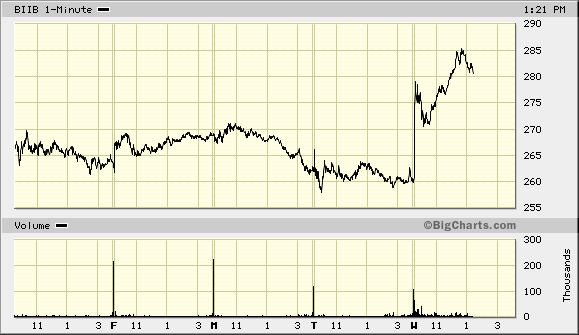
I can’t be sure just yet but it looks like the Buy List is outperforming the S&P 500 by about 60 basis points. That’s very good. We still have the Fed announcement coming later this afternoon. There are also four more Buy List earnings reports tomorrow.
One small news item. Late last year, Hormel Foods (HRL) announced plans for a 2-for-1 stock split. That was approved today by shareholders. The split is due for February 9.
-
Biogen Earns $4.50 per Share
Posted by Eddy Elfenbein on January 27th, 2016 at 8:07 amBiogen (BIIB) crushed their earnings estimates. For Q4, the biotech company earned $4.50 per share which was 42 cents better than estimates.
Revenue increased 7.5% to $2.84 billion, above the $2.71 billion analysts had forecast. The company cited the solid performance from its multiple sclerosis drugs and the strong adoption of its hemophilia therapies.
Tecfidera sales rose 8.4% to $992.8 million. Its revenue benefited from an increase in wholesale inventory.
Sales of the drug have been pressured recently because fewer new patients were being prescribed the drug, in part because of doctors’ concerns about a rare side effect that was linked to a patient death last year.
For 2016, Biogen forecast adjusted earnings of $18.30 and $18.60 a share, while analysts forecast $18.45 a share. The company said it expects revenue of $11.1 billion to $11.3 billion; analysts forecast $11.3 billion.
The shares are up about 6% in pre-market trading.
-
Morning News: January 27, 2016
Posted by Eddy Elfenbein on January 27th, 2016 at 6:56 amChina Shares End Lower, Taking 2016 Losses to $1.8 Trillion
RBS Sees $5.2 Billion Asset Value Hit, Clouding Dividend
Fed Faces a Messier Economic Picture Six Weeks After Rate Hike
Oil Resumes Decline Near $30 as U.S. Supplies Worsen Global Glut
The Dollar Keeps Rising, for Good or Evil
Toyota Stays Top-Selling Carmaker for Fourth Year as VW Retreats
Fiat Finds $1 Billion in Savings From Unlocking Chrysler’s Cash
Ericsson Earnings Fall Short as U.S. Rebound Stays on Hold
Chase Planning Rollout of Card-Free ATMs
Mitsubishi Electric, Hitachi Get $150 Million EU Cartel Fine
Sundance Roars For a Black Film, and Fox Searchlight Bids $17 Million
Cullen Roche: Three Things I Think I Think: Scary Stories Edition
Jeff Carter: Corporate Inversions: It’s Just Math
Be sure to follow me on Twitter.
-
Stryker Earned $1.56 per Share for Q3
Posted by Eddy Elfenbein on January 26th, 2016 at 4:13 pmStryker‘s (SYK) earnings are out. For Q4, the company earned $1.56 per share. As I said in Friday’s newsletter, this isn’t such a big surprise since they already told us earnings would be between $1.53 and $1.56 per share.
Quarterly sales grew 3.7% to $2.7 billion. That’s 7.0% in constant currency.
“With 2015 organic sales growth of 6.1%, bolstered by a strong fourth quarter increase of 6.4%, our top line results came in above our initial guidance,” said Kevin A. Lobo, Chairman and Chief Executive Officer. “This performance reflects the strength of our diversified revenue model, a commitment to innovation and the competitive advantage of our sales and marketing organizations. Our full year adjusted diluted EPS also exceeded our initial expectation, underscoring our commitment to delivering sales growth at the high end of med tech and leveraged earnings gains. With these results and the current momentum across our businesses, we feel well positioned heading into 2016.”
For all of 2015, Stryker made $5.12 per share. Just for the record, let’s remember Stryker’s guidance for this year. In January, the initial guidance was $4.90 to $5.10 per share. Then in April it went to $4.95 to $5.10 per share.
In July, Stryker brought it up to between $5.06 and $5.12 per share. In October, they raised the low end by one penny per share. A few weeks ago, they raised the low end by another two pennies.
Stryker made $4.73 per share last year.
Sales for the year rose by 2.8% to $9.9 billion. Again, that’s 7.0% in constant currency.
Now for guidance.
We expect 2016 constant currency sales growth in the range of 5.0% to 6.0% and adjusted net earnings per diluted share to be in the range of $1.17-$1.22 and $5.50-$5.70 for the first quarter and full year. If foreign currency exchange rates hold near current levels, we expect net sales in the first quarter and full year of 2016 to be negatively impacted by approximately 1.1% and 1.0% and adjusted net earnings per diluted share to be negatively impacted by approximately $0.02-$0.03 and $0.12-$0.13 in the first quarter and full year.
This was another solid year for Stryker. Here’s the annual EPS trend for Stryker: $2.95, $3.33, $3.72, $4.07, $4.23, $4.73, $5.12. And now make that $5.50 to $5.70 for next year.
-
Bond Yields and Stock Yields
Posted by Eddy Elfenbein on January 26th, 2016 at 9:11 amSorry for the teeny type. Here’s a chart I made showing the yield of the S&P 500 (in blue) along with the yield on the 10-year Treasury (in red).
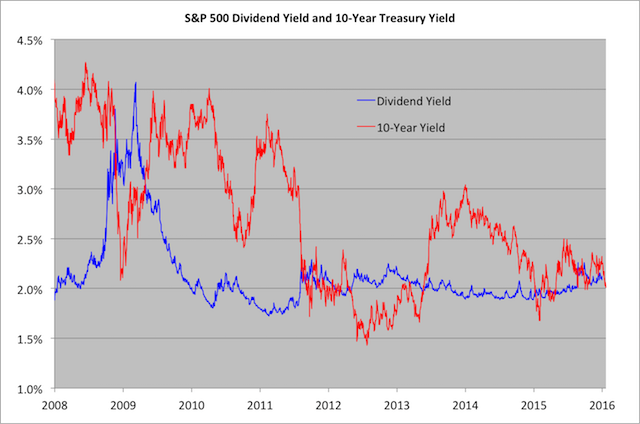
For decades, stocks yielded more than bonds. That changed in the mid-1950s when bonds paid better yields than stocks as Americans got used to capital gains.
That relationship lasted for over 50 years, but during the Financial Crisis stocks again out-yielded bonds. They’ve stayed pretty close to each other over the last four years.
Here’s some earlier (partial) data I was able to get from FRED.
-
Morning News: January 26, 2016
Posted by Eddy Elfenbein on January 26th, 2016 at 7:01 amChina Stocks Plunge to 13-Month Low Amid Capital Outflow Concern
African Economies, and Hopes for New Era, Are Shaken By China
OPEC’s El-Badri Calls on Global Oil Producers to Help Curb Glut
Russian Entente Nears as Allies Hint at End of Ukraine Sanctions
Iran’s Sanctions Lift, and the West Goes to Talk Business
The Five Scenarios Now Facing the Federal Reserve
Court Hands Administration, Environmentalists A Win In Electricity Supply Ruling
Hyundai Posts Lowest Profit in Five Years on China Slowdown
Twitter’s Overhaul of Top Ranks: Analysts React
So Far, Amazon and Netflix Are Sundance’s Top Buyers
J&J Sales Fall on Strong Dollar
U.S. Cruise Lines Look For Growth in China’s Waters
These Dudes Built An Igloo During The Blizzard And Listed It On Airbnb
Howard Lindzon: THE BANKS ARE CRASHING….Everyone to the FAZmobile
Joshua Brown: On Everyone’s Mind
Be sure to follow me on Twitter.
-
Stocks and Oil Are Correlated
Posted by Eddy Elfenbein on January 25th, 2016 at 12:56 pm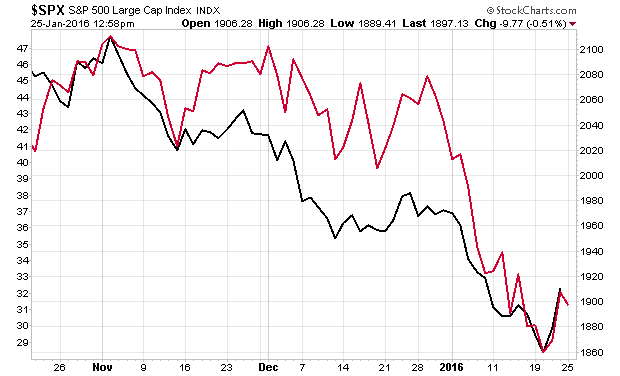
The WSJ notes that stocks and oil are 97% correlated this year. That’s the highest in 26 years.
The unusually strong link between the two markets partly reflects a common theme driving both: fears that a slowing Chinese economy could tip the global economy into recession. But as traders and investors in each market look at the other for clues as to how bad things are, they have exacerbated the overall bearish mood.
The recent pattern marks a shift in the dynamics of oil’s 19-month collapse. Traders who long worried that the oil market was suffering from oversupply are now growing increasingly concerned that demand may be weakening as well.
“There is a vicious-cycle mentality among investors,” said François Savary, Chief Investment Officer at Prime Partners, a Swiss investment firm managing $2.6 billion of assets. “It is become self-sustaining.”
In the chart above, red is the S&P 500 and black is oil.
It seems that we’ve turned a corner where lower oil went from being a net a benefit for the economy (lower gas prices, more consumer spending) to being a net negative for the economy (defaults, etc).
-
My Lousy Timing with McDonald’s
Posted by Eddy Elfenbein on January 25th, 2016 at 12:41 pmIt’s always good to look at my mistakes. In 2014, I added McDonald’s (MCD) to our Buy List. I can’t say I’m a big fan of their food, but I thought the stock was cheap and the company was poised for a turnaround.
My thesis was correct but my timing was off. The stock went nowhere during 2014 and I decided to boot it from the 2015 Buy List. Then in August 2015, the stock started to move. MCD went from a low of $87.50 in August to high today of $121.90.
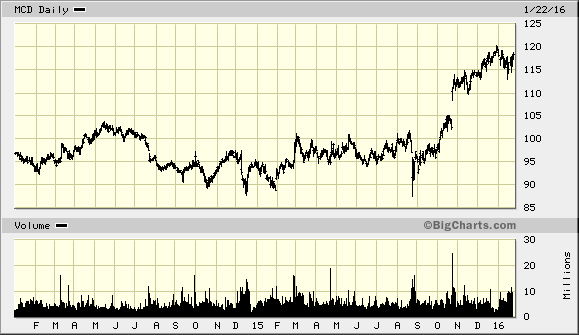
This morning, the fast food joint reported good earnings.
McDonald’s Corp.’s fourth-quarter profit and revenue soundly beat analysts’ expectations, as the company’s move to all-day breakfast helped drive the best quarterly results in the U.S. in nearly four years.
Signs that a turnaround under Chief Executive Steve Easterbrook was beginning to take hold emerged in the third quarter, when McDonald’s U.S. division posted its first quarterly increase in same-store sales in two years. That momentum continued into the fourth quarter with the launch of breakfast all day in early October—the company’s biggest strategic change since it rolled out McCafe beverages nationwide in 2009.
Investors expected all-day breakfast to boost sales, but not this much. Sales at U.S. restaurants open at least 13 months jumped 5.7% in the fourth quarter—far above the 2.7% growth analysts were expecting and the best same-store sales results in the U.S. in 15 quarters. Globally, same-store sales rose 5%, while analysts were expecting growth of 3.2%.
As Keynes supposed said, “markets can remain irrational a lot longer than you and I can remain solvent.” The guys in The Big Short had to wait and wait for their big bet to pay off as well. But it took time.
-
Archives
- June 2026
- May 2026
- April 2026
- March 2026
- February 2026
- January 2026
- December 2025
- November 2025
- October 2025
- September 2025
- August 2025
- July 2025
- June 2025
- May 2025
- April 2025
- March 2025
- February 2025
- January 2025
- December 2024
- November 2024
- October 2024
- September 2024
- August 2024
- July 2024
- June 2024
- May 2024
- April 2024
- March 2024
- February 2024
- January 2024
- December 2023
- November 2023
- October 2023
- September 2023
- August 2023
- July 2023
- June 2023
- May 2023
- April 2023
- March 2023
- February 2023
- January 2023
- December 2022
- November 2022
- October 2022
- September 2022
- August 2022
- July 2022
- June 2022
- May 2022
- April 2022
- March 2022
- February 2022
- January 2022
- December 2021
- November 2021
- October 2021
- September 2021
- August 2021
- July 2021
- June 2021
- May 2021
- April 2021
- March 2021
- February 2021
- January 2021
- December 2020
- November 2020
- October 2020
- September 2020
- August 2020
- July 2020
- June 2020
- May 2020
- April 2020
- March 2020
- February 2020
- January 2020
- December 2019
- November 2019
- October 2019
- September 2019
- August 2019
- July 2019
- June 2019
- May 2019
- April 2019
- March 2019
- February 2019
- January 2019
- December 2018
- November 2018
- October 2018
- September 2018
- August 2018
- July 2018
- June 2018
- May 2018
- April 2018
- March 2018
- February 2018
- January 2018
- December 2017
- November 2017
- October 2017
- September 2017
- August 2017
- July 2017
- June 2017
- May 2017
- April 2017
- March 2017
- February 2017
- January 2017
- December 2016
- November 2016
- October 2016
- September 2016
- August 2016
- July 2016
- June 2016
- May 2016
- April 2016
- March 2016
- February 2016
- January 2016
- December 2015
- November 2015
- October 2015
- September 2015
- August 2015
- July 2015
- June 2015
- May 2015
- April 2015
- March 2015
- February 2015
- January 2015
- December 2014
- November 2014
- October 2014
- September 2014
- August 2014
- July 2014
- June 2014
- May 2014
- April 2014
- March 2014
- February 2014
- January 2014
- December 2013
- November 2013
- October 2013
- September 2013
- August 2013
- July 2013
- June 2013
- May 2013
- April 2013
- March 2013
- February 2013
- January 2013
- December 2012
- November 2012
- October 2012
- September 2012
- August 2012
- July 2012
- June 2012
- May 2012
- April 2012
- March 2012
- February 2012
- January 2012
- December 2011
- November 2011
- October 2011
- September 2011
- August 2011
- July 2011
- June 2011
- May 2011
- April 2011
- March 2011
- February 2011
- January 2011
- December 2010
- November 2010
- October 2010
- September 2010
- August 2010
- July 2010
- June 2010
- May 2010
- April 2010
- March 2010
- February 2010
- January 2010
- December 2009
- November 2009
- October 2009
- September 2009
- August 2009
- July 2009
- June 2009
- May 2009
- April 2009
- March 2009
- February 2009
- January 2009
- December 2008
- November 2008
- October 2008
- September 2008
- August 2008
- July 2008
- June 2008
- May 2008
- April 2008
- March 2008
- February 2008
- January 2008
- December 2007
- November 2007
- October 2007
- September 2007
- August 2007
- July 2007
- June 2007
- May 2007
- April 2007
- March 2007
- February 2007
- January 2007
- December 2006
- November 2006
- October 2006
- September 2006
- August 2006
- July 2006
- June 2006
- May 2006
- April 2006
- March 2006
- February 2006
- January 2006
- December 2005
- November 2005
- October 2005
- September 2005
- August 2005
- July 2005
 Eddy Elfenbein is a Washington, DC-based speaker, portfolio manager and editor of the blog Crossing Wall Street. His