-
Stocks and Buyback Correlation = 0.61
Posted by Eddy Elfenbein on July 9th, 2014 at 12:03 pmYou should read the whole thing, but I wanted to share three sentence from Mark Hulbert’s latest.
New stock buybacks fell to $23.2 billion in June, the lowest level in a year and a half, according to fund tracker TrimTabs Investment Research. In May, the total was just $24.8 billion, and the monthly average in 2013 was $56 billion.
(…)
According to Santschi, the correlation coefficient between monthly buyback volume and the stock market’s level, for the period from 2006 until this spring, was 0.61.
(…)
Over the past five years, for example, per-share sales growth for S&P 500 companies has been an annualized 2.4%, lagging far behind the 20% annualized earnings per share growth rate.
-
Life Imitates Parody
Posted by Eddy Elfenbein on July 9th, 2014 at 11:55 amYesterday, Bloomberg ran this headline:
Concern Over ‘Severe’ Pullback Sends U.S. Stocks Lower
As a joke, I tweeted this three months ago:
-
The One- and Two-Year Treasuries
Posted by Eddy Elfenbein on July 9th, 2014 at 11:45 amI thought this was a simple but fascinating graph. It shows the yields for the one- and two-year Treasuries.
The difference between the red and blue line reflects the expectations that the red line will increase. The wider the spread, the more the red line is expected to rise over the next year. In 2009, those expectations were massively wrong. Gradually, the spread got narrower and narrower until 2011 and 2012 when there was very little difference.
In the last year, there’s finally been some daylight between the two lines. While the one-year yield hasn’t moved much, the two-year is beginning to creep higher. It recently cracked 0.5%. By looking at the two lines we can infer where the market expects the one-year yield to be one year hence.
The takeaway is that the market expects the Federal Reserve to do nothing to interest rates in the short term, but it expects an increase about one year from today.
-
NYT on James H. Simons
Posted by Eddy Elfenbein on July 9th, 2014 at 11:31 amThe New York Times profiles James H. Simons, the only person who’s ever made money off math:
Dr. Simons received his doctorate at 23; advanced code breaking for the National Security Agency at 26; led a university math department at 30; won geometry’s top prize at 37; founded Renaissance Technologies, one of the world’s most successful hedge funds, at 44; and began setting up charitable foundations at 56.
This year, he was elected to the National Academy of Sciences, an elite body that Congress founded during Lincoln’s presidency to advise the federal government.
With a fortune estimated at $12.5 billion, Dr. Simons now runs a tidy universe of science endeavors, financing not only math teachers but hundreds of the world’s best investigators, even as Washington has reduced its support for scientific research. His favorite topics include gene puzzles, the origins of life, the roots of autism, math and computer frontiers, basic physics and the structure of the early cosmos.
Wow.
-
Ford Close to Breakout
Posted by Eddy Elfenbein on July 9th, 2014 at 11:25 amShares of Ford ($F) got as high as $17.38 today. That’s two pennies shy of its highest price since October. After getting crushed in Europe, the automaker sees a profit coming soon.
Ford Motor Co., targeting an end to losses in Europe, maintained its forecast to return to profitability in the region by 2015, as it reported auto sales for the first six months that outpaced the broader industry.
“We are very, very pleased with where we are on our European transformation plan,” Stephen Odell, Ford’s Europe chief, told reporters today at the company’s headquarters in Dearborn, Michigan.
Auto sales in Europe are growing this year after falling to a two-decade low in 2013. The company has said it expects a smaller loss in the region this year and a return to profitability in 2015. The second-biggest U.S. automaker’s pretax operating loss in Europe narrowed to $194 million during the first quarter from a loss of $425 million during the same period last year.
Ford’s sales in Europe this year through June rose 6.6 percent from a year earlier, outpacing industry growth of 6.3 percent, the company said. For the first six months, the automaker’s market share in Europe, which it defines as 20 nations, was about 8 percent.
Earnings are due out in two weeks. Wall Street expects earnings of 38 cents per share which is down from 45 cents for last year’s Q2.
-
Morning News: July 9, 2014
Posted by Eddy Elfenbein on July 9th, 2014 at 6:47 amWhy UBS Says Brazil’s 7-1 Trouncing Is Bearish for Stocks
Wall Street Aims to Clear Low Bar For Earnings Season
Why Alcoa Gained and The Container Store Tumbled As Earnings Season Kicks Off
Trucks Left In The Dust as China Vehicle Market Races Ahead
Chinese Teens Beat U.S. Peers in Money Smarts
Vatican Bank Profits Tumble as Pope Francis Orders an Overhaul
Carlos Slim to Dismantle Mexican Empire
Fed’s Kocherlakota Gives Lukewarm Welcome to U.S. Unemployment Drop
Citigroup Is Said to Be Close to Settling Inquiry Into Mortgage Securities
Amazon Offers Authors 100% of Sales Amid Dispute
European Companies See Opportunity in the ‘Right to Be Forgotten’
GM Korea Workers Approve Strike as Wage Talks Stall
Joshua Brown: 361 Capital Weekly Research Briefing
Jeff Carter: How to Kill Your Company
Be sure to follow me on Twitter.
-
Capitalism – Born in England, Nourished in America
Posted by Eddy Elfenbein on July 8th, 2014 at 11:25 pmCapitalism – Born in England, Nourished in America
By Gary Alexander
Navellier MarketmailThe Bank of England was born 320 years ago, in July 1694. Here’s a short description of that important event from “War and Gold: A 500-Year History of Empires, Adventures and Debt,” by Kwasi Kwarteng:
“The setting up of the Bank of England allowed the government to borrow more cheaply. The initial amount raised was 1.2 million pounds at a time when total government spending in any given year was not much more than this sum. This money was raised by individuals pledging or ‘subscribing’ to lend certain amounts…There was an initial cap of 20,000 pounds for each individual subscription.
“The subscription books were opened in the Mercers’ Chapel on 21 June, 1694. A total of 300,000 pounds, a quarter of the initial sum, was subscribed on the first day. By noon on 2 July, in less than 11 days, the whole of the amount had been raised. There were over 1,200 subscribers and the very first names on the list were those of the King and the Queen, who subscribed 10,000 pounds jointly.”
The Bank of England, in turn, paid 8% a year interest, a relatively high rate even then. The Bank of England was privately owned for over 250 years, until it was nationalized by Atlee’s Labor Party in 1946.
In his 1930 Treatise on Money, British economist John Maynard Keynes wrote that the modern age began with the accumulation of capital in the 16th century, “which resulted from the treasure of gold and silver which Spain brought from the New World to the Old.” Keynes claimed this “profit inflation… created the modern world.” Capital creation “commenced in 1519 when the Aztec spoils arrived, and terminated as early as 1588, the year of the Armada.” However, Spain’s power soon eclipsed because it spent its gold on Armadas, rather than banking it and using the new assets as the basis for loans.
The British and the Dutch were able to build banking and stock market systems, while Spain created sinking assets – wooden ships. France also went the wrong direction. In the same year the Bank of England was founded, 1694, Scotsman John Law fought a duel in London, killing Edward Wilson. Law was sentenced to death, but he mysteriously escaped and fled to Amsterdam, where he picked up some lessons from Europe’s oldest stock exchange, founded in 1609 by the Dutch East India Company. Law then migrated to France where he created one of the great bubbles of all time, the Mississippi Company. His unique idea was to sell paper representing the hope of finding gold or silver in swampy delta land.
John Law consolidated the considerable debts of the spendthrift kings of France by creating shares in this pipedream of gold in America, specifically along the Mississippi River. Shares multiplied 60 fold from 1716 to 1719. Like 1929 or 1999, commoners reaped princely fortunes. Law promised that France would dominate all of Europe, and he could “ruin England and Holland” whenever he pleased, but Law’s Papier-mâché empire fell apart in early 1720 and Law fled Paris to seek his fortune in other European cities.
While France’s fortunes faded – in part due to the despotism which grew out of the French Revolution (225 years ago next Monday) – Britain continued to prosper throughout the 1800s. Between the fall of Napoleon in 1815 and World War I in 1914, Britain’s per capita wealth quadrupled, in real terms.
British historian Niall Ferguson wrote in The Cash Nexus that “Between 1816 and 1899, the UK government ran a deficit in excess of 1% of GNP in only four years.” This was the golden era, literally. Historian A.J.P. Taylor wrote in The Origins of the Second World War that the British people “reared in the stable economic world of the later nineteenth century” assumed that “a country could not flourish without a balanced budget and a gold currency.” The terrors of World War I put an end to that belief.
-
Reynolds and Lorillard Look to Merge
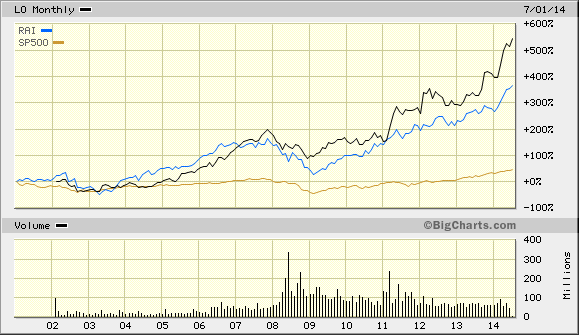
Posted by Eddy Elfenbein on July 8th, 2014 at 2:23 pmOne of my former Buy List stocks, Reynolds American ($RAI), is looking at a major merger with Lorillard ($LO). No deal has come forth yet, but both companies seem to be seriously interested. There’s been talk about some sort of deal for a long time, but now, it’s getting serious. I think we can expect some news by the end of the month.
Tobacco has been a great sector for investors and both stocks have done very well over the last several years. There are a lot of hurdles to a potential RAI-LO deal (legal, anti-trust, divestitures, etc.) Right now, the tobacco industry is very profitable. They’re not exactly monopolies, but some of the dynamics are the same. RAI pays a big fat dividend of 4.3%.
Overall, I’m not a big fan of deals like this. I think both companies would rather not do this deal. Mergers done out of fear are often bad omens. My other concern is that after years of above-market gains, these stocks are no longer the bargains they used to be.
-
The Bond Market Is Holding Up
Posted by Eddy Elfenbein on July 8th, 2014 at 10:18 amThe stock market is down again today. The S&P 500 is currently holding around 1,966. What’s interesting is that the small-caps have been in serious retreat. The little guys have been trailing the market since the beginning of the month. The Russell 2000 broke 1,200 last week. It’s now close to 1,170. Remember that that index tends to be weighted towards domestic manufacturers.
I continue to be surprised by the strength of the bond market. Despite more evidence of a stronger jobs market, and a wee bit more inflation, Treasury yields are holding firm. The yield on the 10-year had bounced up to 2.7% last week, but it’s now back down to 2.57%.
There’s not much going on in the market until earnings season begins later this month. Alcoa ($AA) is the first major company to report after today’s close. But after that, there’s not much until Wells Fargo ($WFC) reports on Friday.
Shares of Amazon ($AMZN) are weak today. The stock plunged from $408 in January to $284 by May. It’s been trying to rally since then. I’ve always thought Amazon was way overpriced and I’ve been consistently wrong about that.
-
Morning News: July 8: 2014
Posted by Eddy Elfenbein on July 8th, 2014 at 6:46 amEuro’s Reserve Appeal Fades as ECB Prompts Decline
Macro Horizons: More Bad News From Germany
Commerzbank Said Next to Face Penalties in U.S. Probe
Here’s What Temasek Bought Over the Past Year
Brent Oil Erases Iraqi Rally in London as Futures Retreat
Gold Shines Again as Hedge Funds Boost Wagers on Advance
Soybeans Slide for Seventh Session on Harvest Prospects
Smartphones Weigh on Samsung Elec as Guidance Disappoints
GM Korea CEO Warns of Output Cut as Strike Vote Looms
BMW Brand Auto Sales up 7.3% in June in China, US
Air France-KLM Shares Hit by Profit Warning
Crumbs, The Cupcakery That Couldn’t, Closes Up Shop
Box Raises $150 Million In Cash And Reports 2014 Sales Growth As It Crawls Toward IPO
Epicurean Dealmaker: You Go First
Howard Lindzon: Web Video Mega Trend Continues, The Future of (Digital) TV… and a TubeMogul Update
Be sure to follow me on Twitter.
-
Archives
- June 2026
- May 2026
- April 2026
- March 2026
- February 2026
- January 2026
- December 2025
- November 2025
- October 2025
- September 2025
- August 2025
- July 2025
- June 2025
- May 2025
- April 2025
- March 2025
- February 2025
- January 2025
- December 2024
- November 2024
- October 2024
- September 2024
- August 2024
- July 2024
- June 2024
- May 2024
- April 2024
- March 2024
- February 2024
- January 2024
- December 2023
- November 2023
- October 2023
- September 2023
- August 2023
- July 2023
- June 2023
- May 2023
- April 2023
- March 2023
- February 2023
- January 2023
- December 2022
- November 2022
- October 2022
- September 2022
- August 2022
- July 2022
- June 2022
- May 2022
- April 2022
- March 2022
- February 2022
- January 2022
- December 2021
- November 2021
- October 2021
- September 2021
- August 2021
- July 2021
- June 2021
- May 2021
- April 2021
- March 2021
- February 2021
- January 2021
- December 2020
- November 2020
- October 2020
- September 2020
- August 2020
- July 2020
- June 2020
- May 2020
- April 2020
- March 2020
- February 2020
- January 2020
- December 2019
- November 2019
- October 2019
- September 2019
- August 2019
- July 2019
- June 2019
- May 2019
- April 2019
- March 2019
- February 2019
- January 2019
- December 2018
- November 2018
- October 2018
- September 2018
- August 2018
- July 2018
- June 2018
- May 2018
- April 2018
- March 2018
- February 2018
- January 2018
- December 2017
- November 2017
- October 2017
- September 2017
- August 2017
- July 2017
- June 2017
- May 2017
- April 2017
- March 2017
- February 2017
- January 2017
- December 2016
- November 2016
- October 2016
- September 2016
- August 2016
- July 2016
- June 2016
- May 2016
- April 2016
- March 2016
- February 2016
- January 2016
- December 2015
- November 2015
- October 2015
- September 2015
- August 2015
- July 2015
- June 2015
- May 2015
- April 2015
- March 2015
- February 2015
- January 2015
- December 2014
- November 2014
- October 2014
- September 2014
- August 2014
- July 2014
- June 2014
- May 2014
- April 2014
- March 2014
- February 2014
- January 2014
- December 2013
- November 2013
- October 2013
- September 2013
- August 2013
- July 2013
- June 2013
- May 2013
- April 2013
- March 2013
- February 2013
- January 2013
- December 2012
- November 2012
- October 2012
- September 2012
- August 2012
- July 2012
- June 2012
- May 2012
- April 2012
- March 2012
- February 2012
- January 2012
- December 2011
- November 2011
- October 2011
- September 2011
- August 2011
- July 2011
- June 2011
- May 2011
- April 2011
- March 2011
- February 2011
- January 2011
- December 2010
- November 2010
- October 2010
- September 2010
- August 2010
- July 2010
- June 2010
- May 2010
- April 2010
- March 2010
- February 2010
- January 2010
- December 2009
- November 2009
- October 2009
- September 2009
- August 2009
- July 2009
- June 2009
- May 2009
- April 2009
- March 2009
- February 2009
- January 2009
- December 2008
- November 2008
- October 2008
- September 2008
- August 2008
- July 2008
- June 2008
- May 2008
- April 2008
- March 2008
- February 2008
- January 2008
- December 2007
- November 2007
- October 2007
- September 2007
- August 2007
- July 2007
- June 2007
- May 2007
- April 2007
- March 2007
- February 2007
- January 2007
- December 2006
- November 2006
- October 2006
- September 2006
- August 2006
- July 2006
- June 2006
- May 2006
- April 2006
- March 2006
- February 2006
- January 2006
- December 2005
- November 2005
- October 2005
- September 2005
- August 2005
- July 2005
 Eddy Elfenbein is a Washington, DC-based speaker, portfolio manager and editor of the blog Crossing Wall Street. His