-
Morning News: September 26, 2012
Posted by Eddy Elfenbein on September 26th, 2012 at 6:28 amRajoy Bets Italian Woes May Ease Spain Rescue Terms
Greece Hit By 24-Hour General Strike Ahead of New Budget Cuts
Germany Clears Last Hurdle To ESM Bailout Fund Ratification
RBS Instant Messages Show Libor Rates Skewed for Traders
Toyota Joins Nissan in Saying Deeper China Output Cuts Loom
AngloGold Mines Halted in South Africa as Strikes Spread
Housing Market Displays New Vigor as Prices Rise
Consumer Confidence in U.S. Rises to a Seven-Month High
Tesla Cuts Revenue Outlook, Unveils Plan to Sell More Shares
U.S. Regulators Order Discover to Pay $214 Million to End Probe
EU Rejects US Claim To Have Weaned Boeing Off Subsidies
ICAP Sees First-Half Revenue Down 14% on ‘Subdued’ Markets
Barnes & Noble Tablets Aim for Niche Below iPad
Jeff Carter: Meaningful Tidbits of Information-Job Creation and Bain Capital
Cullen Roche: When the Egos of Capitalists Ruin a Good Thing…
Be sure to follow me on Twitter.
-
DirecTV Hits 52-Week High
Posted by Eddy Elfenbein on September 25th, 2012 at 1:29 pmFrom Bloomberg:
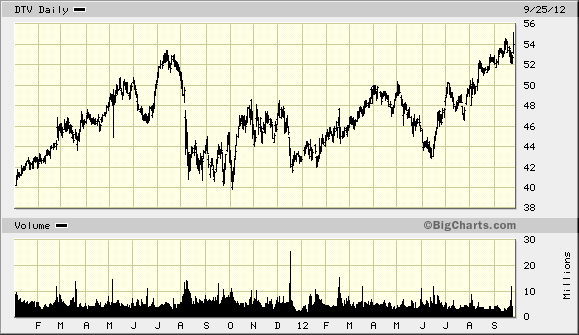
DirecTV (DTV), the largest U.S. satellite-television provider, rose to a record high after Hudson Square Research upgraded the stock to buy from hold.
The shares climbed 3.2 percent to $54.39 at 12:09 p.m. in New York. DirecTV, already up 23 percent this year, rose as much as 4.7 percent to $55.17 earlier in the session, reaching the highest level since the stock began trading in 1985.
-
Drunken Profits
Posted by Eddy Elfenbein on September 25th, 2012 at 11:15 amJosh Brown highlights this amusing tale from the London Telegraph:
It’s probably not uncommon for City traders to wonder how they burnt so much cash during a drunken night on the town.
But Steve Perkins was left with a bigger black hole in his memory than most when his employer rang one morning to ask what he’d done with $520m of the oil trading firm’s money.
It was 7.45am on June 30 last year when the senior, longstanding broker for PVM Oil Futures was contacted by an admin clerk querying why he’d bought 7m barrels of crude in the middle of the night.
The 34-year old broker at first claimed he had spent the night trading alongside a client. But the story began to fall apart when he refused to put the customer in touch with his desk for official approval of the trades.
By 10am it emerged that Mr Perkins had single-handedly moved the global price of oil to an eight-month high during a “drunken blackout”. Prices leapt by more than $1.50 a barrel in under half an hour at around 2am – the kind of sharp swing caused by events of geo-political significance. Ten times the usual volume of futures contracts changed hands in just one hour.
Oopsie.
-
Scattered Thoughts
Posted by Eddy Elfenbein on September 25th, 2012 at 10:55 amThe stock market is up again this morning but only by a modest amount. The market was helped by a strong Case-Shiller report and news that consumer confidence rose to a seven-month high.
I want to pass on a few scattered unrelated thoughts about some stocks.
FactSet Research Systems ($FDS) is down today even though they beat earnings and guided inline. I like this company a lot and it used to be a Buy List member. Unfortunately, I think the price is way too high. I wish it would come down a lot.
I often tell investors to ignore what happens to stocks after you sell them. Of course, I ignore this advice all the time only to my detriment. Of last year’s sells, I see that Gilead ($GILD) is up over 65% this year, Deluxe ($DLX) is up by 38% and Abbott Labs ($ABT) is up by 25%. Deep sigh.
I’ve been watching Global Payments ($GPN) lately. The stock was crushed earlier this year due to an embarrassing security breach. You’ll notice that many good bargains often have dents and scratches in them, but the question is how damaging are they. GPN still looks like a strong business. They report earnings tomorrow. The stock should probably be about $10 higher but I understand the market’s reticence. I’m not saying it’s a clear buy but it’s one to watch.
Seneca Foods ($SENEA) is one of those odd stocks I love. No one follows them but they continue to prosper. The stock is at a new 52-week high.
Cummins ($CMI) seems to be a very attractive stock. I’m surprised the stock is so low. The same could be said for Crane ($CR).
-
Morning News: September 25, 2012
Posted by Eddy Elfenbein on September 25th, 2012 at 6:30 amMerkel Says Markets Worried About Euro States Repaying Debt
The Trade-Off That Created Germany’s Job Miracle
Draghi Rally Lets Skeptics Dump Spain for Bunds
Spain Presses ECB to Quantify Bond Purchases as Bill Yields Rise
IMF No ‘Yes-Man’ For Euro Zone, Lagarde Says
I.M.F.’s Call for More Cuts Irks Greece
South Africa Warms To Shale Gas
Riot at Foxconn Factory Underscores Rift in China
Williams Says Fed to Pursue QE3 Until Job Market Rebounds
After U.S. Inquiries, Discover Agrees to Refund Some Credit Protection Fees
Jump in Home Deliveries Boosts Lennar’s Profit
Verizon to Pay More Than $510 Million to TiVo, ActiveVideo
Roger Nusbaum: Something No One Needs
Be sure to follow me on Twitter.
-
Google Hits All-Time High
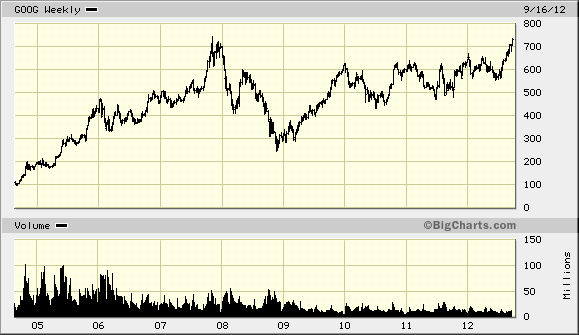
Posted by Eddy Elfenbein on September 24th, 2012 at 12:28 pmAfter five years, shares of Google have finally made an all-time intra-day high. On November 7, 2007, the stock got to $747.24.
-
Black Friday — 143 Years Ago Today
Posted by Eddy Elfenbein on September 24th, 2012 at 11:59 amToday is the 143rd anniversary of Black Friday when some speculators tried to corner the gold market. The government started selling gold and the speculators were wiped out.
Here’s the entry from Wikipedia:
During the reconstruction era after the American Civil War, the United States government issued a large amount of money that was backed by nothing but credit. After the war ended, people commonly believed that the U.S. Government would buy back the “greenbacks” with gold. In 1869, a group of speculators, headed by James Fisk and Jay Gould, sought to profit off this by cornering the gold market. Gould and Fisk first recruited Grant’s brother-in-law, a financier named Abel Corbin. They used Corbin to get close to Grant in social situations, where they would argue against government sale of gold, and Corbin would support their arguments. Corbin convinced Grant to appoint General Daniel Butterfield as assistant Treasurer of the United States. Butterfield agreed to tip the men off when the government intended to sell gold.
In the late summer of 1869, Gould began buying large amounts of gold. This caused prices to rise and stocks to plummet. After Grant realized what had happened, the federal government sold $4 million in gold. On September 20, 1869, Gould and Fisk started hoarding gold, driving the price higher. On September 24 the premium on a gold Double Eagle (representing 0.9675 troy ounces (30.09 g) of gold bullion at $20) was 30 percent higher than when Grant took office. But when the government gold hit the market, the premium plummeted within minutes. Investors scrambled to sell their holdings, and many of them, including Corbin, were ruined. Fisk and Gould escaped significant financial harm.
Subsequent Congressional investigation was chaired by James A. Garfield. The investigation was alleged on the one hand to have been limited because Virginia Corbin and First Lady Julia Grant were not permitted to testify. Garfield’s biographer, Alan Peskin, however, maintains the investigation was quite thorough. Butterfield resigned from the U.S. Treasury. Henry Adams, who believed that President Ulysses S. Grant had tolerated, encouraged, and perhaps even participated in corruption and swindles, attacked Grant in an 1870 article entitled The New York Gold Conspiracy. Grant’s suspected involvement also led his presidency to be called the Era of Good Stealings.
Although Grant was not directly involved in the scandal, his personal association with Gould and Fisk gave clout to their attempt to manipulate the gold market. Also, Grant’s order to release gold in response to gold’s rising price was itself a manipulation of the market. Grant had personally declined to listen to Gould’s ambitious plan to corner the gold market, since the scheme was not announced publicly, but he could not be trusted. Gould had promoted the plan to Grant as a means to help farmers sell a bountiful 1869 wheat crop to Europe.[1]
A highly fictionalized account of Fisk’s life, culminating in a dramatic presentation of the gold corner, was shown in the 1937 film The Toast of New York.
-
Morning News: September 24, 2012
Posted by Eddy Elfenbein on September 24th, 2012 at 6:31 amMerkel, Hollande EU Unity Pledge Fails to Stretch to Bank Union
Monti Should Seek Aid to Straitjacket Successor
Fed Recovery Doubts Spur Investor Bid for Treasuries
Oil Falls Below $110 On Growth Worries
Apple’s Feud With Google Is Now Felt on iPhone
Toyota Drops Plan For Widespread Sales Of Electric Car
CGGVeritas to Buy Fugro’s Seismic Unit for $1.6 Billion
EADS Says BAE Talks Productive, Expects To Meet Deadline
Data Barns in a Farm Town, Gobbling Power and Flexing Muscle
Jeff Miller: Weighing the Week Ahead: Time for a Rebound in Confidence?
Epicurean Dealmaker: Defending the Indefensible
Be sure to follow me on Twitter.
-
CWS Market Review – September 21, 2012
Posted by Eddy Elfenbein on September 21st, 2012 at 9:05 am“In modern business it is not the crook who is to be feared most; it is the honest man who doesn’t know what he is doing.” – William Wordsworth
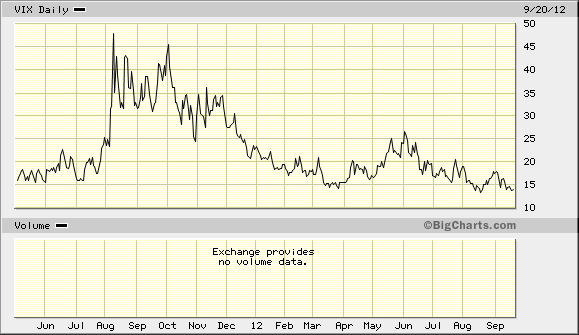
On the surface, Wall Street seemed very stable this week. The last three trading sessions all resulted in moves of less than 0.13% for the S&P 500. That’s not much at all, and it’s a welcome change from the 3% or 4% daily swings we saw this time last year. But this September, Wall Street is in a serene mood. The Volatility Index, or VIX, dropped below 14 on Wednesday, which is less than one-third the peak reading of one year ago.
But I’ll warn you, I don’t expect this quiet time to last. Just below the surface, unseen by most investors, the investing terrain is changing, and I think we’re in for an ugly few weeks. Don’t be too alarmed. I expect that after the election in November, Wall Street will be ready for a strong year-end run.
In this week’s CWS Market Review, we’ll look at what has me so concerned, plus I’ll show you the best ways to position your portfolio for the turbulent weeks ahead. I’ll also highlight the recent Buy List earnings reports from Bed Bath & Beyond ($BBBY) and Oracle ($ORCL). But first, let’s take a closer look at the quiet before the storm.
The Quiet before the Storm
The mood is quietly shifting on Wall Street as investors are beginning to set their sights on the third-quarter earnings season, which begins in just a few weeks. Analysts currently expect a modest earnings decline of 2.2%. That sounds about right, give or take. Once again, Wall Street will have to survey the damage done to profits thanks to the mess in Europe and the slowdown in China.
A possible preview came this week when FedEx ($FDX) slashed its full-year earnings forecast. This is noteworthy because FDX’s business is a decent barometer for the larger economy. The company had expected FY 2013 earnings to range between $6.90 and $7.40 per share. Now FedEx expects an earnings range between $6.20 and $6.60 per share.
What’s interesting is that FDX’s customers seem to be turning away from high-cost overnight services in place of slower and lower-cost alternatives. That’s what happens when people need to cut costs. And it’s not just FedEx. Bank of America ($BAC) also made headlines this week when it announced plans to lay off 16,000 people before the end of the year. I was also struck when Thursday’s report on initial jobless claims came in worse than expectations.
While the stock market has had an impressive 14% run since the June low, there’s been a nearly unnoticed but ultimately positive development for disciplined investors. Specifically, stock correlations have fallen. By this, I mean the tendency for stocks to move the same way each day. During the summer, it seemed like every stock was joined at the hip to every other. In July, the correlation among the ten S&P 500 sectors was an astonishing 89%.
This is bad news for large institutional traders because they need to prove to their clients that they can stand out from the crowd (and thereby justify their large fees). So when all the fish are swimming together, it’s harder for any single one to be the first up the falls. This is probably why hedge funds are having a terrible year. With our strategy of focusing on high-quality stocks, I’m cheering the decline in correlations. This makes it easier to pick up bargain stocks that have strayed far from the pack. Not only is stock correlation dropping, but the correlation between gold and the S&P 500 fell from 64% in July to 32.6% in August.
What’s causing the decline in correlations? That’s hard to say exactly. My guess is that this “disaggregation” is probably a reflection of the first hints of optimism in Europe. That’s why Draghi’s recent move was so important. When things there look so bleak, it was easy to treat anything that used dollars as the same thing. Well, that’s not the case anymore. Looking back on it, I think the IPO flop of Facebook ($FB) woke up a lot of investors.
The key for investors, as always, is to focus on high-quality stocks such as the members of our Buy List. I want to highlight Ford ($F) for a moment because this stock has been such a tremendous buying opportunity for us. I’ve mentioned several times recently how inexpensive it has become. Just last month, I wrote that I didn’t see how Ford could be trading for less than $10, but it was. Now the market has turned and this week, the shares got as high as $10.66. Ford does about one-fourth of its business in Europe, so the numbers in the near-term will be soggy, but that won’t last. Ford is an excellent buy anytime the stock is below $12 per share.
Take Advantage of the Drop in BBBY
On Wednesday, Bed Bath & Beyond ($BBBY) reported fiscal Q2 earnings of 98 cents per share which was four cents below Wall Street’s estimate. If you recall, when the previous earnings report came out in June, the company warned investors that Q2 earnings would range between 97 cents and $1.03 per share. At the time, Wall Street had been expecting $1.08 per share, so the stock got chopped for a 17% loss the next day.
So Bed Bath & Beyond’s warning was accurate. Interestingly, net income fell by 2.2%, but earnings-per-share increased from 93 cents to 98 cents per share thanks to fewer outstanding shares. BBBY seems to be one the few companies that truly reduces their share base. Total revenue rose 12.05% to $2.593 billion. The key retailing metric, comparable store sales, rose by 3.5%, which is a decent number.
The problem with Bed Bath & Beyond right now is that the company has become overly reliant on discount coupons in order to get people in the door. That’s fine during a recession when there’s a lot of pressure on you to clear out your shelves. But now that the economy isn’t so dire and the housing sector is showing some tentative signs of recovery, they need to have greater pricing power.
Bed Bath & Beyond’s net profit margin dropped from 9.91% for last year’s second quarter to 8.65% for this year’s Q2. Put it this way—a falloff in margins like that turns a sales increase of 14.57% into an increase in profits of 0%. It’s hard to fight against the discounting tide.
But the most important news was the forecast for Q3 and the entire year. Bed Bath & Beyond sees Q3 earnings ranging between 99 cents and $1.04 per share. The Street had been expecting $1.02, so it was still within range. The company kept their full-year guidance the same, between the high single digits and the low double digits. Investors, however, reacted very negatively, and the stock dropped nearly 10% on Thursday.
While I’m concerned about the company’s overuse of coupons, I still like BBBY a lot. They overcame the housing bust, which was much more serious than this. To reflect the selloff, I’m lowering my Buy Below on Bed Bath & Beyond to $67 per share. This is a very good company.
Oracle Is a Good Buy Below $35
After the closing bell on Thursday, Oracle ($ORCL) reported fiscal Q1 earnings of 53 cents per share, which matched Wall Street’s forecast. Personally, I was expecting much more. This was a decent increase from last year’s Q1, when Oracle earned 48 cents per share. The trouble spot was on the top line. Oracle’s sales fell by 2% to $8.18 billion, which was $230 million below the Street’s forecast.
Like a lot of companies, Oracle got dinged by currency costs. The strong dollar puts the squeeze on all that money flowing back to the United States. Oracle said that adjusting for currency cost them three cents per share in earnings.
The good news is that Oracle’s licensing revenue rose by 5% last quarter. This is important because it’s probably a good sign of future revenue. Unfortunately, this growth is a slight drop-off from the 7% rate in the previous quarter. Still, Oracle’s CFO said “we’re off to a good start in the new year,” and I have to agree.
On the conference call, Oracle said it expects Q2 earnings ranging between 59 and 63 cents per share and sales growth of flat to 4%. The Street had been expecting 61 cents per share and 4.7% growth. So the outlook was mostly within expectations. I think traders were nervous about this earnings report, as shares of ORCL pulled back on Wednesday and Thursday, but these numbers allay any worries I had. Oracle is a very solid buy up to $35 per share.
Updates to Our Buy Below Prices
Before I go, I want to make a few adjustments to our Buy Below prices. You’ll notice that many of our buy prices are pretty close to the current prices. That’s exactly how I want it. This is an unforgiving market, so let’s not chase stocks but instead wait for good prices to come to us.
For adjustments, let’s start with Hudson City ($HCBK), which continues to look good. I’m raising the buy price to $8. DirecTV ($DTV) just hit a 52-week high last Friday. I’m raising the Buy Below on DTV to $55 per share. I also want to bump up Medtronic’s ($MDT) Buy Below to $46.
That’s all for now. Next week, we’ll get important reports on consumer confidence and durable-goods orders, plus another revision to the Q3 GDP. Be sure to keep checking the blog for daily updates. I’ll have more market analysis for you in the next issue of CWS Market Review!
– Eddy
-
Morning News: September 21, 2012
Posted by Eddy Elfenbein on September 21st, 2012 at 8:29 amItaly, Spain Won’t Seek Aid Unless Yields Surge, Official Says
Spain’s Leader Fails to Reach Deal With Catalonia
ECB Says Cost of New Frankfurt Skyscraper Soars by 41%
Draghi Plan Helping Only Those Who Don’t Need It
Canadian Auto Workers Union and G.M. Agree on Contract
Lonmin Deal With Illegal Strikers Sets ‘Dangerous’ Precedent
Oil Trims Biggest Drop Since June as Losses Considered Excessive
Behind the Scenes, Some Lawmakers Lobby to Change the Volcker Rule
Wal-Mart Is Deleting the Kindle From Stores
Bank of America Ramps Up Job Cuts
Norfolk Southern Falls as Profit Echoes FedEx Slowdown
Microsoft, HP Skirted Taxes Via Offshore Units-U.S. Senate Panel
Universal Wins E.U. Approval for Purchase of EMI
Credit Writedowns: Expats’ Leaving China In Droves Is A Bad Economic Signal
Howard Lindzon: Entrepreneurs and Angels are Arm Chair Quarterbacks…Revisited
Be sure to follow me on Twitter.
-
Archives
- October 2026
- September 2026
- August 2026
- July 2026
- June 2026
- May 2026
- April 2026
- March 2026
- February 2026
- January 2026
- December 2025
- November 2025
- October 2025
- September 2025
- August 2025
- July 2025
- June 2025
- May 2025
- April 2025
- March 2025
- February 2025
- January 2025
- December 2024
- November 2024
- October 2024
- September 2024
- August 2024
- July 2024
- June 2024
- May 2024
- April 2024
- March 2024
- February 2024
- January 2024
- December 2023
- November 2023
- October 2023
- September 2023
- August 2023
- July 2023
- June 2023
- May 2023
- April 2023
- March 2023
- February 2023
- January 2023
- December 2022
- November 2022
- October 2022
- September 2022
- August 2022
- July 2022
- June 2022
- May 2022
- April 2022
- March 2022
- February 2022
- January 2022
- December 2021
- November 2021
- October 2021
- September 2021
- August 2021
- July 2021
- June 2021
- May 2021
- April 2021
- March 2021
- February 2021
- January 2021
- December 2020
- November 2020
- October 2020
- September 2020
- August 2020
- July 2020
- June 2020
- May 2020
- April 2020
- March 2020
- February 2020
- January 2020
- December 2019
- November 2019
- October 2019
- September 2019
- August 2019
- July 2019
- June 2019
- May 2019
- April 2019
- March 2019
- February 2019
- January 2019
- December 2018
- November 2018
- October 2018
- September 2018
- August 2018
- July 2018
- June 2018
- May 2018
- April 2018
- March 2018
- February 2018
- January 2018
- December 2017
- November 2017
- October 2017
- September 2017
- August 2017
- July 2017
- June 2017
- May 2017
- April 2017
- March 2017
- February 2017
- January 2017
- December 2016
- November 2016
- October 2016
- September 2016
- August 2016
- July 2016
- June 2016
- May 2016
- April 2016
- March 2016
- February 2016
- January 2016
- December 2015
- November 2015
- October 2015
- September 2015
- August 2015
- July 2015
- June 2015
- May 2015
- April 2015
- March 2015
- February 2015
- January 2015
- December 2014
- November 2014
- October 2014
- September 2014
- August 2014
- July 2014
- June 2014
- May 2014
- April 2014
- March 2014
- February 2014
- January 2014
- December 2013
- November 2013
- October 2013
- September 2013
- August 2013
- July 2013
- June 2013
- May 2013
- April 2013
- March 2013
- February 2013
- January 2013
- December 2012
- November 2012
- October 2012
- September 2012
- August 2012
- July 2012
- June 2012
- May 2012
- April 2012
- March 2012
- February 2012
- January 2012
- December 2011
- November 2011
- October 2011
- September 2011
- August 2011
- July 2011
- June 2011
- May 2011
- April 2011
- March 2011
- February 2011
- January 2011
- December 2010
- November 2010
- October 2010
- September 2010
- August 2010
- July 2010
- June 2010
- May 2010
- April 2010
- March 2010
- February 2010
- January 2010
- December 2009
- November 2009
- October 2009
- September 2009
- August 2009
- July 2009
- June 2009
- May 2009
- April 2009
- March 2009
- February 2009
- January 2009
- December 2008
- November 2008
- October 2008
- September 2008
- August 2008
- July 2008
- June 2008
- May 2008
- April 2008
- March 2008
- February 2008
- January 2008
- December 2007
- November 2007
- October 2007
- September 2007
- August 2007
- July 2007
- June 2007
- May 2007
- April 2007
- March 2007
- February 2007
- January 2007
- December 2006
- November 2006
- October 2006
- September 2006
- August 2006
- July 2006
- June 2006
- May 2006
- April 2006
- March 2006
- February 2006
- January 2006
- December 2005
- November 2005
- October 2005
- September 2005
- August 2005
- July 2005
 Eddy Elfenbein is a Washington, DC-based speaker, portfolio manager and editor of the blog Crossing Wall Street. His