-
CWS Market Review – November 11, 2011
Posted by Eddy Elfenbein on November 11th, 2011 at 8:49 amJust when I thought the market was getting back to something resembling normal, the S&P 500 got hit for a 3.67% loss on Wednesday. In the five weeks preceding that (more precisely, from October 3rd to November 8th), the index gained 16.1% which is an impressive rally for such a short period of time. But once again, Europe’s mess is our pain.
The latest worry is Italy and truthfully, the story in Italy is basically the same as the story in Greece, except that it’s much larger which means that it’s potentially far worse. If need be, Greece can be tossed aside. Italy can’t. It’s perfectly positioned in no man’s land: too big to fail and too big to save. Italy is the third-largest economy in Europe and it holds $2.6 trillion in debt. That’s more than Greece, Ireland, Spain and Portugal combined. If that’s defaulted, well…people notice that sort of thing.
Investors have grown very weary of holding Italian bonds and I don’t blame them. The yield on the ten-year bond there shot up past 7% which is the trigger point at which other countries have sought bailouts. In the realm of international finance, the bond market is the court of no appeal; once that’s turned against you, the end is certainly near. Your business or economy can be a complete wreck but as long as someone is willing to lend you money, you can stay alive. But once the money train ends, you’re done. James Carville, the former political advisor to President Clinton, once said that he’d prefer to be reincarnated as the bond because “you can intimidate everybody.” He’s right.
To their credit, the Italian government has gotten intimidated. They’ve promised to fast-track reforms and that helped the markets recover a bit on Thursday. The European Central Bank has jumped in, starting to buy Italian debt in an effort to push down yields. Also, Prime Minister Berlusconi has promised to step down after a new budget deal is reached. Yesterday the Italian government auctioned off some one-year debt and that went much better than expected.
As I said last week, my fear is that all these moves merely treat the symptoms without curing the disease which is an inherently dysfunctional currency union. In fact, I’m not sure that the ECB can ultimately help Italy. We might really be seeing the end of the euro. In last week’s CWS Market Review, I said that the currency might be able to survive in a smaller union. Now we learn that France and Germany have been talking about exactly that for the past several months. For the euro to live, the periphery of Europe needs to start growing again and soon, and that won’t be easy with their new-found austerity. For now, I think the most-probable path will be a much weaker euro. This mess is going to get worse before it gets better.
One beneficiary of the nervousness in Europe is the U.S. bond market. Two weeks ago, the yield on the 10-year note broke above 2.4%, and that was a move I was happy to see. Investors are well-advised to shift out of these safe assets in exchange for riskier assets like high-yielding stocks. On Wednesday, however, the yield on the 10-year got as low 1.93%. Things could be changing. On Thursday, the Treasury auctioned off a new batch of 10-year notes and the demand was the lowest it’s been in nearly two years.
Now let’s turn to our Buy List. Some of the higher-yielding stocks I like right now include AFLAC ($AFL), Johnson & Johnson ($JNJ), Reynolds American ($RAI) and Sysco ($SYY). This week we had a last trickle of earnings reports for this earnings season. On Friday, Moog ($MOG-A) delivered a great earnings report. For their fiscal fourth quarter, Moog made 83 cents per share which was 10 cents more than Wall Street’s estimate. That also represented 17% growth over last year.
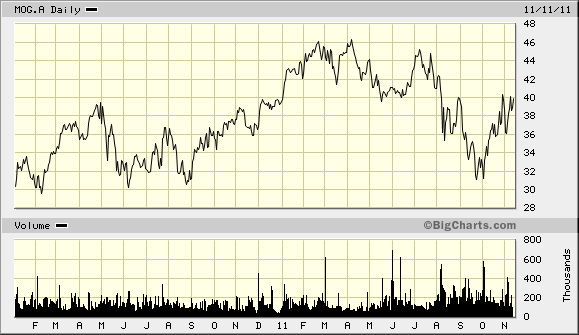
The more I look at Moog’s number, the more I like them. For all of 2011, Moog earned $2.95 per share. For 2012, the company sees sales increasing by 8% to $2.52 billion and EPS rising 12% to $3.31. Wall Street had been expecting $3.25 per share.
As a business Moog is very profitable, but as a stock it’s dull as dirt and that suits me just fine. The shares are basically flat for the year, but if you’re able to get MOG-A for less than $40 (which is 12 times forward earnings), then you’ve gotten yourself a good deal.
On Monday, Sysco ($SYY) reported quarterly earnings of 55 cents per share which topped Wall Street’s estimates by thee cents per share. Overall, the company had a very good quarter though demand wasn’t nearly as strong as I’d like. The good news, though not for consumers, was that Sysco’s bottom line was helped by higher food prices. I’m not so worried about factors that may impact Sysco’s business in the short term.
Here’s the important part: Sysco has raised its quarterly dividend for the last 41 years in a row, and I expect to see #42 very soon. However, the increase will probably be very modest. My guess is that the board will bump up the quarterly dividend from 26 cents to 27 cents per share. That would give the shares a yield of close to 4%. In this environment, that’s not bad. Sysco is a good buy up to $30 per share.
After the closing bell on Tuesday, Leucadia National ($LUK) reported a loss of $291 million for the third quarter. I have to explain that LUK refuses to play the quarterly earnings game. Since no analysts on Wall Street cover the stock, which is basically a large closed-end fund, the earnings report can be misleading. What’s hurt Leucadia lately is its holding of Jefferies ($JEF). LUK’s stock dropped more than 12% on Wednesday.
That’s all for now. The bond market will be closed on November 11th in honor of Veterans’ Day. Next week will be the last full week of trading before Thanksgiving. Be sure to keep checking the blog for daily updates. I’ll have more market analysis for you in the next issue of CWS Market Review!
– Eddy
-
Morning News: November 11, 2011
Posted by Eddy Elfenbein on November 11th, 2011 at 6:48 amEconomist Named to Lead Greek Unity Government
Italy Looks to New Government Led by Mario Monti
Europe’s Banks Turned to Safe Bonds and Found Illusion
Invisible Bank Run Becomes Conversation With 7% Italy Yield
China New Loans Rise More Than Expected in Loosening Signal
APEC CEOs to World Leaders: Boost Trade and Growth
In MF Global’s Wake, Regulators to Audit All Futures Firms
US Stocks Rise As Jobs Data Fuel Optimism
Jobless Claims in U.S. Fall to Lowest Level in Seven Months
Sinopec to Pay Galp $3.5 Billion for Brazilian Oil Stake
GE Predicts Growth Above 10% in Emerging Markets
Zynga Leans On Some Workers to Surrender Pre-IPO Shares
Latest Starbucks Concoction: Juice
Disney Profit Jumps 30% on Theme Parks, TV
Layoffs Tip Spain’s Telefónica Into Loss
Phil Pearlman: Apple and the Genius Premium
Howard Lindzon: Timestamps Matter and Sometimes You Just Have To Call the Authorities
Be sure to follow me on Twitter.
-
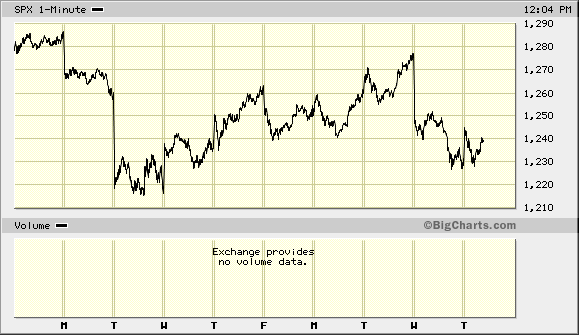
The S&P 500 Peaks Above 1,240
Posted by Eddy Elfenbein on November 10th, 2011 at 12:10 pmAfter yesterday’s bloodbath — which mostly happened in the afternoon — the S&P 500 has slowly gained back some territory.
What I find interesting is that for now, there seem to be buyers willing to defend the market above 1,200. That didn’t happen a few weeks ago.
-
Morning News: November 10, 2011
Posted by Eddy Elfenbein on November 10th, 2011 at 5:19 amInvestors Around the World Flee Stocks
Italy’s Senate Speeds Austerity Vote
China’s Trade Surplus Widens, Falls Short of Forecast
Trade War in Solar Takes Shape
E.U. Poised to Overtake U.S. as Biggest Oil Importer
Corporate Japan Rocked by Scandal at Olympus
Sweden’s Tough Love of Banks is World Model
G.M. Posts Quarterly Profit, but Chief Calls It Insufficient
Deutsche Telekom Net Profit Rises
Siemens Sees Stagnant Profit as Growth Slows
Aegon Net Drops 95%, Hurt by Falling Stocks, Interest Rates
Wal-Mart to Start Its Sales at 10 P.M. on Thanksgiving
Google’s Chief Works to Trim a Bloated Ship
Jeff Carter: Yet Another Buying Opportunity?
Stone Street: Analyzing the Popular Proposals for Mortgage Principal Writedowns, Part I, Part II, Part III
Be sure to follow me on Twitter.
-
The Stock Market’s Gain Has Come on One Day in Every 21 Months
Posted by Eddy Elfenbein on November 9th, 2011 at 1:04 pmThe Dow’s entire 3,066% gain since the 1929 top came on just 46 days. On average, that’s being long on just one day every 21 months. The other 99.78% of the time, the Dow has been flat.
While this fact is technically correct, it’s very misleading. For one, I’m using the market’s top in 1929, plus I’m not including dividends.
But what really makes the stat work is the market’s volatility. Those 46 days were all days of greater than 5.3% rallies. In fact, 34 of those 46 days occurred from 1929 to 1933.
-
Italian Bond Market Sinks U.S. Stocks
Posted by Eddy Elfenbein on November 9th, 2011 at 9:57 amThe market is down sharply this morning on the news of a seriously freaked out bond market in Italy. If the bond market ain’t happy, ain’t nobody happy.
Ten-year bonds are now paying more than 7% which is the highest since the euro came along. This comes after Prime Minister Silvio Berlusconi said he would step down after a budget deal was reached. Initially, markets rallied on the news. (Note to self: It’s usually not a good sign when the news of your departure sparks a rally.) So where are folks seeking shelter? You guessed it—U.S. Treasury bonds.
Our 10-year note is now back below 2%. There’s going to be a big auction of 19-years by the Treasury later today. Yesterday’s three-year auction had some pretty intense demand.
Shares of General Motors ($GM) are lower after the company said that its third-quarter profits dropped 15% from one year ago. This is the company’s seventh-straight profitable quarter and they topped expectations. GM is taking a bath in Europe and they said they don’t expect to break even this year in Europe.
It’s still early, but the S&P 500 has been as low as 1,240.99 which is a drop of 2.74%.
-
Morning News: November 9, 2011
Posted by Eddy Elfenbein on November 9th, 2011 at 5:17 amFinancial Alchemy Foils Capital Rules in Europe
European Debt Crisis as Berlusconi’s Last Stand
European Stocks Slide as Italian-German Bond Yield Spread Widens
Lagarde Warns of Risk of ‘Lost Decade’ for Global Economy
China October Inflation Cools, More Policy Tweaks Seen
Bank of Japan Official Urges Japan to Restore Fiscal Health
Occupy Movement Inspires Unions to Embrace Bold Tactics
A Board Complicit in MF Global’s Bets, and Its Demise
HSBC Investment Bank Profit Shrinks
AB InBev Revenue Misses Estimates as U.S. Beer Sales Slide
Carlsberg Surges After Brewer Reiterates Full-Year Forecast
Republic Surges Most Since 2009 With Frontier Airlines Set for Separation
Maersk Sees Losses as Freight Rates Plunge
Shares Dive as Olympus Scrambles for Answers
Cullen Roche: The Stocks Vs. Italian Yields Conundrum
Joshua Brown: Citi Spots a Positive Trend in Housing – Depletion
Be sure to follow me on Twitter.
-
Leucadia National Reports Q3 Loss of $291 Million
Posted by Eddy Elfenbein on November 8th, 2011 at 9:04 pmLeucadia National ($LUK) just reported a loss of $291 million for the third quarter. Don’t be too alarmed. LUK refuses to follow the Wall Street script of making their earnings report easy-to-read.
The accounting they present is strictly by the book and little is done to make the numbers more accessible for shareholders. Despite the company having a market value of more than $6 billion, no analysts on the Street cover them which gives them even less incentive to play the quarterly earnings game.
-
10-Year TIPs Spread and Equity Returns
Posted by Eddy Elfenbein on November 8th, 2011 at 1:14 pmI’m clearly having fun with my spreadsheets today.
Check this out:
Since 2003, the total return of the Wilshire 5000 has lost 9.2% when the 10-year TIPs spread is 2.36% or greater. Annualized, that’s -2.7%.
When the TIPs spread is 2.35% or less, the total return of the Wilshire 5000 has been 95.1%. Annualized, that’s +13.5%.
-
S&P 500 and the 10-Year Yield
Posted by Eddy Elfenbein on November 8th, 2011 at 12:00 pmHere’s an interesting stat I found.
Since 2007, the S&P 500 has done much better when the yield on the 10-year T-bond has been below 3.5% than when it has been above 3.5%.
When the 10-year yield has been below 3.5%, the S&P 500 has gained a combined 78.6%.
When the 10-year yield has been above 3.5%, the S&P 500 has lost 50.2%.
The 10-year is currently at 2%.
-
Archives
- October 2026
- September 2026
- August 2026
- July 2026
- June 2026
- May 2026
- April 2026
- March 2026
- February 2026
- January 2026
- December 2025
- November 2025
- October 2025
- September 2025
- August 2025
- July 2025
- June 2025
- May 2025
- April 2025
- March 2025
- February 2025
- January 2025
- December 2024
- November 2024
- October 2024
- September 2024
- August 2024
- July 2024
- June 2024
- May 2024
- April 2024
- March 2024
- February 2024
- January 2024
- December 2023
- November 2023
- October 2023
- September 2023
- August 2023
- July 2023
- June 2023
- May 2023
- April 2023
- March 2023
- February 2023
- January 2023
- December 2022
- November 2022
- October 2022
- September 2022
- August 2022
- July 2022
- June 2022
- May 2022
- April 2022
- March 2022
- February 2022
- January 2022
- December 2021
- November 2021
- October 2021
- September 2021
- August 2021
- July 2021
- June 2021
- May 2021
- April 2021
- March 2021
- February 2021
- January 2021
- December 2020
- November 2020
- October 2020
- September 2020
- August 2020
- July 2020
- June 2020
- May 2020
- April 2020
- March 2020
- February 2020
- January 2020
- December 2019
- November 2019
- October 2019
- September 2019
- August 2019
- July 2019
- June 2019
- May 2019
- April 2019
- March 2019
- February 2019
- January 2019
- December 2018
- November 2018
- October 2018
- September 2018
- August 2018
- July 2018
- June 2018
- May 2018
- April 2018
- March 2018
- February 2018
- January 2018
- December 2017
- November 2017
- October 2017
- September 2017
- August 2017
- July 2017
- June 2017
- May 2017
- April 2017
- March 2017
- February 2017
- January 2017
- December 2016
- November 2016
- October 2016
- September 2016
- August 2016
- July 2016
- June 2016
- May 2016
- April 2016
- March 2016
- February 2016
- January 2016
- December 2015
- November 2015
- October 2015
- September 2015
- August 2015
- July 2015
- June 2015
- May 2015
- April 2015
- March 2015
- February 2015
- January 2015
- December 2014
- November 2014
- October 2014
- September 2014
- August 2014
- July 2014
- June 2014
- May 2014
- April 2014
- March 2014
- February 2014
- January 2014
- December 2013
- November 2013
- October 2013
- September 2013
- August 2013
- July 2013
- June 2013
- May 2013
- April 2013
- March 2013
- February 2013
- January 2013
- December 2012
- November 2012
- October 2012
- September 2012
- August 2012
- July 2012
- June 2012
- May 2012
- April 2012
- March 2012
- February 2012
- January 2012
- December 2011
- November 2011
- October 2011
- September 2011
- August 2011
- July 2011
- June 2011
- May 2011
- April 2011
- March 2011
- February 2011
- January 2011
- December 2010
- November 2010
- October 2010
- September 2010
- August 2010
- July 2010
- June 2010
- May 2010
- April 2010
- March 2010
- February 2010
- January 2010
- December 2009
- November 2009
- October 2009
- September 2009
- August 2009
- July 2009
- June 2009
- May 2009
- April 2009
- March 2009
- February 2009
- January 2009
- December 2008
- November 2008
- October 2008
- September 2008
- August 2008
- July 2008
- June 2008
- May 2008
- April 2008
- March 2008
- February 2008
- January 2008
- December 2007
- November 2007
- October 2007
- September 2007
- August 2007
- July 2007
- June 2007
- May 2007
- April 2007
- March 2007
- February 2007
- January 2007
- December 2006
- November 2006
- October 2006
- September 2006
- August 2006
- July 2006
- June 2006
- May 2006
- April 2006
- March 2006
- February 2006
- January 2006
- December 2005
- November 2005
- October 2005
- September 2005
- August 2005
- July 2005
 Eddy Elfenbein is a Washington, DC-based speaker, portfolio manager and editor of the blog Crossing Wall Street. His