-
Blaming the Victim
Posted by Eddy Elfenbein on March 14th, 2009 at 9:45 pmJoe Nocera has a good article in the New York Times where he points out an unpleasant truth—many of Madoff’s victims should have known better.
“These were people with a fair amount of money, and most of them sought no professional advice,” said Bruce C. Greenwald, who teaches value investing at the Graduate School of Business at Columbia University. “It’s like trying to do your own dentistry.” Mr. Hedges said, “It is a real lesson that people cannot abdicate personal responsibility when it comes to their personal finances.”
And that’s the point. People did abdicate responsibility — and now, rather than face that fact, many of them are blaming the government for not, in effect, saving them from themselves. Indeed, what you discover when you talk to victims is that they harbor an anger toward the S.E.C. that is as deep or deeper than the anger they feel toward Mr. Madoff. There is a powerful sense that because the agency was asleep at the switch, they have been doubly victimized. And they want the government to do something about it.Also, don’t forget to blame Jim Cramer and CNBC.
-
A Short-Selling Conspiracy
Posted by Eddy Elfenbein on March 14th, 2009 at 11:42 amA totally unhinged article from the Daily Kos:
This rabbit hole involves the thugs surrounding Jim Cramer and some of the top financial “journalists” from the New York Times, WSJ, Fortune magazine and BusinessWeek, top hedge funds, the Mafia, and the DTCC. It also includes “blackmail, smear campaigns, espionage, fraud, harassment, extortion, bribery, rumor-mongering, sabotage, off-shore money laundering, political cronyism, frivolous lawsuits, witness tampering, biased financial research, false identities, bogus credit ratings, bribery, libelous blogs, bad science, forgery, wiretapping, counterfeiting, collusion, lying, cheating, threats and theft.”
And if that wasn’t fun enough, it may be the underlying story of what collapsed the entire, global banking system or at least served as the catalyst for the collapse.What, no JFK assassination?
Unfortunately, this story is so rich and multi-dimensional that I cannot possibly hope to do it justice here.
Well, he’s right about that.
-
Mississippi Fred McDowell
Posted by Eddy Elfenbein on March 13th, 2009 at 6:48 pm -
My Last Post on Cramer Versus Stewart
Posted by Eddy Elfenbein on March 13th, 2009 at 3:18 pmJim Cramer went on Jon Stewart’s show last night. Frankly, I have no interest in watching it. I’ve grown sick and tired of Jon Stewart and his act. His reputation is a bubble and I hope someone takes it down. As usual, Megan sums up the issue nicely.
I’ll add in a few points. Jim Cramer isn’t a reporter, he’s a stock-picker and he has an after-hours show on stock-picking. The beginning of the show clearly states what it is. I do the same thing, just for a much, much smaller audience.
I don’t think there are many people who have criticized Cramer as long as I have, but he’s not responsible for predicting the house of cards that we built up. I don’t see why how Jon Stewart blames Cramer for this.
The news isn’t the agency that’s supposed to prevent crime. Sometimes they do, but that’s not their role. In the Madoff case, the SEC failed us, not CNBC. It’s the job of CNBC to ask the SEC what went wrong and hold their bosses accountable. I don’t blame local muggings on the local news either.
Finally, and most importantly, the credit crisis was by its nature extremely difficult to predict by anyone person, let alone a news organization. Let me state this carefully because this is a nice little lie that needs to end. Some people got parts of it right, like Roubini and housing. But no one could have gotten the whole thing right. If you think they could have, then you don’t understand what happened. For example, you would have had to have known that the government would come to the aid of Bear Stearns, but not to Lehman Brothers.
CNBC does have very good reporters (Faber, Griffith, Herera, and many others). I didn’t even see what was wrong with some of the clips Stewart played in his original piece. Faber merely had an executive go on record. That’s exactly what he should have done. Of all the people to make fun of at CNBC, Stewart went after David Faber?
Later on that same show, Stewart interviewed Joe Nocera, a very good report at the NYT. Ironically, Stewart could have used his exact same tactics against the Times to make it appear that they caused the mess we’re in. Andrew Ross Sorkin (a great reporter) said that the Feds wouldn’t let Lehman fail. Ben Stein says something absurd nearly every week. And Gretchen Morgenson…well, I’ll stop here.
If you want a cheap laugh, fine, watch Jon Stewart. But don’t think he’s offering a serious critique of financial journalism. -
Madoff: A Real Criminal
Posted by Eddy Elfenbein on March 13th, 2009 at 9:25 amI want to amplify Larry Ribstein’s point that Bernie Madoff is a real criminal.
Over the last few years, we’re seen trumped-up criminals, like people who didn’t properly account for their pay, get treated as if they were crooks. Well, Bernie’s the real deal. He knew that what he was doing was wrong, and he lied about it for years. He’s a thief pure and simple. I hope our government learns to understand the difference. -
Bloomberg Gets the A for the Day
Posted by Eddy Elfenbein on March 12th, 2009 at 10:43 pmGlad to see that someone in the media still knows how to moralize:
Madoff, in a dark blue suit and minus the baseball cap he’d favored when roaming the streets of his Upper East Side neighborhood, began speaking about his guilt. He started bilking his clients during the recession of the early 1990s, he said. Once he had a taste of it — by neglecting to buy securities his clients paid him for, for example — he just couldn’t stop himself.
“I cannot adequately express how sorry I am for what I have done,” he said. “I am deeply sorry and ashamed.”
His voice uninflected, his tone flat, he sounded about as ashamed and sorry as Hannibal Lecter.The person who wrote that works for Mike Bloomberg. Irony!!
-
It Could Be Worse
Posted by Eddy Elfenbein on March 12th, 2009 at 10:39 pmNovember 24, 2008
Russian analyst predicts decline and breakup of U.S.
March 12, 2009
Chuck Norris: “I May Run For President of Texas” -
Bernie Goes Down, Market Goes Up
Posted by Eddy Elfenbein on March 12th, 2009 at 11:47 amSo we’re rallying on Bernie’s plea? Or maybe it’s one of those correlation/causation things I’ve read about.
I guess Bernie should have pleaded guilty several thousand points ago. If only someone had informed the Feds.
Esquire gives us a preview of Bernie’s new digs. -
So Long Risk Premium
Posted by Eddy Elfenbein on March 12th, 2009 at 11:33 amBloomberg reports that long-term government bonds have outperformed the stock market over the last 30 years. The article quotes Douglas Cliggott, “Over the last 30 years there’s been no risk premium.”
Technically, the most common reference to the risk premium is stocks versus short-term T-bills. The problem is that the market isn’t that cheap when looking at long-term corporate yields (it’s not expensive either). What’s happened is that the spread between government and corporate debt has widened pretty dramatically.
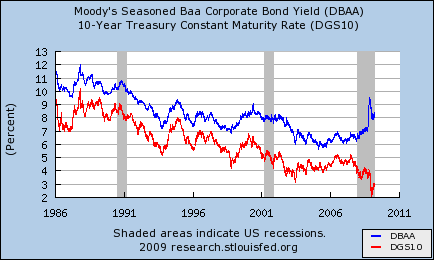
The graph above shows the 10-year yield versus BAA debt. Clearly, folks have moved strongly away from risky assets. It’s not so much that the risk premium is gone, it’s that we’re in a T-bond bubble. -
Good Retail News
Posted by Eddy Elfenbein on March 12th, 2009 at 10:58 amThere was actually good news in retail sales. Good, not great. Retail sales for February dropped by 0.1% last month which was slightly better than what analysts were expecting. The best news came from the revisions for January. That number was revised higher to 1.8% from the original 1.0%. It’s not great but let’s hope this trend lasts.
Interestingly, if you exclude car sales from the February numbers, then retail sales rose by 0.7%
-
Archives
- October 2026
- September 2026
- August 2026
- July 2026
- June 2026
- May 2026
- April 2026
- March 2026
- February 2026
- January 2026
- December 2025
- November 2025
- October 2025
- September 2025
- August 2025
- July 2025
- June 2025
- May 2025
- April 2025
- March 2025
- February 2025
- January 2025
- December 2024
- November 2024
- October 2024
- September 2024
- August 2024
- July 2024
- June 2024
- May 2024
- April 2024
- March 2024
- February 2024
- January 2024
- December 2023
- November 2023
- October 2023
- September 2023
- August 2023
- July 2023
- June 2023
- May 2023
- April 2023
- March 2023
- February 2023
- January 2023
- December 2022
- November 2022
- October 2022
- September 2022
- August 2022
- July 2022
- June 2022
- May 2022
- April 2022
- March 2022
- February 2022
- January 2022
- December 2021
- November 2021
- October 2021
- September 2021
- August 2021
- July 2021
- June 2021
- May 2021
- April 2021
- March 2021
- February 2021
- January 2021
- December 2020
- November 2020
- October 2020
- September 2020
- August 2020
- July 2020
- June 2020
- May 2020
- April 2020
- March 2020
- February 2020
- January 2020
- December 2019
- November 2019
- October 2019
- September 2019
- August 2019
- July 2019
- June 2019
- May 2019
- April 2019
- March 2019
- February 2019
- January 2019
- December 2018
- November 2018
- October 2018
- September 2018
- August 2018
- July 2018
- June 2018
- May 2018
- April 2018
- March 2018
- February 2018
- January 2018
- December 2017
- November 2017
- October 2017
- September 2017
- August 2017
- July 2017
- June 2017
- May 2017
- April 2017
- March 2017
- February 2017
- January 2017
- December 2016
- November 2016
- October 2016
- September 2016
- August 2016
- July 2016
- June 2016
- May 2016
- April 2016
- March 2016
- February 2016
- January 2016
- December 2015
- November 2015
- October 2015
- September 2015
- August 2015
- July 2015
- June 2015
- May 2015
- April 2015
- March 2015
- February 2015
- January 2015
- December 2014
- November 2014
- October 2014
- September 2014
- August 2014
- July 2014
- June 2014
- May 2014
- April 2014
- March 2014
- February 2014
- January 2014
- December 2013
- November 2013
- October 2013
- September 2013
- August 2013
- July 2013
- June 2013
- May 2013
- April 2013
- March 2013
- February 2013
- January 2013
- December 2012
- November 2012
- October 2012
- September 2012
- August 2012
- July 2012
- June 2012
- May 2012
- April 2012
- March 2012
- February 2012
- January 2012
- December 2011
- November 2011
- October 2011
- September 2011
- August 2011
- July 2011
- June 2011
- May 2011
- April 2011
- March 2011
- February 2011
- January 2011
- December 2010
- November 2010
- October 2010
- September 2010
- August 2010
- July 2010
- June 2010
- May 2010
- April 2010
- March 2010
- February 2010
- January 2010
- December 2009
- November 2009
- October 2009
- September 2009
- August 2009
- July 2009
- June 2009
- May 2009
- April 2009
- March 2009
- February 2009
- January 2009
- December 2008
- November 2008
- October 2008
- September 2008
- August 2008
- July 2008
- June 2008
- May 2008
- April 2008
- March 2008
- February 2008
- January 2008
- December 2007
- November 2007
- October 2007
- September 2007
- August 2007
- July 2007
- June 2007
- May 2007
- April 2007
- March 2007
- February 2007
- January 2007
- December 2006
- November 2006
- October 2006
- September 2006
- August 2006
- July 2006
- June 2006
- May 2006
- April 2006
- March 2006
- February 2006
- January 2006
- December 2005
- November 2005
- October 2005
- September 2005
- August 2005
- July 2005
 Eddy Elfenbein is a Washington, DC-based speaker, portfolio manager and editor of the blog Crossing Wall Street. His