-
Possible Headline
Posted by Eddy Elfenbein on July 25th, 2007 at 2:01 pmFrom the AP:
Or my suggestion:
-
Guess This Stock?
Posted by Eddy Elfenbein on July 25th, 2007 at 7:31 am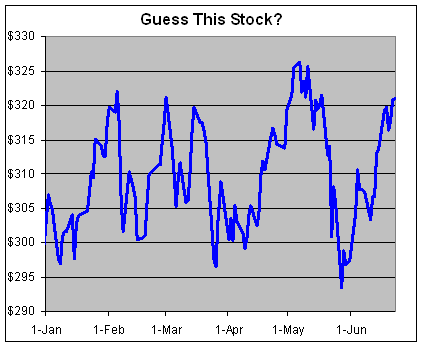
Give up? -
Behold the Power of Wednesdays
Posted by Eddy Elfenbein on July 25th, 2007 at 6:23 amSince I got so many e-mails on this subject, I wanted to revisit my post on how good Wednesdays have been for Wall Street.
Going back exactly six years, the days of the week for the S&P 500 break down like this:
Monday 1.31%
Tuesday -9.96%
Wednesday 37.19%
Thursday 4.99%
Friday -1.85%
That’s capital gains only. For all five days, the S&P 500 is up 28.97%. So except for Wednesday, the rest of the week is net down.
So what’s the deal on Hump Day?
A few emails suggested it could be due to Fed meetings, or possibly when the oil stats are released. Personally, I think it’s due to Lost which broadcasts on Wednesday. For the next six days, everyone on the Street says “What the fuck was that about?” It’s just a theory.
Let’s get some grad students on it. -
What’s Up 551% in San Diego?
Posted by Eddy Elfenbein on July 25th, 2007 at 6:15 amHome foreclosures in San Diego County continued their troublesome upward climb in June, but analysts say the number has yet to reach a threshold that creates a drag on real estate prices or the economy at large.
“California is better off than the nation and San Diego County is better off than California,” said researcher John Karevoll of DataQuick Information Systems. “It still is not a major factor in the real estate market, but if there is a recession, it could become a huge factor.” -
The Bond Market Says No
Posted by Eddy Elfenbein on July 24th, 2007 at 10:09 amI used to think if there was reincarnation, I wanted to come back as the President or the Pope or a .400 baseball hitter. But now I want to come back as the bond market. You can intimidate everyone.
–James CarvilleLast week, I mentioned that KKR had canceled a loan deal for Maxeda, a Dutch department store.
Now comes another story. Expedia (EXPE) had this great idea to buy back a gazillion shares of their stock. Not with money, but with “future money” otherwise known as debt.
The bond market looked at the plan and said, “no dice.” Bloomberg reports:At least 20 companies have canceled or postponed debt offerings since June 26 as credit markets grow tighter.
The extra yield investors demand to own high-risk, high- yield, or junk-rated corporate bonds has jumped 0.85 percentage points to 3.37 percentage points since the day before Expedia announced its share buyback, according to Merrill Lynch & Co. index data.EXPE dropped 9% yesterday.
-
Earnings, Earnings and Earnings
Posted by Eddy Elfenbein on July 24th, 2007 at 9:36 amAfter the close yesterday, W.R. Berkley (BER) reported operating earnings of 92 cents a share, 10 cents more than last year. The stock is going for less than nine times earnings.
The other insurance stock on the Buy List, AFLAC (AFL), reports later today.
I also noticed that Dell (DELL) closed at a 15-month high yesterday. -
Corus Bankshares
Posted by Eddy Elfenbein on July 23rd, 2007 at 1:41 pmEver heard of Corus Bankshares (CORS)?
Don’t worry, you’re not alone. Corus is a pee-wee-cap bank that specializes in making condo loans in markets where people like to overpay for condos. Without anyone noticing, CORS has become one the top-performing stocks of the last generation. Over the last 30 years, shares of Corus are up about 45,000%. That’s amazing. Put it this way, Corus has lapped the S&P 500 about 30 times in 30 years and more than doubled Intel (and I bet you heard of that one). Still, few people know about little Corus. The reason I bring this up isn’t to tout Corus’ long-term record, but to draw your attention to today’s earnings report. For Q2, Corus netted 74 cents a share, which is a big drop off from the 82 cents a share it made last year. The culprit, naturally, was the real estate market in places like Florida. But here’s the interesting part: Wall Street was expecting much worse. The average of the three analysts was for 61 cents a share. I don’t mean this as any hyper-sophisticated analysis of the real estate market. It’s just interesting to note that even experts are having difficulty seeing the magnitude of the housing mess. Perhaps it’s not as bad as it looks. Meanwhile, shares of Corus are up about 6.4% today. -
Lindsay Campbell for Seasonique
Posted by Eddy Elfenbein on July 22nd, 2007 at 4:56 pmI could’ve sworn I’ve seen this girl somewhere before.
Oh right! It’s WallStrip‘s Lindsay Campbell promoting Barr Pharmaceuticals‘s (BRL) Seasonique.
I wasn’t really paying attention to what the product is used for. (I think it’s girl’s stuff.) But I’m amazed at Lindsay’s footwork. I’ve watched it a few times and she stops the ball without looking. See for yourself.
Let’s see David Beckham do that. -
The Strangest Market Stat You’ll Read All Day
Posted by Eddy Elfenbein on July 20th, 2007 at 2:49 pmSince the beginning of the 2006, here are the cumulative S&P 500 returns by days of the week:
Monday 1.40%
Tuesday -0.36%
Wednesday 18.72%
Thursday 4.36%
Friday -0.61%
So what’s the deal with Hump Day? It’s responsible for over three-quarters of the S&P 500’s return. And today’s data point will make it even more.
Told ya it was a strange stat. -
Bond Rally
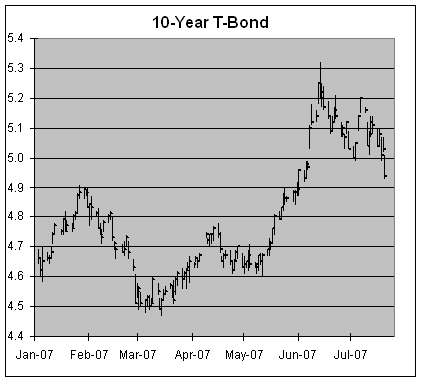
Posted by Eddy Elfenbein on July 20th, 2007 at 1:18 pmStocks may be down, but bonds are taking off. That tells us where all the money is going. The yield on the 10-year (^TNX) is below 5%. The cylicals are getting slammed.
-
Archives
- August 2026
- July 2026
- June 2026
- May 2026
- April 2026
- March 2026
- February 2026
- January 2026
- December 2025
- November 2025
- October 2025
- September 2025
- August 2025
- July 2025
- June 2025
- May 2025
- April 2025
- March 2025
- February 2025
- January 2025
- December 2024
- November 2024
- October 2024
- September 2024
- August 2024
- July 2024
- June 2024
- May 2024
- April 2024
- March 2024
- February 2024
- January 2024
- December 2023
- November 2023
- October 2023
- September 2023
- August 2023
- July 2023
- June 2023
- May 2023
- April 2023
- March 2023
- February 2023
- January 2023
- December 2022
- November 2022
- October 2022
- September 2022
- August 2022
- July 2022
- June 2022
- May 2022
- April 2022
- March 2022
- February 2022
- January 2022
- December 2021
- November 2021
- October 2021
- September 2021
- August 2021
- July 2021
- June 2021
- May 2021
- April 2021
- March 2021
- February 2021
- January 2021
- December 2020
- November 2020
- October 2020
- September 2020
- August 2020
- July 2020
- June 2020
- May 2020
- April 2020
- March 2020
- February 2020
- January 2020
- December 2019
- November 2019
- October 2019
- September 2019
- August 2019
- July 2019
- June 2019
- May 2019
- April 2019
- March 2019
- February 2019
- January 2019
- December 2018
- November 2018
- October 2018
- September 2018
- August 2018
- July 2018
- June 2018
- May 2018
- April 2018
- March 2018
- February 2018
- January 2018
- December 2017
- November 2017
- October 2017
- September 2017
- August 2017
- July 2017
- June 2017
- May 2017
- April 2017
- March 2017
- February 2017
- January 2017
- December 2016
- November 2016
- October 2016
- September 2016
- August 2016
- July 2016
- June 2016
- May 2016
- April 2016
- March 2016
- February 2016
- January 2016
- December 2015
- November 2015
- October 2015
- September 2015
- August 2015
- July 2015
- June 2015
- May 2015
- April 2015
- March 2015
- February 2015
- January 2015
- December 2014
- November 2014
- October 2014
- September 2014
- August 2014
- July 2014
- June 2014
- May 2014
- April 2014
- March 2014
- February 2014
- January 2014
- December 2013
- November 2013
- October 2013
- September 2013
- August 2013
- July 2013
- June 2013
- May 2013
- April 2013
- March 2013
- February 2013
- January 2013
- December 2012
- November 2012
- October 2012
- September 2012
- August 2012
- July 2012
- June 2012
- May 2012
- April 2012
- March 2012
- February 2012
- January 2012
- December 2011
- November 2011
- October 2011
- September 2011
- August 2011
- July 2011
- June 2011
- May 2011
- April 2011
- March 2011
- February 2011
- January 2011
- December 2010
- November 2010
- October 2010
- September 2010
- August 2010
- July 2010
- June 2010
- May 2010
- April 2010
- March 2010
- February 2010
- January 2010
- December 2009
- November 2009
- October 2009
- September 2009
- August 2009
- July 2009
- June 2009
- May 2009
- April 2009
- March 2009
- February 2009
- January 2009
- December 2008
- November 2008
- October 2008
- September 2008
- August 2008
- July 2008
- June 2008
- May 2008
- April 2008
- March 2008
- February 2008
- January 2008
- December 2007
- November 2007
- October 2007
- September 2007
- August 2007
- July 2007
- June 2007
- May 2007
- April 2007
- March 2007
- February 2007
- January 2007
- December 2006
- November 2006
- October 2006
- September 2006
- August 2006
- July 2006
- June 2006
- May 2006
- April 2006
- March 2006
- February 2006
- January 2006
- December 2005
- November 2005
- October 2005
- September 2005
- August 2005
- July 2005
 Eddy Elfenbein is a Washington, DC-based speaker, portfolio manager and editor of the blog Crossing Wall Street. His