-
Earnings from AFLAC and Express Scripts
Posted by Eddy Elfenbein on July 28th, 2015 at 8:16 pmAfter the closing bell, we had two more Buy List earnings reports. AFLAC (AFL) reported Q2 operating earnings of $1.50 per share. That was two cents below expectations. The weak yen knocked off 14 cents per share.
For Q3, AFLAC sees earnings ranging between $1.40 and $1.53 per share. For the full year, AFLAC’s projects earnings of $5.88 to $6.17 per share. Wall Street had been expecting $1.48 and $5.97 per share. That assumes the yen averages 120 to 125 per dollar.
Express Scripts (ESRX) made $1.44 per share which beat by four cents. For Q3, they offered guidance of $1.41 to $1.45 per share. Wall Street was at $1.43.
ESRX also raised their full-year range to $5.46 to $5.54. The old range was $5.37 to $5.47 per share. This is the second time this year, they’ve revised full-year guidance. In April, they narrowed the range by two cents at both ends.
-
Ford’s Best Profit in 15 Years
Posted by Eddy Elfenbein on July 28th, 2015 at 2:14 pm -
Public Storage Continues to Rally
Posted by Eddy Elfenbein on July 28th, 2015 at 10:41 amFour years ago, I highlighted Public Storage (PSA). The stock has continued to rally. Here’s a description:
If the attic or garage are packed, Public Storage can help. The real estate investment trust (REIT), is one of the largest self-storage companies in the US. It operates more than 2,250 storage facilities comprising some 146 million sq. ft. of storage space in the US and more than 190 facilities in Europe (through its Shurgard Europe affiliate). The firm’s self-storage properties, located in densely populated areas, generate more than 90% of the company’s sales. Public Storage, which was founded in 1980, also rents trucks, and sells moving supplies such as locks, boxes, and packing supplies. It also owns about 42% of publicly traded PS Business Parks, an office building REIT.
The stock reached a low of $6.25 per share in 1990. Today, it’s at $203 per share. But that doesn’t include the quarterly dividend which has risen from 20 cents in 1990 to $1.70 per share today. That means PSA was yielding 12.8% at its 1990 low. With dividends, the stock is up 100-fold in 25 years.
So many people waste their time trying to find the “next Apple” or “next Google.” Few people think about the “next Public Storage.”
Or the current one for that matter.
-
Ford Beat by 10 Cents per Share
Posted by Eddy Elfenbein on July 28th, 2015 at 7:13 amGood news from Ford Motor (F) this morning. The automaker beat Q2 estimates by 10 cents per share.
Ford Motor Co second-quarter earnings widely beat Wall Street expectations, based on the continued strength of its North American sales.
Ford maintained its full-year 2015 forecast of an operating profit of between $8.5 billion to $9.5 billion.
Ford made a net profit of $1.89 billion, or $0.47 per share. There were no one-time items and the 47 cents per share beat analyst expectations of 37 cents per share, according to Thomson Reuters I/B/E/S.
Ford’s quarterly revenue of $37.3 billion also beat expectations of $35.34 billion.
The stock is up near $15 this morning which is a 3% rise.
-
Morning News: July 28, 2015
Posted by Eddy Elfenbein on July 28th, 2015 at 7:04 amBritish Economy Bounces Back Due to Rebounding Services Activity, Industrial Output
China Shares Fall Again as Beijing Scrambles to Calm Markets
Analyst Who Predicted Bottom for Shanghai Stocks Sees Further 14% Plunge
Toyota’s Global Sales Dip 1.5% in First-Half of Year
U.S. Forces Fiat Chrysler to Buy Back Trucks in Rarely Used Move
BP Reports Second-Quarter Loss as Oil Spill Settlement Takes Toll
DuPont Cuts Full-Year Outlook on Weak Farm Sales
Sanofi to Join Regeneron in Quest to Unleash Immune System on Cancer
Hikma Pharmaceuticals to Buy Generic Drug Maker Roxane
How David Taylor Should Manage His Own Onboarding As Procter & Gamble’s New CEO
Honeywell to Buy Elster for $5.1 Billion
Roger Nusbaum: Markets Wilt in Summer Heat
Be sure to follow me on Twitter.
-
Five Down Days in a Row
Posted by Eddy Elfenbein on July 27th, 2015 at 5:05 pmThe S&P 500 fell for the fifth day in a row. The index hasn’t had a six-day losing streak in three years (via Ryan Detrick).
Thanks to Wabtec (WAB), our Buy List beat the S&P 500 for the fourth day in a row. We’re now at a relative strength high for the year. We’re 361 basis points ahead of the S&P 500 (4.03% to 0.42%).
-
DirecTV and AT&T Close the Deal
Posted by Eddy Elfenbein on July 27th, 2015 at 1:25 pmLast May, I sent out a special CWS Market Review on the news of AT&T making a bid for DirecTV, one of our Buy List stocks.
The announced deal was for $95 per share, but since it involved cash and stock, it might not be closed at that price.
Ultimately, DTV shareholders got $28.50 in cash plus 1.892 shares of AT&T. That works out to $93.38 per share. Before there was chatter of this deal, DTV was around $77 per share. We did very well with DTV.
At the end of last year, I decided to ditch DTV from the Buy List because I didn’t want AT&T. I have nothing against AT&T — it’s a fine company. If you just received your shares of AT&T along with your cash, there’s no reason to sell out now.
The stock pays a good dividend, but I wouldn’t expect to see shares of T wander too far from $34.
-
Wabtec Rises on Acquisition
Posted by Eddy Elfenbein on July 27th, 2015 at 10:01 amNo earnings reports today for our Buy List but shares of Wabtec (WAB) have been up as much as 8.7% this morning. The company is buying Faiveley Transport SA, a French company for $1.8 billion.
The transaction includes cash and stock and the assumption of Faiveley debt, Wabtec said Monday in a statement. Wilmerding, Pennsylvania-based Wabtec traces its roots to Westinghouse Air Brake, which was founded in 1869.
-
The FANG Stocks
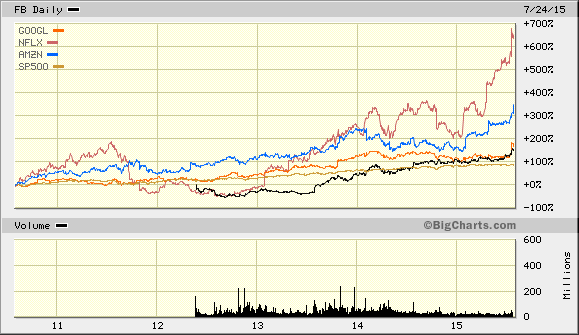
Posted by Eddy Elfenbein on July 27th, 2015 at 9:16 amI can’t verify this but with the S&P 500 up just 1% this year, I would imagine that taking out Amazon and Google, the index would be down for the year. Lately, there’s been talk of the FANG stocks; Facebook, Amazon, Netflix and Google.
That isn’t quite accurate since Google wasn’t that strong a performer until its recent earnings report. Here’s a look at the growth of the FANG stocks over the last five years.
-
Chinese Stocks Crash
Posted by Eddy Elfenbein on July 27th, 2015 at 8:08 amThe Shanghai Composite just had its biggest one-day fall in eight years. The index lost 8.48%.
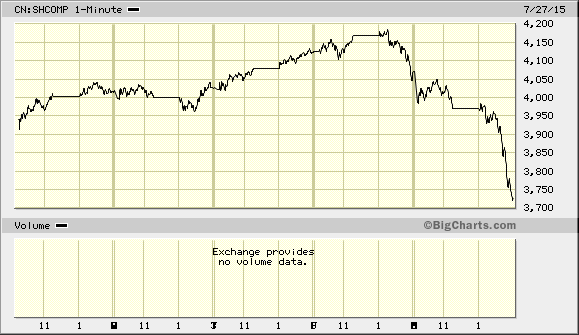
Analysts say investors fearful the government would curb its purchases of blue-chip stocks sparked Monday’s selling. Others said officials could be testing whether the market can support itself.
Authorities may want to “test whether the market has recovered its resilience,” said Fu Xuejun, a strategist at Huarong Securities. “The government wants to use state funds to stabilize the market, not to prop it back to 5000 points overnight.”
Earlier this month, 21 brokerages pledged to support the Shanghai index as long as it stayed below the 4500 level. Before Monday, China’s main stock market had rallied for three-straight weeks.
-
Archives
- September 2026
- August 2026
- July 2026
- June 2026
- May 2026
- April 2026
- March 2026
- February 2026
- January 2026
- December 2025
- November 2025
- October 2025
- September 2025
- August 2025
- July 2025
- June 2025
- May 2025
- April 2025
- March 2025
- February 2025
- January 2025
- December 2024
- November 2024
- October 2024
- September 2024
- August 2024
- July 2024
- June 2024
- May 2024
- April 2024
- March 2024
- February 2024
- January 2024
- December 2023
- November 2023
- October 2023
- September 2023
- August 2023
- July 2023
- June 2023
- May 2023
- April 2023
- March 2023
- February 2023
- January 2023
- December 2022
- November 2022
- October 2022
- September 2022
- August 2022
- July 2022
- June 2022
- May 2022
- April 2022
- March 2022
- February 2022
- January 2022
- December 2021
- November 2021
- October 2021
- September 2021
- August 2021
- July 2021
- June 2021
- May 2021
- April 2021
- March 2021
- February 2021
- January 2021
- December 2020
- November 2020
- October 2020
- September 2020
- August 2020
- July 2020
- June 2020
- May 2020
- April 2020
- March 2020
- February 2020
- January 2020
- December 2019
- November 2019
- October 2019
- September 2019
- August 2019
- July 2019
- June 2019
- May 2019
- April 2019
- March 2019
- February 2019
- January 2019
- December 2018
- November 2018
- October 2018
- September 2018
- August 2018
- July 2018
- June 2018
- May 2018
- April 2018
- March 2018
- February 2018
- January 2018
- December 2017
- November 2017
- October 2017
- September 2017
- August 2017
- July 2017
- June 2017
- May 2017
- April 2017
- March 2017
- February 2017
- January 2017
- December 2016
- November 2016
- October 2016
- September 2016
- August 2016
- July 2016
- June 2016
- May 2016
- April 2016
- March 2016
- February 2016
- January 2016
- December 2015
- November 2015
- October 2015
- September 2015
- August 2015
- July 2015
- June 2015
- May 2015
- April 2015
- March 2015
- February 2015
- January 2015
- December 2014
- November 2014
- October 2014
- September 2014
- August 2014
- July 2014
- June 2014
- May 2014
- April 2014
- March 2014
- February 2014
- January 2014
- December 2013
- November 2013
- October 2013
- September 2013
- August 2013
- July 2013
- June 2013
- May 2013
- April 2013
- March 2013
- February 2013
- January 2013
- December 2012
- November 2012
- October 2012
- September 2012
- August 2012
- July 2012
- June 2012
- May 2012
- April 2012
- March 2012
- February 2012
- January 2012
- December 2011
- November 2011
- October 2011
- September 2011
- August 2011
- July 2011
- June 2011
- May 2011
- April 2011
- March 2011
- February 2011
- January 2011
- December 2010
- November 2010
- October 2010
- September 2010
- August 2010
- July 2010
- June 2010
- May 2010
- April 2010
- March 2010
- February 2010
- January 2010
- December 2009
- November 2009
- October 2009
- September 2009
- August 2009
- July 2009
- June 2009
- May 2009
- April 2009
- March 2009
- February 2009
- January 2009
- December 2008
- November 2008
- October 2008
- September 2008
- August 2008
- July 2008
- June 2008
- May 2008
- April 2008
- March 2008
- February 2008
- January 2008
- December 2007
- November 2007
- October 2007
- September 2007
- August 2007
- July 2007
- June 2007
- May 2007
- April 2007
- March 2007
- February 2007
- January 2007
- December 2006
- November 2006
- October 2006
- September 2006
- August 2006
- July 2006
- June 2006
- May 2006
- April 2006
- March 2006
- February 2006
- January 2006
- December 2005
- November 2005
- October 2005
- September 2005
- August 2005
- July 2005
 Eddy Elfenbein is a Washington, DC-based speaker, portfolio manager and editor of the blog Crossing Wall Street. His